Best Alarm Clock for Heavy Sleepers 2026
Affiliate Disclosure: As an Amazon Associate I earn from qualifying purchases. Some links on this page are affiliate links. If you buy through them we earn a small commission at no extra cost to you. Our recommendations are based on research into specifications, published evidence and product listings. Learn more.
Quick Picks
The best alarm clock for heavy sleepers combines progressive light simulation with escalating sound, giving your brain multiple sensory cues to surface from deep sleep gradually rather than being jolted awake by a single jarring tone. Light temperature and sound layering tend to matter far more than raw decibel levels.
Shop on Amazon: JALL Wake Up Light → | Loftie Clock →
Heavy sleeping isn’t laziness. It’s often a sign of deep, restorative sleep cycles, or in some cases, accumulated sleep debt that your body is desperately trying to repay. The right alarm clock works with your biology instead of against it.
If you want a broader look at how light-based waking fits into a complete sleep improvement system, the Sunrise Alarm Clocks hub covers everything from the science of light and circadian rhythms to detailed model comparisons across different budgets and needs.

Why Do Heavy Sleepers Struggle So Much With Standard Alarms?
Product Comparison
Best Overall  Philips SmartSleep Check Price on Amazon |  Philips Hf3500 Check Price on Amazon | 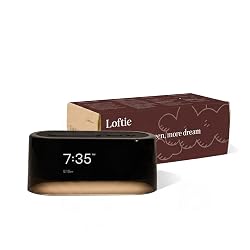 Loftie Clock Check Price on Amazon | |
|---|---|---|---|
| Type | Wake-up light | Wake-up light | Smart clock |
| Light Therapy | Advanced | Basic | No |
| Smart Home | No | No | Yes |
| Price Range | $$ | $ | $$$ |
The problem with a standard alarm is that it delivers a single, abrupt signal with no context. Your brain, particularly during the deeper stages of sleep, isn’t primed to process that signal as meaningful. It registers as noise, gets suppressed, and you’re back under within seconds.
Sleep inertia is the technical term for that groggy, disoriented state you experience immediately after waking. Research published through the National Institutes of Health has consistently linked abrupt awakening from deep slow-wave sleep to more severe and prolonged sleep inertia, which impairs cognitive performance for anywhere from 15 minutes to over an hour depending on the individual and the timing of the wake signal.
Heavy sleepers tend to spend more time in slow-wave sleep, which is genuinely beneficial for physical recovery and memory consolidation. But it also means a conventional alarm is more likely to catch you at the worst possible moment in your cycle. The solution isn’t a louder alarm. It’s a smarter one.
What Makes a Sunrise Alarm Clock Actually Effective for Deep Sleepers?
I want to be honest about something that took me a while to accept: not all sunrise alarms are created equal, and the marketing language around them is frequently disconnected from the actual experience of using them.
Budget sunrise alarms, such as those at around $25 may offer a sunrise simulation function in a limited form. A flat, slightly blue-tinged white that simply gets brighter over 30 minutes isn’t unpleasant, but it may not be convincing, and it may not be enough to stop you hitting snooze.
What I eventually understood, after trying a Lumie and other wake-up lights, is that light colour progression is the critical variable. A genuine sunrise doesn’t go from dark to bright white. It moves through amber, then warm orange, then a richer yellow before approaching anything close to daylight white. The amber-to-white progression is what triggers the photoreceptors in your eyes that signal your suprachiasmatic nucleus, your brain’s master clock, that morning is genuinely arriving.
The Mayo Clinic notes that light exposure is the most powerful external cue for regulating circadian rhythms, which govern not just sleep timing but cortisol release, body temperature, and alertness. A sunrise clock that mimics the spectral progression of real dawn is doing something physiologically meaningful. One that simply turns a white LED up slowly is doing considerably less.
For heavy sleepers specifically, I’d add three other factors that matter:
- Simulation duration: 20 minutes is the minimum. 30 to 45 minutes is better. This gives your body time to begin the natural cortisol awakening response before any sound kicks in.
- Sound layering: The best models add nature sounds gradually alongside the light, starting at low volume and building. This multi-sensory approach is much harder to sleep through than a single beep.
- Backup alarm volume: For genuinely heavy sleepers, you want a model that can reach meaningful volume if the light and gentle sounds haven’t done the job. Some budget models top out at levels that a deep sleeper simply won’t register.

Which Alarm Clock Features Are Worth Paying For, and Which Are Marketing?
Some features are worth the premium, and others exist primarily to justify a higher price tag.
Worth paying for:
A proper colour temperature shift in the light simulation. This is the single biggest differentiator between a $25 model and a $80 to $150 model. If the product description doesn’t mention warm amber or colour temperature progression, assume it’s just a dimmable white LED.
FM radio or a decent speaker. Some heavy sleepers need a genuine audio backup, and tinny, low-quality speakers undermine the whole experience. The Philips SmartSleep includes a speaker and an FM radio, which gives you an audio backup.
A sunset simulation feature. This is genuinely useful and often overlooked. Winding down with a slow light fade in the evening supports melatonin production and makes falling asleep easier, which in turn affects how rested you feel when the alarm triggers.
Probably not worth paying for:
App connectivity for basic alarm setting. The honest reality is that the app adds friction without adding meaningful function for most users. Setting an alarm directly on the device is faster and doesn’t depend on your phone being charged and nearby.
Sleep tracking built into the alarm clock itself. Dedicated sleep tracking is better handled by your phone or a wearable. If you’re curious about tracking your sleep properly, the comparison of the best sleep tracking apps in 2025 covers the options that actually give you useful data, rather than the basic estimates most alarm clock sensors produce.
Dozens of nature sound options. In practice, you’ll settle on one or two sounds and use them consistently. Having 50 options is a selling point that doesn’t translate to better sleep outcomes.
How Does Sound Choice Affect Wake Quality for Heavy Sleepers?
What surprised me was how much the sound selection mattered for him specifically. He found birdsong irritating and would dismiss it immediately. What worked was a low rumble of distant ocean waves that built slowly in volume. Something about the low-frequency, rhythmic quality of it seemed to surface him from sleep more gently than higher-pitched nature sounds.
There’s actually some science behind this. based on available evidence referenced by the American Psychological Association, melodic, gradually escalating sounds produce less abrupt cortical arousal than sudden tonal alarms, which may reduce the severity of sleep inertia even when the sounds in the end reach similar volume levels. The rhythm and predictability of the sound matters to your brain as much as the volume does.
For heavy sleepers who also use sound to fall asleep, there’s a useful overlap here. The best sleep sounds apps offer a much wider library of options than any physical alarm clock, and some allow you to set a morning fade-in through the same app you use for sleep sounds at night. That kind of continuity, familiar sounds both entering and exiting sleep, can be genuinely helpful for people whose relationship with sleep is already complicated.

What Are the Best Alarm Clocks for Heavy Sleepers in 2026?
Specific recommendations follow rather than a vague “it depends” answer.
Best Overall: Philips SmartSleep Wake-Up Light HF3650
This is the model to start with. It offers customizable sunrise, sunset and sound profiles, plus a speaker and an FM radio that can act as an audio failsafe. It’s not cheap, in the $100 to $200 range, but it packs the most features of the wake-up lights here.
The limitation is that it is a dedicated device with its own controls, so expect a few days to get comfortable with the interface. Not a dealbreaker, but worth knowing.
Best Mid-Range: Lumie Bodyclock Spark 100
The Lumie is where I’d send someone who wants a meaningful upgrade from a budget model without committing to the Philips price point. The light quality is noticeably better than anything under $40, and the sunrise simulation feels more natural than most competitors. It lacks FM radio, which is a genuine omission for heavy sleepers who need an audio failsafe, but the built-in sounds are reasonable quality and reach adequate volume.
Lumie has been making light therapy products for decades and their understanding of light spectrum shows in the product. This is one area where brand heritage actually correlates with product quality.
Best Budget Option: Coulax Sunrise Alarm Clock
I’m including a budget option because not everyone can or should spend $100 on an alarm clock. The Coulax and similar models in the $25 to $35 range have improved considerably in the past two years. The light quality is still a step below the Lumie and Philips, but if you combine one of these with a good sleep sounds app and a consistent sleep schedule, you’ll get most of the benefit at a fraction of the cost.
Be realistic about the limitations: the sound quality is mediocre, the colour temperature shift is minimal, and the build quality reflects the price. But as a first step away from a jarring phone alarm, it’s a meaningful improvement.
Best for Tech-Integrated Sleepers: Hatch Restore 2
The Hatch Restore 2 is the most polished product in this category from a user experience standpoint. The app is genuinely well-designed, the sound library is extensive, and the light quality is excellent. It also integrates sleep content, including guided meditations and sleep stories, which can be useful if you’re building a broader wind-down routine.
The significant caveat is the subscription model. Full access to the content library requires a monthly fee, and without it, the device is functional but less impressive. If you’re already using something like the apps covered in the comparison of Calm vs. Headspace for guided sleep meditation, you may find the Hatch content redundant and the subscription an unnecessary additional cost.

Does Your Sleep Data Tell You Anything Useful About Your Waking Patterns?
It’s worth paying attention to when you actually wake, not just whether you wake up at all. Understanding your sleep cycle timing can genuinely inform how you set your alarm, and whether a 30-minute or 45-minute sunrise simulation makes more sense for your biology.
An Apple Watch can help with sleep stage tracking, and the AutoSleep app is useful for making sense of the data. The AutoSleep app review goes into detail about what the tracking actually tells you versus what it estimates. The short version: it’s not perfect, but it’s useful enough to identify patterns in your sleep architecture over time.
If your data shows you are consistently in a lighter sleep stage in the 30 to 45 minutes before your alarm, starting the sunrise simulation 40 minutes before your target wake time rather than 20 minutes may make getting up easier.
If you’re an Oura Ring user, the Oura app features include a smart alarm function that attempts to wake you during a lighter sleep phase within a defined window. This can be genuinely useful on mornings where you have flexibility in your exact wake time. It’s not magic, but the underlying logic is sound.
The CDC recommends adults get seven to nine hours of sleep per night, and consistently falling short of that is one of the most common reasons people identify as heavy sleepers when they’re actually just chronically under-slept. If your sleep tracking data shows you’re regularly getting less than seven hours, no alarm clock will fully solve the problem. The waking experience improves when the underlying sleep quality and duration improves first.
How Should Heavy Sleepers Build a Complete Morning Wake System?
An alarm clock, however good, is one component. People who make the most consistent progress with morning waking tend to build a small system around it rather than relying on any single product or technique.
consider this I currently use, and what I’d suggest as a starting point:
A 45-minute sunrise simulation starting from deep amber. We consider this the core of the system.
Nature sounds layered in from the 20-minute mark. Ocean waves at low volume, building to moderate by the time the main alarm triggers, can work well. Combined with the light, this gives your brain two separate sensory streams to process, which makes the transition from sleep to wakefulness feel less abrupt.
A consistent sleep schedule, even on weekends. This is the part that most people resist and the part that makes the biggest difference. Your circadian rhythm is a system that responds to consistency. When you sleep and wake at wildly different times across the week, you’re essentially giving yourself social jet lag, and no alarm clock compensates for that effectively. Research highlighted by the World Health Organization has linked irregular sleep timing to a range of health outcomes beyond just morning grogginess.
Sleep tracking to understand your patterns. This doesn’t mean obsessive monitoring, but a few weeks of consistent tracking can reveal whether you’re actually getting enough sleep, whether your sleep quality is being disrupted by something environmental, and whether your natural sleep cycle aligns with your alarm timing. For iPhone users without a wearable, the Pillow app uses the accelerometer in your phone to estimate sleep stages with reasonable accuracy, and it’s a decent starting point before committing to a wearable.
A morning routine that starts before you get out of bed. Scrolling your phone immediately after waking is a habit I’d encourage you to break. The first few minutes after waking are when sleep inertia is at its peak, and passive phone use extends that foggy state rather than helping you clear it. Even sitting up, drinking water, and letting the sunrise light continue to hit your eyes for five minutes before reaching for your phone makes a measurable difference to how alert you feel by the time you’re actually moving.

Is a Sunrise Alarm Clock Actually Worth the Investment for Heavy Sleepers?
I get asked this directly, and I’ll answer it directly. Yes, with conditions.
If you’re a heavy sleeper who consistently struggles with morning waking, feels groggy for extended periods after getting up, or relies on multiple alarms to get out of bed, a quality sunrise alarm clock is likely to produce a noticeable improvement. The physiological mechanism is real, the evidence is reasonably solid, and the subjective experience of waking to light rather than noise is genuinely different.
The conditions: you need to buy a model with a proper colour temperature progression, not just a dimmable white LED. You need to use it consistently, including setting a consistent sleep time, not just a consistent wake time. And you need to be realistic that it won’t fully compensate for chronic sleep deprivation or an underlying sleep disorder.
If you’ve been struggling with sleep quality more broadly, whether that’s difficulty falling asleep, frequent night waking, or persistent fatigue despite adequate hours in bed, those issues are worth exploring more carefully. The American Psychological Association has published extensively on cognitive behavioural approaches to insomnia that address the root causes rather than just the symptoms, and those approaches are significantly more effective long-term than any single product.
For most heavy sleepers, though, a good sunrise alarm clock combined with a consistent schedule and a few supportive habits will make mornings meaningfully better. That’s what the evidence broadly supports.
Read more articles on the Sunrise Alarm Clocks Hub.
Transparency: LiveWorkSleep may earn affiliate commissions from products recommended on this page. This doesn’t influence our recommendations. Our recommendations are based on research into specifications, published evidence and product listings.
About This Guide
LiveWorkSleep publishes guides to sleep products and sleep science. Recommendations are based on research into specifications, published evidence and product listings. This page is general information, not medical advice.
Ready to choose? Our top picks
Frequently Asked Questions
What is the best alarm clock for someone who sleeps through everything?
For people who sleep through standard alarms, a sunrise alarm clock with a genuine amber-to-white colour temperature progression and a gradually escalating nature sound backup is the most effective single-device solution. The Philips SmartSleep HF3650 is the model I’d recommend first, with the Lumie Bodyclock Spark 100 as a solid mid-range alternative. Pairing either with a consistent sleep schedule amplifies the results significantly.
Do sunrise alarm clocks actually work for heavy sleepers?
Yes, with important caveats. Sunrise alarm clocks work by triggering the natural cortisol awakening response through light exposure before the main alarm sounds, which reduces sleep inertia and makes waking feel less abrupt. The evidence is strongest for models that use a genuine colour temperature shift rather than simply increasing brightness. They work best when combined with a consistent sleep schedule and adequate total sleep duration. They are not a substitute for addressing underlying sleep disorders or chronic sleep deprivation.
How long should a sunrise simulation be for heavy sleepers?
For heavy sleepers, a 30 to 45-minute simulation window is generally more effective than the 20-minute default on many models. The longer duration gives your body more time to begin the natural hormonal shift from sleep toward wakefulness before any auditory alarm triggers. If your clock allows you to adjust the simulation length, start at 30 minutes and extend to 45 if you’re still finding the transition difficult.
Shop on Amazon: JALL Wake Up Light → | Loftie Clock → | Philips SmartSleep →
Can a sunrise alarm clock replace a regular alarm for heavy sleepers?
For most heavy sleepers, a sunrise alarm clock works best as the primary alarm with a backup audio alarm set on your phone as a failsafe, particularly in the first few weeks of use. Over time, as your sleep schedule stabilises and your body adapts to the light cue, many people find they’re waking naturally before the audio backup triggers at all. Complete replacement of a backup alarm is possible but depends on the individual and the consistency of their sleep timing.
Does the colour of sunrise alarm clock light actually matter?
Yes, significantly. Light colour temperature is arguably the most important technical specification in a sunrise alarm clock, more important than maximum brightness. A warm amber-to-white progression mimics the spectral shift of actual sunrise, which is what triggers the photoreceptors linked to your circadian clock. A clock that simply increases brightness using a cool white or blue-tinted LED provides less effective biological signalling, even at higher lux values. This is the primary reason budget models under $30 tend to underperform compared to Lumie and Philips products in real-world use.