Best Sleep Aids for Seniors: Safe, Effective Options for Better Rest
Affiliate Disclosure: We may earn a commission on purchases made through links in this article at no extra cost to you. Our recommendations are based on research into specifications, published evidence and product listings. Learn more.
Quick answer: the best sleep aids for seniors are the lower-risk options covered in this guide, and any supplement or over-the-counter product should be checked with a doctor or pharmacist first. The sections below are organised by sleep problem so seniors and caregivers can go straight to what applies, and the risks of common sleep aids are explained before the picks.
Safest Sleep Aids for Older Adults
What to Choose Based on Your Sleep Issue
Best Overall  Doctor's Best Magnesium Glycinate Check Price on Amazon |  Natrol Fast Dissolve Melatonin 1mg Check Price on Amazon |  Homedics SoundSleep White Noise Machine Check Price on Amazon | |
|---|---|---|---|
| Type | Mineral supplement | Hormone supplement | White noise device |
| Best For | Restless legs, muscle tension, anxiety | Trouble falling asleep, jet lag | Light sleepers, partner snoring, tinnitus |
| Drug Interaction Risk | Low (talk to doctor if on diuretics) | Moderate (interacts with blood thinners) | None |
| Smartphone Needed | No | No | No |
| Setup Difficulty | Take 1 tablet before bed | Place under tongue | Plug in, turn dial |
Quick picks: Natrol Melatonin → | Doctor’s Best Magnesium → | YnM Weighted Blanket →
Finding the right sleep aid as an older adult feels like navigating a minefield. Every product promises miraculous results, but the reality is that many popular options carry significant risks for seniors.
The search for safe sleep aids becomes even more critical past age 65. Metabolism slows, medications interact in unexpected ways, and what worked at 40 may cause problems at 70.
This guide examines sleep aids specifically suited for older adults, prioritising safety alongside effectiveness. You’ll find honest assessments of supplements, behavioural approaches, and products that can genuinely improve sleep quality without the risks associated with many pharmaceutical options.

Why Sleep Changes With Age
Understanding why sleep becomes more challenging with age helps explain which interventions actually work. Research indicates that older adults spend less time in deep sleep stages and experience more frequent nighttime awakenings. These changes occur naturally as the body’s production of sleep-regulating hormones declines.
Nearly half of adults over 65 report some form of sleep difficulty, according to research published in the Journal of Research in Medical Sciences. The causes range from medical conditions and medications to changes in circadian rhythm and decreased physical activity. For a deeper exploration of these biological shifts, our guide on how sleep changes with age covers the science in detail.
Why Many Common Sleep Aids Pose Risks for Seniors
Before examining what works, understanding what doesn’t work safely matters enormously. The Gerontological Society of America convened a multidisciplinary workgroup specifically to address over-the-counter sleep aid use in older adults, and their findings should give anyone pause.
Diphenhydramine and doxylamine, the active ingredients in most OTC sleep products, have anticholinergic properties that can cause cognitive impairment, dizziness, and falls in older adults. These medications also have longer half-lives in elderly patients, meaning the sedating effects persist well into the following day. The American Geriatrics Society’s Beers Criteria explicitly recommends avoiding these products in older adults.
Diphenhydramine is associated with exactly the problems researchers describe in older adults. The medication may induce drowsiness, but users commonly report next-day grogginess and, in some cases, restless legs that can make sleep impossible. When something causes restless legs while you’re trying to sleep, that’s an absolute nightmare. The irony of a sleep aid potentially creating a new sleep problem is well documented in the literature.

Melatonin: Understanding the Evidence for Older Adults
Melatonin occupies an interesting position in the sleep aid conversation. While endogenous melatonin levels do decline with age, research on supplementation shows mixed results that depend heavily on the specific sleep problem being addressed.
According to research published in the Canadian Journal of Hospital Pharmacy, melatonin has a statistically significant but relatively small effect on sleep latency, reducing the time to fall asleep by approximately 9 minutes compared to placebo. The effect on total sleep time or sleep quality is generally considered small or nonsignificant for typical insomnia.
However, the same research notes that melatonin may be particularly useful for specific conditions common in elderly populations, including REM sleep behaviour disorder associated with Parkinson’s disease or Lewy body dementia. For these applications, melatonin is considered a preferred pharmacological option.
Research findings on melatonin align with several practical considerations for its use. The manufacturer and published guidance generally suggest doses well below 10mg, taken about an hour before bed, with consistent nightly use considered more effective than occasional dosing. Is it placebo? Perhaps partly. The key insight is that melatonin isn’t an immediate fix. It seems to build up in the system and support sleep over time rather than knocking you out on any given night.
Natrol Fast Dissolve Melatonin 1mg
See Natrol Melatonin on AmazonMagnesium: A Promising Natural Option
Magnesium has emerged as one of the more promising natural sleep aids for older adults, with research specifically examining its effects in elderly populations. A double-blind, placebo-controlled clinical trial published in the Journal of Research in Medical Sciences found that magnesium supplementation significantly improved both subjective and objective measures of insomnia in elderly participants.
The study participants received 500mg of elemental magnesium daily for eight weeks and showed improvements in sleep time, sleep efficiency, and sleep onset latency compared to the placebo group. Importantly, the intervention also affected biological markers, including increased serum melatonin and decreased cortisol levels.
Magnesium is often taken alongside melatonin about an hour before bed and is considered by many sleep researchers to be a useful part of a sleep-support routine. An interesting aspect of magnesium is that it may help explain why certain late-night foods, such as porridge, are associated with better sleep. Oats are high in magnesium, so a bowl eaten when sleep feels distant may be doing more than simply providing comfort.
For older adults, magnesium glycinate or magnesium citrate are generally well-tolerated forms, though the citrate version has laxative effects that may be problematic for some. Starting with a lower dose and gradually increasing allows you to assess tolerance.

Doctor's Best Magnesium
See Doctor's Best Magnesium on AmazonWeighted Blankets: Deep Pressure for Better Sleep
Weighted blankets represent one of the more surprising success stories in non-pharmaceutical sleep interventions. Research published in Frontiers in Psychiatry reviewed multiple studies and found that weighted blankets could effectively improve sleep quality and alleviate negative emotions and daytime symptoms in patients with sleep disorders.
A specific study examining weighted blankets in nursing homes found that older adults showed improvements in quality of life, sleep quality, and even cognition after using weighted blankets. Sleep improved significantly, especially with respect to waking during the night.
Weighted blankets are frequently reported by users to be surprisingly effective. The sensation of pressure is just so calming. The sensation has been described as feeling like being held, and that sense of security is thought to help quiet racing thoughts that often interfere with sleep. A common complaint is that weighted blankets are not always large enough, meaning they can slide off during the night and disturb sleep when they do.
For older adults, the research advises caution. Those with limited mobility, frailty, or severe dementia should use the lightest weighted blanket possible and only after consulting with a healthcare provider. The blanket should be approximately 10% of body weight, which typically means 4 to 8 kilograms for most adults. The ability to remove the blanket independently is essential for safety.
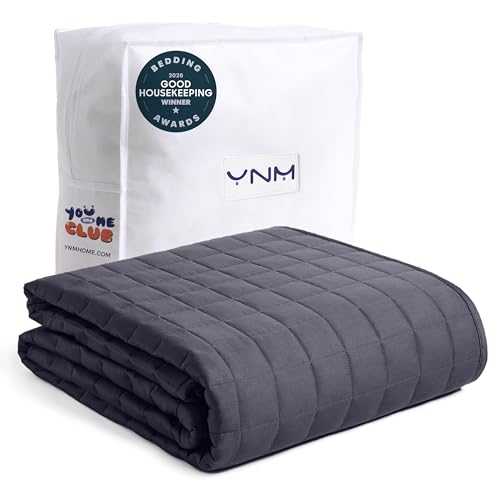
YnM Weighted Blanket (15 lbs)
See YnM Weighted Blanket on AmazonCognitive Behavioural Therapy for Insomnia (CBT-I)
If there’s a gold standard for treating insomnia in older adults, CBT-I is it. The Sleep Foundation notes that the American College of Physicians recommends CBT-I as a first-line approach for all adult patients with chronic insomnia, and multiple studies confirm its effectiveness in older populations specifically.
Meta-analyses of CBT-I in older adults show significant improvements in sleep efficiency, sleep onset latency, and wake time after sleep onset. Unlike medication, the benefits of CBT-I tend to persist long after treatment ends, making it particularly valuable for managing chronic sleep issues.
CBT-I works by addressing the thoughts, feelings, and behaviours that contribute to insomnia. Techniques include stimulus control, which strengthens the association between bed and sleep, sleep restriction therapy, and cognitive restructuring to challenge unhelpful beliefs about sleep.
Elements of CBT-I can meaningfully change how people approach sleep. The worry diary technique, used within CBT-I therapy, involves writing down everything on one’s mind at the end of the day and systematically working through each concern. Can I do anything about this? No? Then there’s no point worrying. Yes? I’ll address it tomorrow. This simple practice is intended to stop thoughts from cycling repeatedly through the mind during the night.
For seniors who struggle to access in-person CBT-I, digital versions delivered via apps or online programmes have shown significant effectiveness. This accessibility makes CBT-I a realistic option regardless of location or mobility limitations. If you’re dealing with persistent sleep difficulties, our article on insomnia in older adults explores treatment options in greater depth.

Environmental and Behavioural Sleep Aids
Sometimes the most effective sleep aids aren’t products at all but changes to environment and routine. These interventions carry virtually no risk and can significantly improve sleep quality for older adults.
Temperature control matters enormously. The bedroom should be cool, generally around 18 to 20 degrees Celsius.
Light control is equally important. Blackout curtains or blinds create the complete darkness that supports melatonin production and deep sleep. Any light pollution, from streetlights or electronics, can disrupt the sleep of older adults who are already experiencing lighter sleep stages.
Sound management through earplugs or white noise machines helps many seniors. For those who want to explore technology options, our guide to the best sleep trackers for seniors covers devices that can monitor and help optimise sleep.
Reading before bed is widely recommended as a high-impact wind-down habit. Around 30 minutes with a physical book, fiction preferably, can help clear mental activity accumulated during the day. Screen use before bed is generally discouraged. Avoiding phones for approximately an hour before sleep is a commonly recommended guideline.
Physical Activity and Daytime Light Exposure
What happens during the day profoundly affects sleep at night. Morning light exposure helps regulate circadian rhythms, and even 20 minutes of outdoor time early in the day can improve sleep quality.
Exercise timing matters for older adults. Physical activity during the day supports sleep, but evening exercise can be counterproductive.
For seniors with mobility limitations, any movement helps. Chair exercises, gentle stretching, or simply spending time in natural light contributes to better sleep. The supportive furniture choices can also make a difference, which is why our guide on the best adjustable beds for seniors addresses positioning that supports both comfort and sleep quality.

Practical Sleep Aid Recommendations by Need
A practical word from someone who’s helped older parents through this: the right pick depends less on the product and more on the actual sleep problem. If your bedroom is too quiet and every creak wakes you (or your partner snores), start with the Homedics white noise machine — no pills, no interactions, just turn the dial. If you fall asleep fine but wake at 3am with racing thoughts or restless legs, magnesium glycinate is the gentlest entry point. Save melatonin for when the issue is genuinely struggling to fall asleep at bedtime, start at 1mg (not 5 or 10), and always check with your GP first if you’re on blood thinners or blood pressure medication.
Different sleep problems require different solutions. Here’s a practical framework based on what research supports for older adults.
For difficulty falling asleep, magnesium taken an hour before bed shows the strongest evidence for older adults. Melatonin may help if used consistently rather than occasionally. A consistent wind-down routine that includes reading and avoiding screens creates the conditions for sleep onset.
For frequent nighttime awakenings, a weighted blanket may reduce movement and improve sleep continuity. Addressing environmental factors like light and sound is essential. For seniors who need to get up at night, our guide to the best nightlights for seniors covers options that provide safe navigation without disrupting sleep hormones.
For anxiety-related sleep problems, CBT-I techniques offer the most sustainable improvement. The worry diary and breathing exercises address the root cause rather than masking symptoms. Slow, controlled breathing triggers a physiological response that calms the entire body. It’s science, and anyone who thinks breathing exercises don’t work simply isn’t doing them properly.
For general sleep quality improvement, a supportive mattress makes an enormous difference. Mattress quality varies considerably across price points, and a higher-quality mattress is generally associated with better durability and support. The right mattress is such a personal thing, but for seniors especially, proper support prevents the aches that contribute to nighttime awakenings. Our best mattress for seniors guide covers specific options suited to older adults.
What to Avoid: Sleep Aids That Backfire
Some commonly used sleep strategies actually worsen sleep problems in older adults. Alcohol is the most problematic. A few drinks might help you fall asleep faster, but alcohol fragments sleep in the second half of the night and reduces overall sleep quality. Alcohol is not the answer to most things, and it’s definitely not the answer to sleep problems.
Antihistamines like diphenhydramine should be avoided despite their widespread marketing as sleep aids. The risks of cognitive impairment, falls, and prolonged sedation simply aren’t worth the modest sleep benefits, especially when safer alternatives exist.
Benzodiazepines and similar prescription sedatives carry significant risks for older adults, including dependence, cognitive effects, and increased fall risk. Research consistently shows that non-pharmacological approaches like CBT-I produce better long-term outcomes without these dangers.
The Mindset That Makes Everything Work Better
This acceptance-based approach works particularly well for older adults who may be dealing with multiple factors affecting sleep. Not every night will be perfect, and that’s acceptable. What matters is having a toolkit of strategies and the knowledge that sleep problems can be managed, even if they can’t always be eliminated.
For seniors beginning to address sleep issues, I’d offer this advice: Start with the environmental basics like temperature, darkness, and sound control. Add magnesium if you’re not already getting enough. Consider a weighted blanket if anxiety or restlessness contributes to your sleep problems. Explore CBT-I techniques, whether through a therapist, an app, or a structured programme. These approaches work, they’re safe, and they address the underlying causes of poor sleep rather than just masking symptoms.
Sleep is absolutely crucial to overall health and wellbeing. Improvement in sleep quality is possible, even for those who develop significant sleep problems later in life. The solutions that work best for older adults tend to be gentler, more natural, and focused on creating the conditions for the body to do what it already knows how to do: rest, restore, and prepare for another day.
Safety Note: Before starting any new supplement or making significant changes to sleep habits, older adults should consult with their healthcare provider, particularly if taking prescription medications or managing chronic health conditions. Individual responses to sleep aids vary, and professional guidance ensures the safest approach for your specific situation.
Read more articles on the Sleep for Seniors Hub.
About This Guide
LiveWorkSleep publishes guides to sleep products and sleep science. Recommendations are based on research into specifications, published evidence and product listings. This page is general information, not medical advice.
Ready to choose? Our top picks
Frequently Asked Questions
What are the best sleep aids for seniors?
This guide covers seniors and older adults under the same advice: lower-risk options are listed first, and common antihistamine sleep aids are flagged as a concern in the sections above. Review the medical guidance in this article and speak to a doctor or pharmacist before starting anything new, particularly alongside existing medication.
What is the safest sleep aid for elderly adults?
Magnesium supplements and melatonin are among the safest options, with research supporting their use in older populations. Non-pharmacological approaches like weighted blankets and CBT-I carry virtually no risk and show significant effectiveness. Always consult a healthcare provider before starting any new supplement.
Why are antihistamine sleep aids not recommended for seniors?
Antihistamines like diphenhydramine have anticholinergic properties that can cause cognitive impairment, dizziness, falls, and prolonged sedation in older adults. These medications also have extended half-lives in elderly patients, meaning effects last much longer than intended.
How much melatonin should older adults take?
Research suggests starting with lower doses of 0.5 to 3mg taken 30 to 60 minutes before bed. Higher doses are not necessarily more effective and may cause next-day grogginess. Consistent use appears more important than dose size for sleep benefits.
Check current prices on Amazon: Natrol Melatonin → | Doctor’s Best Magnesium → | YnM Weighted Blanket →
Are weighted blankets safe for elderly people?
Weighted blankets are generally safe for older adults who can independently remove the blanket. Those with limited mobility, frailty, respiratory problems, or severe dementia should use lighter blankets only after consulting a healthcare provider. The recommended weight is approximately 10% of body weight.
What is CBT-I and why is it recommended for older adults?
Cognitive Behavioural Therapy for Insomnia (CBT-I) is a structured approach that addresses the thoughts, feelings, and behaviours contributing to sleep problems. It’s recommended as first-line treatment because it produces lasting improvements without medication risks, and research confirms its effectiveness specifically in older populations.
Price bands: $ under $15, $$ $15 to $40, $$$ $40 to $100, $$$$ over $100. Check Amazon for the current price.