How Sleep Trackers Work: Technology, Accuracy, and Limitations Explained
Affiliate Disclosure: As an Amazon Associate I earn from qualifying purchases. Some links on this page are affiliate links. If you buy through them we earn a small commission at no extra cost to you. Our recommendations are based on research into specifications, published evidence and product listings. Learn more.
Quick Picks


You strap on a device before bed, wake up eight hours later, and your phone tells you exactly how much deep sleep you got, when you were restless, and whether your recovery was optimal. It sounds like science fiction, but this is the promise of modern sleep trackers. The question is: how do these wrist-worn devices actually know what’s happening inside your brain while you sleep?
What exactly are these devices measuring, and how reliable is that data?
Understanding how sleep trackers work requires looking beyond the marketing promises and examining the actual technology, algorithms, and scientific validation behind these devices. The reality is more nuanced than most companies would have you believe.
Shop on Amazon: Oura Ring 4 → | Fitbit Charge 6 →

The Foundation: Actigraphy Technology
At their core, most sleep trackers rely on a technology called actigraphy, which has been used in sleep research since the 1970s. Actigraphy measures movement using an accelerometer, the same sensor that rotates your smartphone screen when you turn it sideways.
The principle is straightforward: movement indicates wakefulness, and lack of movement suggests sleep. An accelerometer detects motion along three axes (up-down, left-right, forward-backward) and records these movements multiple times per second. When you’re lying still in bed, the accelerometer registers minimal activity. When you’re tossing and turning or getting up for a bathroom trip, it captures those movements.
Research-grade actigraphs process this movement data through specialized algorithms that convert raw acceleration readings into sleep-wake classifications. Consumer devices use similar approaches, though the specific algorithms are usually proprietary and unpublished.
The limitation here is obvious: actigraphy can’t directly measure sleep. It infers sleep from the absence of movement. If you’re lying perfectly still while reading or worrying about tomorrow’s presentation, many trackers will assume you’re asleep.
Beyond Movement: Heart Rate and Photoplethysmography
Modern sleep trackers have evolved beyond simple movement detection. Most wrist-worn devices now incorporate photoplethysmography (PPG) sensors to measure heart rate and heart rate variability (HRV). These are the green LED lights you see flashing on the underside of your smartwatch or fitness tracker.
PPG works by shining light through your skin and measuring how much is absorbed versus reflected. As your heart pumps blood through your arteries, the volume of blood changes, which affects how much light is reflected back to the sensor. By tracking these tiny variations, the device can determine your heart rate and the time intervals between individual heartbeats.
During sleep, your cardiovascular system behaves differently than when you’re awake. Your heart rate typically decreases, and heart rate variability generally increases as your parasympathetic nervous system takes over. Different sleep stages show distinct patterns: deep sleep is characterized by very stable, low heart rates, while REM sleep features more variable heart rates similar to waking levels.
Research published in NPJ Digital Medicine found that adding heart rate variability features increased sleep staging accuracy by 16% compared to using motion data alone. This explains why newer trackers that combine accelerometry with PPG tend to perform better than older motion-only devices.

Decoding Sleep Stages: The Algorithm Challenge
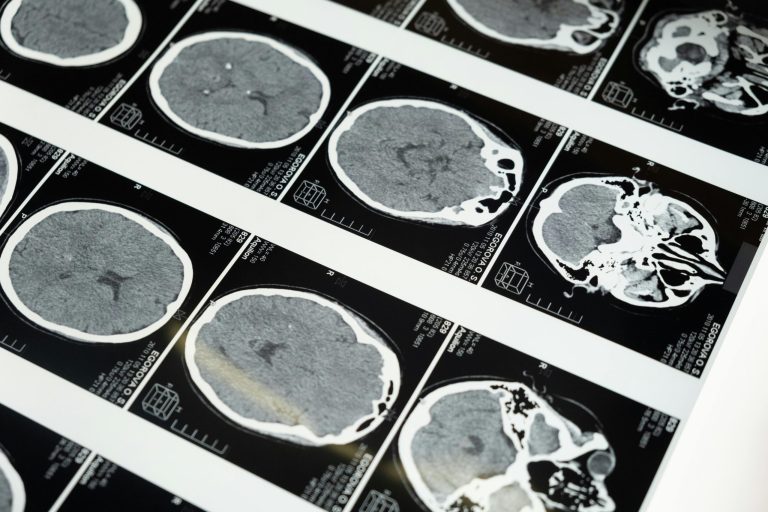
Combining movement and heart rate data sounds simple, but translating these signals into specific sleep stages (light, deep, REM) is extraordinarily complex. Sleep stages are technically defined by brain wave patterns measured through electroencephalography (EEG). Wrist-worn trackers don’t measure brain activity at all. They’re attempting to predict one variable (brain state) from completely different variables (movement and heart rate).
This is where proprietary algorithms come into play. Companies like Apple, Garmin, Fitbit, and Oura use machine learning models trained on thousands of nights of simultaneous polysomnography (PSG) and wearable data. These algorithms look for patterns: during N3 deep sleep, you typically have minimal movement, low heart rate, and high HRV. During REM sleep, heart rate becomes more variable while movement remains minimal. Light sleep (N1 and N2) falls somewhere in between.
The challenge is that these correlations aren’t perfect. Heart rate patterns during REM can look similar to light sleep in some people. Lying still while awake can mimic sleep physiologically. Individual variation is enormous. What constitutes “low” heart rate for an elite athlete differs dramatically from an average person, yet many algorithms use population-level standards.
Some advanced trackers incorporate additional data points. The Oura Ring, for example, uses body temperature and circadian rhythm information alongside movement and heart rate. This multi-modal approach can improve accuracy, though it doesn’t eliminate the fundamental limitation of inferring brain states from peripheral measurements.
What Research Says About Accuracy
The sleep tracking industry has grown faster than the scientific validation supporting it, but recent years have seen more rigorous testing. The findings paint a nuanced picture of where these devices excel and where they fall short.
For detecting sleep versus wake, consumer trackers perform reasonably well. A 2021 study in the journal Sleep evaluated seven consumer sleep trackers against polysomnography and found that most devices showed high sensitivity (over 93%) for detecting sleep. This means they’re good at correctly identifying when you’re asleep.
However, specificity (correctly identifying wake periods) was much lower, ranging from 18% to 54%. In practical terms, this means trackers tend to overestimate total sleep time because they misclassify quiet wakefulness as sleep. If you’ve ever noticed your tracker giving you credit for “sleep” during times you know you were awake, this explains why.
Sleep stage accuracy is more problematic. Research involving 11 consumer sleep trackers compared to polysomnography showed substantial performance variation, with the highest accuracy score (macro F1) at 69% and the lowest at 26%. Most devices struggled particularly with distinguishing between wake and light sleep stages.
Interestingly, trackers performed better at identifying deep and REM sleep, likely because these stages have more distinctive physiological markers. But even for these stages, mean absolute percentage errors exceeded 20% across all tested devices in one major study.
This variability can help explain mornings when the tracker’s assessment doesn’t match how you feel. The technology works on population averages, but your individual physiology might not fit those patterns perfectly.

What Sleep Trackers Can’t Tell You
Understanding the limitations of sleep tracking technology is just as important as knowing how it works. Polysomnography, the gold standard for sleep assessment, measures brain waves (EEG), eye movements (EOG), muscle activity (EMG), heart rhythm (ECG), breathing patterns, and blood oxygen levels. Consumer trackers measure none of these things directly.
This means wearable devices cannot diagnose sleep disorders like sleep apnea, periodic limb movement disorder, or most parasomnias. The American Academy of Sleep Medicine explicitly states that actigraphy should not be used to diagnose certain conditions that require direct measurement of breathing or limb movements.
Sleep trackers also can’t measure sleep quality in any meaningful clinical sense. The “sleep score” you see in your app is a proprietary calculation based on duration, estimated stages, and sometimes heart rate metrics. These scores have no standardized medical definition and vary wildly between devices and manufacturers.
Perhaps most importantly, trackers can create anxiety about sleep. There’s a phenomenon researchers call “orthosomnia” where people become so fixated on achieving perfect sleep metrics that it actually worsens their sleep.
You could feel genuinely well-rested, but if the app says your sleep was suboptimal, you might convince yourself you’re tired. This nocebo effect undermines one of the most valuable indicators of sleep quality: how you actually feel.
Device Types and What They Measure
Not all sleep trackers work the same way. Understanding the different types can help set realistic expectations about what each can and can’t do.
Wrist-worn trackers and smartwatches are the most common type. Devices like Fitbit, Apple Watch, Garmin, and WHOOP use accelerometers and PPG sensors to track movement and heart rate. They’re convenient and can be worn 24/7, but wrist placement means they’re more susceptible to movement artifacts that can affect heart rate accuracy.
Ring trackers like Oura measure similar data but from your finger. Because fingers have good blood flow and minimal movement during sleep, some research suggests finger-based PPG might be more accurate for heart rate measurement than wrist-based sensors. Rings also measure body temperature, which can provide additional insights into circadian rhythms and illness detection.
Under-mattress and bedside trackers use different technology entirely. Some employ ballistocardiography, which detects the micro-movements caused by your heartbeat through the mattress. Others use low-power radio waves or ultra-wideband radar to sense breathing and movement without any physical contact. These “nearable” devices eliminate the discomfort of wearing something to bed but may be less accurate for individuals sharing a bed.
EEG headbands like Muse or Dreem actually measure brain activity, making them the closest consumer approximation to polysomnography. However, they’re bulkier, less comfortable for all-night wear, and significantly more expensive than wrist trackers. Most people find them impractical for regular use.
Making Sleep Trackers Work for You
Despite their limitations, sleep trackers can provide value when used appropriately. The key is focusing on what they do well: tracking trends over time rather than obsessing over nightly precision.
Total sleep time is where consumer trackers show their strongest performance. While any single night might be off by 20-30 minutes, looking at your average sleep duration over a week or month can reveal useful patterns. Are you consistently getting six hours when you need seven? Are weekends significantly different from weekdays? This type of trend data doesn’t require perfect accuracy to be actionable.
Similarly, consistency in bedtime and wake time matters more than the exact minute-by-minute breakdown of sleep stages. When choosing a tracker, look for devices that excel at detecting sleep onset and offset, even if their stage classification isn’t perfect.
A tracker can be used to look for connections between behaviors and sleep, and these connections don’t require perfect measurement to be informative.
The mistake is treating the specific numbers as gospel truth. Your tracker might say you got 47 minutes of deep sleep last night, but that’s an estimate with significant margin of error. However, if you consistently see lower deep sleep estimates on nights when you drink alcohol, that pattern is probably meaningful even if the exact numbers aren’t perfectly accurate.
The Psychology of Sleep Tracking
One aspect of sleep tracking that manufacturers rarely discuss is the psychological impact of constant monitoring.
This creates a problematic feedback loop. You feel anxious about poor sleep scores, that anxiety makes it harder to sleep well, which leads to worse scores, increasing anxiety further. For people already dealing with anxiety-driven sleep issues, adding another source of sleep-related worry can be counterproductive.
The solution isn’t necessarily to abandon sleep tracking entirely, but rather to adjust your relationship with the data. Focus on weekly averages instead of individual nights, and trust your subjective experience over what the app tells you. If you feel well-rested, that matters more than whether your tracker thinks you got enough deep sleep.
Some trackers are better designed than others in this regard. Devices that emphasize trends and patterns over daily scores, or that provide educational insights rather than just numbers, tend to be less anxiety-provoking. Features like “readiness scores” that incorporate multiple factors beyond just sleep can also provide more balanced feedback than focusing solely on sleep metrics.
Should You Use a Sleep Tracker?
After understanding how these devices actually work, the question becomes whether they’re worth using at all. The answer depends on your goals and personality.
Sleep trackers can be valuable for identifying broad patterns in your sleep schedule. If you’re genuinely unaware of whether you’re getting enough sleep, a tracker can provide that baseline information. They can help you see the impact of lifestyle changes like new exercise routines, caffeine adjustments, or different bedtimes. For people who thrive on data and find it motivating, tracking can support positive behavior changes.
However, if you’re already anxious about sleep, adding constant monitoring might make things worse rather than better. If you find yourself obsessing over numbers, lying awake worrying about tonight’s sleep score, or feeling anxious when you see poor metrics, the tracker is doing more harm than good. No device is worth sacrificing your mental peace over.
For those dealing with genuine sleep disorders, trackers can complement (but not replace) proper medical evaluation. They might provide useful data to share with a sleep specialist, but they can’t diagnose apnea, restless leg syndrome, or other clinical sleep problems. Understanding whether sleep tracking actually improves outcomes requires honest self-assessment of whether the data leads to meaningful changes.
Sleep trackers are tools, not truth-tellers. They can provide useful information about trends and patterns, but they’re measuring proxies of sleep rather than sleep itself. The technology has legitimate scientific basis but also significant limitations. Whether a tracker helps or hinders depends entirely on how you use it.

The Future of Sleep Tracking Technology
Sleep tracking technology continues to evolve. Newer devices are incorporating additional sensors like blood oxygen monitoring, respiratory rate detection, and advanced temperature tracking. Some companies are exploring acoustic monitoring that analyzes breathing sounds or even measures heart activity through subtle vibrations in your mattress.
Machine learning algorithms are becoming more sophisticated, with some manufacturers claiming they can now personalize their models to individual users over time rather than relying solely on population-level data. If these claims prove accurate, it could significantly improve accuracy.
However, fundamental physics still limits what’s possible from a wrist-worn device. Until consumer trackers can directly measure brain activity in a comfortable, practical form factor, they’ll continue to be making educated guesses about sleep stages rather than definitive measurements. The gap between marketing promises and technical reality remains substantial.
What matters most isn’t having the latest sensor technology or the most advanced algorithm. It’s whether the information you’re getting actually helps you sleep better. For some people, that answer is yes. For others, the technology creates more problems than it solves. Understanding how these devices actually work helps you make an informed choice about which category you fall into.
Read more articles on the Sleep Trackers Hub.
About This Guide
LiveWorkSleep publishes guides to sleep products and sleep science. Recommendations are based on research into specifications, published evidence and product listings. This page is general information, not medical advice.
Transparency Box
This article may contain affiliate links. If you purchase through these links, we may earn a commission at no additional cost to you. We only recommend products we have thoroughly researched. Our editorial content is not influenced by affiliate relationships. Read our full affiliate disclosure policy.
Medical Disclaimer
The information provided in this article is for educational purposes only and is not intended as medical advice. Sleep trackers cannot diagnose sleep disorders. If you suspect you have a sleep disorder such as sleep apnea, insomnia, or restless leg syndrome, consult with a qualified healthcare provider or sleep specialist. Always seek professional medical advice before making decisions about your health based on sleep tracker data.
Frequently Asked Questions
How accurate are sleep trackers compared to professional sleep studies?
Consumer sleep trackers are reasonably accurate for detecting total sleep time and sleep versus wake periods, typically achieving over 90% sensitivity. However, they’re much less accurate for determining specific sleep stages, with error rates often exceeding 20% compared to polysomnography. They work best for tracking trends over time rather than providing precise nightly measurements.
Can a sleep tracker diagnose sleep apnea or other sleep disorders?
No. Consumer sleep trackers cannot diagnose sleep disorders. While they may detect patterns suggestive of problems (like frequent nighttime awakenings), only a healthcare provider using proper diagnostic tools like polysomnography can diagnose conditions such as sleep apnea, periodic limb movement disorder, or other clinical sleep issues.
Do I need to wear my sleep tracker every night?
Not necessarily. Sleep trackers are most useful for identifying patterns over time, which requires consistent data collection. However, wearing them every night isn’t essential for everyone. Some people find value in periodic tracking (a few nights per week) to spot trends without the burden or anxiety of constant monitoring. Choose an approach that provides useful information without creating stress.
Why does my sleep tracker sometimes say I’m asleep when I know I was awake?
Sleep trackers infer sleep from the absence of movement and low heart rate. If you’re lying still in bed while awake, reading, or watching television, the device may incorrectly classify this as sleep. This is a known limitation of actigraphy-based technology, which is why trackers tend to overestimate total sleep time.
Check current prices on Amazon: Oura Ring 4 → | Fitbit Charge 6 →
Are expensive sleep trackers more accurate than budget options?
Not always. Research comparing various sleep trackers shows significant variation in accuracy, but price doesn’t consistently correlate with better performance. Some budget devices perform comparably to premium options for basic sleep-wake detection. The main differences often lie in additional features, build quality, battery life, and ecosystem integration rather than fundamental sleep tracking accuracy.
Should I trust my sleep tracker data if it conflicts with how I feel?
Trust your subjective experience over tracker data when they conflict. If you feel well-rested despite poor sleep scores, or exhausted despite good numbers, your physical experience is the more reliable indicator. Sleep trackers measure proxies of sleep quality, not sleep quality itself. They’re tools for identifying patterns, not definitive assessments of how well you slept.