Smart Ring Accuracy for Sleep Tracking: What the Research Really Shows
Affiliate Disclosure: As an Amazon Associate I earn from qualifying purchases. Some links on this page are affiliate links. If you buy through them we earn a small commission at no extra cost to you. Our recommendations are based on research into specifications, published evidence and product listings. Learn more.
Quick Picks


Smart rings promise sleep tracking in a compact, comfortable form factor. But how accurate are they really? After spending years testing sleep technology and dealing with my own anxiety-driven insomnia, I’ve learned that marketing claims rarely tell the whole story. The difference between a ring that says you slept 7.5 hours versus one that says 6 hours can create unnecessary stress about something you can’t change after the fact.
This article examines what peer-reviewed research actually reveals about smart ring accuracy for sleep tracking. I’ll explain how these devices measure sleep, what they get right, where they struggle, and whether the data they provide is useful for improving sleep quality.
How Smart Rings Measure Sleep
Smart rings use photoplethysmography (PPG) sensors to track physiological changes that correlate with sleep states. The ring shines LED lights into your finger’s blood vessels and measures how much light gets absorbed or reflected back. During sleep, your heart rate, heart rate variability, and skin temperature all shift in predictable patterns that algorithms can interpret as different sleep stages.
Shop on Amazon: Oura Ring 4 → | RingConn Gen 2 Air →
The Oura Ring Gen4, for example, uses an 18-path PPG system that samples at 250 Hz during sleep periods. This creates thousands of data points per night that feed into proprietary algorithms trained on polysomnography data. The ring also includes a 3-axis accelerometer to detect movement and temperature sensors accurate to 0.07°C to track nighttime body temperature fluctuations.
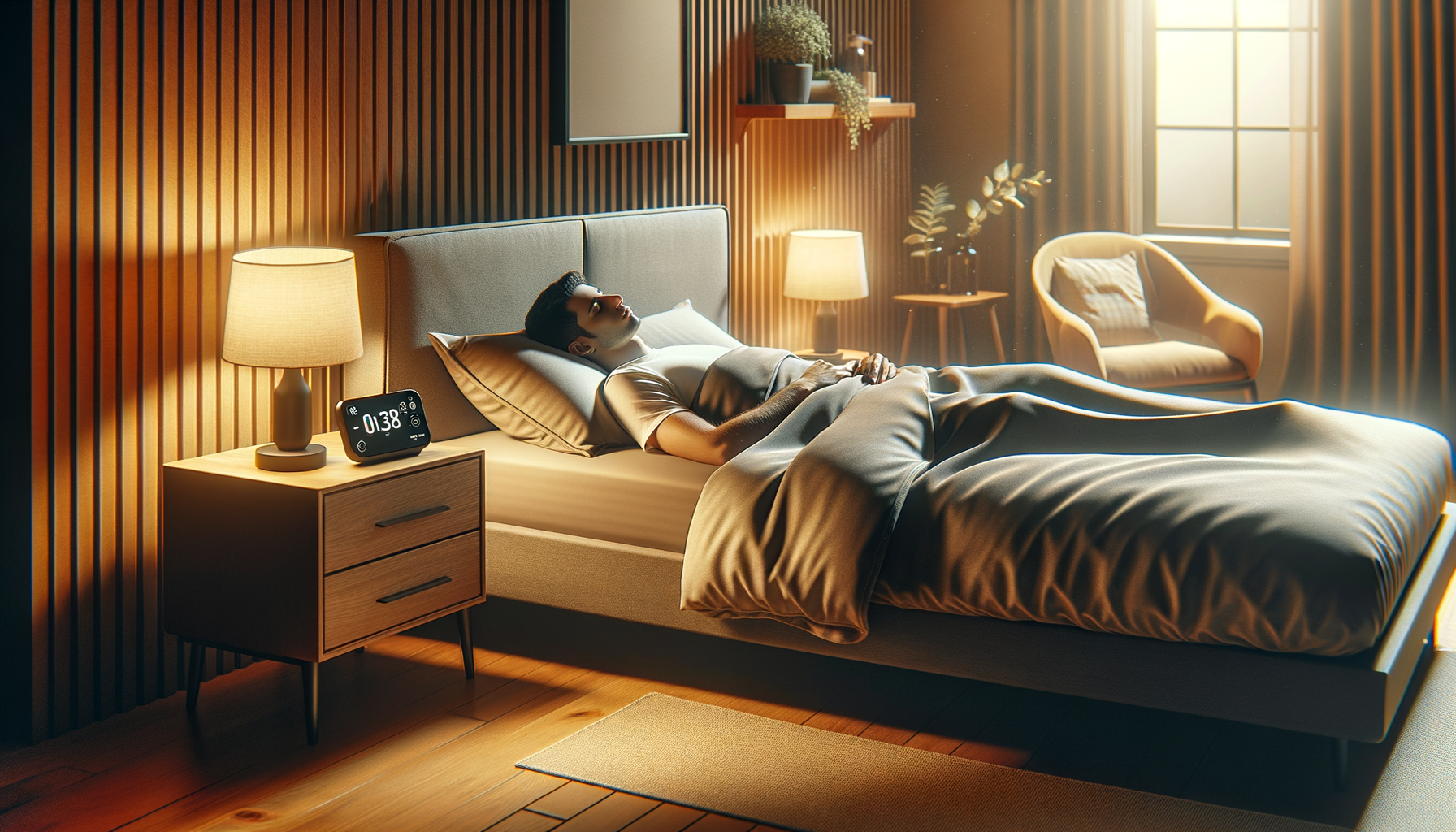
When I first started tracking my sleep with a WHOOP band years ago, I noticed something unsettling. Some mornings I’d wake up feeling decent, then check the app and see my sleep was rated poorly. Suddenly I’d convince myself I was exhausted. The measurement itself was creating anxiety about sleep, which is exactly what I was trying to manage. This is why understanding what these devices actually measure versus what they claim to measure matters so much.
The Gold Standard: Polysomnography
To evaluate smart ring accuracy, researchers compare them against polysomnography (PSG), the clinical gold standard for sleep measurement. PSG involves sleeping in a lab connected to electrodes monitoring brain waves, eye movements, muscle activity, heart rhythm, and breathing patterns. Trained technicians score each 30-second epoch of sleep into wake, light sleep (N1 and N2), deep sleep (N3), or REM sleep based on standardized criteria.
The challenge is that smart rings measure different things than PSG. PSG directly observes brain activity to determine sleep stages. Rings infer sleep stages from heart rate patterns and movement. It’s like trying to determine what’s happening inside a house by watching the lights turn on and off versus actually looking through the windows.
Sleep vs. Wake Detection: The Strong Suit
Smart rings perform best at the most basic task: determining whether you’re asleep or awake. A validation study conducted at Brigham and Women’s Hospital analyzed data from 35 healthy adults wearing the Oura Ring Gen3, Apple Watch Series 8, and Fitbit Sense 2 during overnight PSG recordings. The researchers examined 421,045 individual 30-second epochs across 96 nights of data.
The Oura Ring achieved 95.1% sensitivity for detecting sleep, meaning it correctly identified sleep 95 out of 100 times when you were actually asleep. Specificity for detecting wake was lower at 73.4%, indicating the ring sometimes misclassified wake periods as sleep. This pattern is common across consumer sleep trackers because they’re optimized to avoid false alarms about poor sleep, which would undermine user confidence in the device.
For total sleep time, the Oura Ring showed an intraclass correlation coefficient (ICC) of 0.85 compared to medical-grade actigraphy in a 7-day home-based study. ICC values above 0.75 are considered excellent agreement. The mean difference was just 3.4 minutes, well within acceptable clinical thresholds.

Sleep Stage Accuracy: Where Rings Struggle
Sleep stage classification is significantly more challenging. The Brigham study found that Oura Ring Gen3 achieved 76.3% overall accuracy in four-stage classification (wake, light, deep, REM) compared to PSG. This sounds reasonable until you understand what it means in practice.
Cohen’s kappa, a statistical measure that accounts for agreement by chance, was 0.65 for the Oura Ring. Values between 0.61-0.80 indicate substantial agreement, but clinical applications typically require kappa above 0.80. The ring performed best at identifying light sleep (79.5% accuracy) and struggled most with deep sleep (53.3% accuracy). REM sleep accuracy fell in the middle at 72.1%.
My therapist once told me something that applies here: the specifics of sleep stages matter less than total sleep duration and consistency. I spent months obsessing over whether I got enough deep sleep, only to learn that even the best consumer devices show poor concordance with PSG for individual sleep stages. The systematic review analyzing 107 studies found ICC values for deep sleep and REM sleep ranged from just 0.13 to 0.37, indicating poor to fair agreement.
Heart Rate and HRV: Surprisingly Accurate
While sleep stage classification remains imperfect, smart rings excel at measuring heart rate and heart rate variability during sleep. Oura’s internal validation study found their Gen4 ring achieved r² = 0.996 correlation with ECG for heart rate and r² = 0.980 for HRV measurements.
These metrics matter because they reflect your autonomic nervous system’s activity during sleep. High HRV generally indicates good recovery, while declining HRV can signal stress, illness, or overtraining. For athletes and anyone tracking recovery, these measurements provide more actionable data than sleep stage percentages.
I track this mostly for trends, not absolutes. When my HRV drops for several consecutive nights, it usually coincides with feeling run down or fighting off illness. But I’ve learned not to panic over a single night of low HRV any more than I panic over a single night of restless sleep.
Temperature Tracking: An Emerging Strength
Skin temperature tracking represents a newer capability where smart rings have an advantage over wrist-worn devices. Your finger temperature correlates closely with core body temperature fluctuations, and these patterns provide insights into circadian rhythm, illness, and menstrual cycle phases.
The Oura Ring tracks temperature deviations as small as 0.07°C from your personal baseline. During sleep, body temperature naturally drops by about 1-2°C as part of the sleep initiation process. Tracking these patterns can reveal when you’re fighting an infection days before you feel symptoms, or help identify optimal sleep timing based on your temperature nadir.
Temperature tracking also sidesteps many of the algorithmic challenges that plague sleep stage classification. It’s a direct physiological measurement rather than an inference based on heart rate patterns, making the data more reliable for spotting meaningful changes.
Comparing Smart Rings to Other Sleep Trackers
How do smart rings stack up against smartwatches and other wearables? The Brigham study’s head-to-head comparison revealed that the Oura Ring Gen3 outperformed both the Apple Watch Series 8 and Fitbit Sense 2 in overall sleep stage accuracy. The Oura achieved 76.3% accuracy compared to 72.1% for Apple Watch and 69.8% for Fitbit.
For detecting wake periods, differences were more modest. Oura’s 73.4% specificity edged out Apple Watch (71.2%) and Fitbit (68.9%), but all three devices showed similar limitations in distinguishing quiet wakefulness from light sleep. If you lie still in bed for 20 minutes trying to fall asleep, all three devices will likely classify at least some of that time as sleep.
The practical advantage of rings comes from comfort and compliance. A study tracking long-term adherence found that 80% of smart ring users were still wearing their devices at 3 months, dropping to 43% at 12 months. Smartwatch adherence typically declines faster because many people find them uncomfortable for sleep or forget to charge them daily. Our guide on smart rings vs smartwatches for sleep tracking explores these trade-offs in depth.
What the Research Doesn’t Tell You
Most validation studies share several important limitations that affect how you should interpret their findings. First, 89% of published studies use proprietary algorithms that manufacturers can update at any time. The accuracy metrics published in 2023 may not reflect the performance of the device you buy in 2025 after multiple software updates.
Second, study populations skew heavily toward young, healthy adults. Only 35% of studies reported participants’ race or ethnicity, despite known variations in PPG accuracy across different skin tones. Darker skin absorbs more light from PPG sensors, potentially affecting measurement accuracy. Most manufacturers don’t publish validation data stratified by demographic factors.
Third, lab validation doesn’t capture real-world variability. Sleeping in a lab with PSG electrodes attached differs substantially from sleeping in your own bed. Environmental factors like room temperature, mattress type, sleep position changes, and alcohol consumption all affect sleep patterns in ways that validation studies don’t assess.
Finally, even medical-grade actigraphy shows significant discrepancies with PSG for sleep staging. The “ground truth” itself has measurement error, which means 80% agreement between a ring and PSG might actually represent the practical ceiling for wearable sleep tracking.
Does Accuracy Even Matter?
Here’s the uncomfortable question: does knowing your exact sleep stage distribution improve your sleep? After a decade managing insomnia, my answer is no. What helped was acceptance, behavioral changes, and addressing the underlying anxiety, not optimizing my REM percentage.
Smart rings provide value through longitudinal trends, not nightly precision. If your deep sleep percentage is consistently declining over weeks, that matters. If Tuesday shows 18% deep sleep instead of 22%, that’s noise. The research shows smart rings are accurate enough to detect meaningful patterns over time, which is what actually helps you improve sleep habits.
I still use a smart ring, but I check the data less obsessively than I used to. Morning HRV gives me a quick recovery snapshot. Sleep duration trends help me maintain consistency. But I’ve stopped agonizing over whether I got 87 minutes or 102 minutes of deep sleep, because those numbers change based on which algorithm version I’m using anyway.
Choosing an Accurate Smart Ring
If you’re considering a smart ring based on accuracy, the research points toward a few key factors. First, look for devices with published validation studies comparing their technology to PSG, not just actigraphy or other consumer devices. The Oura Ring has the most extensive validation data, with multiple independent studies confirming its measurements.
Second, prioritize rings with high sampling rates. The Oura Ring Gen4’s 250 Hz sampling during sleep periods provides more granular data than devices sampling at 50 Hz or 100 Hz. More data points allow algorithms to detect subtle transitions between sleep stages more reliably.
Third, consider which metrics matter most for your goals. If you’re primarily interested in recovery tracking for athletic performance, heart rate and HRV accuracy matter more than sleep stage classification. If you’re tracking menstrual cycles or fighting chronic illness, temperature precision becomes the priority. Our comprehensive guide on how to choose a smart ring for sleep walks through these considerations in detail.
Finally, check whether the ring requires a subscription for full functionality. Some manufacturers lock advanced sleep metrics behind monthly fees, which affects the long-term value proposition. We’ve compiled options in our review of the best smart rings without subscription requirements.
Practical Accuracy vs. Clinical Accuracy
The distinction between practical accuracy and clinical accuracy matters when evaluating smart rings. Clinical accuracy requires precise measurements suitable for diagnosing sleep disorders or making medical decisions. That’s the domain of PSG, which costs thousands of dollars per night and requires trained technicians to interpret.
Practical accuracy means measurements are consistent and reliable enough to guide lifestyle decisions and track trends. Smart rings deliver practical accuracy for most users. They won’t diagnose sleep apnea or correctly classify every 30-second epoch of sleep, but they’ll reliably tell you whether you’re sleeping 6 hours versus 8 hours and whether your sleep patterns are improving or declining over time.
This distinction helped me reframe my relationship with sleep tracking technology. I stopped expecting my ring to tell me exactly what happened during the night and started using it to identify patterns over weeks and months. That shift in perspective reduced anxiety and made the data actually useful.
When Smart Ring Data Becomes Counterproductive
Sleep tracking can backfire when you start managing the score instead of managing your sleep. Orthosomnia, the term for unhealthy obsession with perfect sleep metrics, creates the exact anxiety that disrupts sleep in the first place.
I went through this phase. I’d wake up feeling decent, then immediately check my sleep score. If it was low, I’d spend the morning wondering why I felt okay despite “bad” sleep, which triggered anxiety about whether I was actually recovering properly. The device designed to help me sleep better was making my sleep anxiety worse.
The solution was setting boundaries with the data. I stopped checking my sleep score first thing in the morning. Instead, I assess how I actually feel, then maybe glance at trends once or twice a week. When a measurement conflicts with my subjective experience, I trust the experience. Getting upset about your sleep score is like getting upset that it’s raining outside. There’s just no point.
The Future of Smart Ring Accuracy
Emerging technologies promise improvements in sleep tracking accuracy. Multi-wavelength PPG sensors that use infrared, red, and green LEDs can better compensate for skin tone variations. Machine learning models trained on larger, more diverse datasets should improve sleep stage classification beyond the current 70-80% accuracy ceiling.
Some manufacturers are exploring additional sensors like galvanic skin response to measure stress levels, or SpO2 sensors to detect breathing disruptions that might indicate sleep apnea. The challenge is balancing sensor complexity with battery life and maintaining the compact form factor that makes rings comfortable for sleep.
Perhaps more importantly, manufacturers are developing better ways to present data that focuses on actionable insights rather than overwhelming users with metrics. Instead of showing you 23% deep sleep versus 26% deep sleep, future apps might simply flag concerning trends and suggest evidence-based interventions. That shift from measurement to meaningful guidance would represent the real advancement in sleep tracking technology.
Final Thoughts
Smart ring accuracy for sleep tracking has reached the point of practical utility. The devices reliably measure total sleep time, detect sleep and wake periods with reasonable precision, and track heart rate metrics with excellent accuracy. Sleep stage classification remains imperfect, but it’s accurate enough to identify trends over time.
The bigger question is whether you need that level of detail in the first place. For most people, the basics matter most: sleeping 7-9 hours consistently, maintaining regular sleep and wake times, and creating conditions that support quality sleep. Smart rings can help you optimize those fundamentals, but they can’t fix underlying sleep disorders or replace the behavioral work required to manage anxiety-driven insomnia.
If you decide a smart ring makes sense for your sleep tracking needs, choose based on validated accuracy metrics rather than marketing claims. Look for devices with published PSG validation studies, prioritize metrics that align with your specific goals, and maintain realistic expectations about what the data can and cannot tell you. For options to consider, explore our review of the best smart rings for sleep tracking in 2025.
Most importantly, remember that sleep tracking is a tool, not a solution. The measurement itself doesn’t improve sleep quality. What matters is what you do with the information and whether it helps you build healthier sleep habits without creating unnecessary anxiety about metrics you can’t control.
Read more articles on the Smart Rings Hub.
Check current prices on Amazon: RingConn Gen 2 Air → | Oura Ring 4 →
Transparency Disclaimer: This article contains affiliate links to sleep products. If you purchase through these links, liveworksleep may earn a commission at no additional cost to you. These commissions help support our independent testing and honest reviews. We only recommend products that align with our experience-based evaluation standards.
About the Author
Scott Hilliard is the founder of liveworksleep.com and has spent over a decade managing anxiety-driven insomnia through evidence-based techniques and product testing. His approach combines personal experience with sleep science research to help others improve their sleep quality.
Medical Disclaimer
This article is for informational purposes only and does not constitute medical advice. Sleep tracking devices cannot diagnose sleep disorders. If you experience persistent sleep problems, excessive daytime sleepiness, loud snoring, or breathing interruptions during sleep, consult a qualified healthcare provider or sleep specialist for proper evaluation and treatment.