Best Bed Cooling Systems 2026
Affiliate Disclosure: We may earn a commission on purchases made through links in this article at no extra cost to you. Our recommendations are based on research into specifications, published evidence and product listings. Learn more.
Quick Picks
Product Comparison
Best Overall  AquaPad Breeze Water Cooling Mattress Pad Check Price on Amazon | Budget Pick 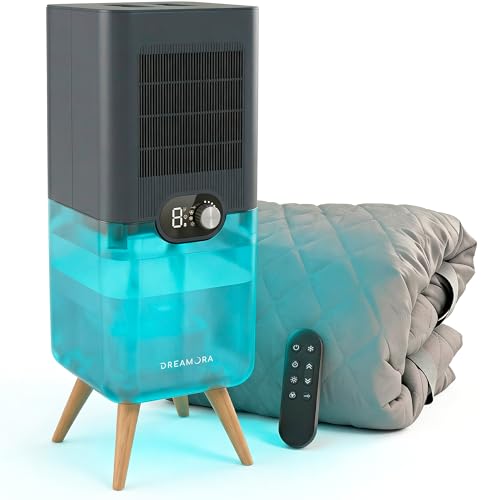 DREAMORA Luna – Water-Cooled Bed Cooling Check Price on Amazon | Twin Size Pick  Adamson B10 Bed Cooling System – Check Price on Amazon |
|---|
Temperature regulation during sleep is one of those variables you don’t think about until it becomes a problem. That’s where bed cooling systems come in.
The science here is straightforward: your core body temperature needs to drop by about 1°C for sleep initiation, and maintaining optimal skin temperature throughout the night directly impacts sleep quality. A 2024 study in the journal Bioengineering found that sleeping at cooler temperatures during the first half of the night was linked with about 14 more minutes of deep sleep in men and 9 more minutes of REM sleep in women. That is one small study, so treat the figures as indicative. The question is whether the technology actually delivers on these promises in real-world conditions.

The Quick Picks Explained
AquaPad Breeze (best overall). A water-cooled mattress topper with a remote control. The Amazon listing mentions EvapoChill and SuperBlue technology and a 5 year coverage plan, and the double size listing covers queen, king and California king beds. It sits in the mid price range ($$).
DREAMORA Luna (budget pick). A water-cooled pad that circulates chilled fluid through silicone tubes. The listing describes a flip-reversible pad and a comfortable, not cold feel. It comes in under $200. Our full DREAMORA Luna review covers it in detail.
Adamson B10 (single sleeper pick). The listing is for a twin size, 100% cotton cooling pad with four speeds, described as cooling 7 to 12°F. It also comes in under $200, so it suits one sleeper on a tighter budget rather than a couple.
The DREAMORA Luna and the B10 are sold by third-party sellers on Amazon, so check the seller and the size before you order. Eight Sleep is not one of the Amazon picks above because it is sold through its own site, so there is no Amazon button for it here. See our Eight Sleep Pod 4 review for how it compares.
Water or air? Water systems circulate temperature-controlled water through a pad and can both cool and heat, with a wide temperature range. Air systems like BedJet blow air into your bedding, which helps with sweat but depends on room temperature. Both are covered below.
How Bed Cooling Systems Actually Work
Bed cooling systems fall into three main categories, each with distinct mechanisms and limitations. Water-based systems like the Eight Sleep Pod and ChiliSleep pump temperature-controlled water through a mattress pad, achieving precise temperature control from 13°C to 43°C. Air-based systems like BedJet use convective cooling by circulating room-temperature air through your bedding. Phase-change materials absorb and release heat passively without active cooling.
Shop on Amazon: Chilipad Cube → | BedJet 3 →
The fundamental difference is active versus passive cooling. Active systems continuously regulate temperature throughout the night, while passive systems eventually saturate and warm to body temperature. Studies on thermal environment effects during sleep show that maintaining skin temperature within 33.5-35.5°C is crucial, as deviations outside this range increase sleep disturbances and decrease deep sleep. Passive systems struggle to maintain this narrow range beyond the first sleep cycle.
A weighted blanket combined with temperature management can be a counterintuitive but useful pairing. The pressure sensation many people like from weighted blankets creates additional thermal load. An active cooling system lets you keep the sensory benefits while offsetting the heat retention.
Eight Sleep Pod: The Technology Leader
The Eight Sleep Pod represents the current high end of bed cooling technology. It combines temperature regulation with sleep tracking, using water circulation through a thin mattress cover to achieve precise temperature control on each side of the bed. The system can cool down to 55°F and heat up to 110°F, with three programmable temperature zones throughout the night.

Research on the Eight Sleep Pod, published in PMC, reported measurable sleep improvements: men sleeping at cooler temperatures during the first half of the night averaged 14 more minutes of deep sleep, while women gained 9 minutes of REM sleep. Heart rate decreased by 2% and heart rate variability improved by 7% with temperature regulation active. The measures came from sleep monitoring equipment rather than self-report, but this is one study of one product, so the results may not carry over to other systems.
The dual-zone temperature control solves a real problem for couples. A cool sleep environment under 20°C doesn’t suit everyone. Independent temperature settings on each side mean no compromise necessary. The hub sits beside the bed, and water circulation may be audible if the room is completely silent.
Cost is the primary barrier. At a premium price for the complete system, this is a significant investment. A monthly subscription for advanced features adds ongoing expense. You’re paying for precision engineering, but you need to value sleep optimization enough to justify the outlay.
ChiliSleep: Water Cooling Without the Premium Price
ChiliSleep offers similar water-based cooling at a lower price point. The Chilipad Cube system runs from 60°F to 115°F, using water that flows through silicone micro-tubes in a mattress topper. The main distinction from Eight Sleep is less integrated sleep tracking and a simpler control interface, a remote control for changing the bed temperature.
The Chilipad Cube circulates chilled or heated water through the topper while you sleep. This addresses the fundamental physics problem that passive cooling materials can’t solve: they warm to body temperature and stop providing cooling benefit. Active water circulation maintains the temperature differential needed for continuous heat dissipation throughout the night.
ChiliSleep’s transparent approach to the limitations of gel and copper mattress toppers is worth noting. Their marketing correctly points out that passive materials reach thermal equilibrium quickly. This isn’t speculation; it’s basic thermodynamics. A material that absorbs heat will eventually saturate unless that heat is actively removed from the system.
The trade-off is complexity. Water-based systems require maintenance, occasional refilling, and create a potential failure point with the pump mechanism. The pad itself is thicker than Eight Sleep’s cover, which some people notice as a slight change in mattress feel. The thickness change matters more if you’ve carefully selected your mattress for specific comfort characteristics.

BedJet: Air-Based Alternative
BedJet takes a completely different approach using forced air instead of water. The system blows room-temperature or heated air directly into your bedding through a nozzle that connects to a special Cloud Sheet. Temperature range is 66°F to 104°F, controlled by biorhythm programming that adjusts temperature hourly throughout the night.
The physics of convective cooling work differently than hydronic systems. Air movement accelerates evaporative cooling from perspiration, which can be highly effective for managing night sweats. Research shows this rapid moisture removal helps maintain thermal comfort, though the cooling effect depends on room temperature staying below 79°F.
BedJet’s main limitation is that it’s not air conditioning. In extremely hot environments, circulating warm air provides minimal cooling benefit. The system excels in moderate climates where air circulation alone provides sufficient temperature reduction. For hot sleepers in temperate zones, this represents the most cost-effective active cooling solution.
Noise is the primary concern with any air-based system. BedJet claims “silky quiet” operation, and while it’s not loud, you can definitely hear the airflow. If you sleep with earplugs, this is unlikely to be an issue. If you sleep without earplugs in a silent room, the air circulation sound might be noticeable.
The dual-zone system for couples requires purchasing two BedJet units and the appropriate Cloud Sheet. This brings the cost closer to hydronic systems while maintaining the simplicity advantage of no water circulation. Setup is genuinely simple compared to water-based alternatives; you’re essentially adding a fan that blows under your covers.
Quick recap: our top picks
The Science of Sleep Temperature
Understanding why temperature matters requires looking at the circadian rhythm’s role in sleep regulation. Your core body temperature follows a predictable 24-hour cycle, dropping in the evening to facilitate sleep onset and rising in the morning to promote waking. This temperature drop signals the brain that it’s time to sleep through interactions with the suprachiasmatic nucleus.
Research on temperature dependence shows that optimal skin microclimate temperature is 31-35°C. When skin temperature deviates from this range, sleep quality measurably decreases. The body struggles to maintain the core temperature drop necessary for sleep if the sleep environment is too warm. This explains why hot sleepers experience more frequent awakenings and reduced deep sleep.
The temperature needs change throughout the night. During REM sleep, your body’s thermoregulation is partially suspended, making you more vulnerable to environmental temperature. Deep sleep requires the coolest temperatures. A 2023 study on nighttime ambient temperature found that sleep efficiency drops 5-10% when bedroom temperature exceeds 25°C, with the most efficient sleep occurring between 20-25°C.
Heat exposure specifically increases wakefulness and decreases both slow-wave sleep and REM sleep according to research on thermal environment effects. This isn’t just comfort; temperature directly affects sleep architecture. The practical implication is that maintaining optimal temperature throughout the night matters for sleep quality, not just sleep duration.

Who Actually Needs Active Cooling
Not everyone requires active temperature regulation. If you sleep comfortably through the night without temperature-related waking, simpler interventions suffice. The people who benefit most from bed cooling systems fall into specific categories where passive solutions consistently fail.
Hot sleepers who wake multiple times per night drenched in sweat represent the clearest use case. If you’re regularly changing sheets or pillowcases due to perspiration, passive cooling isn’t addressing the problem. Active temperature regulation provides continuous heat removal that passive materials physically cannot maintain.
Couples with incompatible temperature preferences face a problem no amount of bedroom adjustment solves. One person needs 18°C while the other is comfortable at 22°C. Dual-zone active cooling eliminates the compromise, which can solve a real issue when one partner prefers cooler temperatures and the other needs warmer sleep conditions.
Menopausal women experiencing hot flashes and night sweats often find that active cooling provides faster temperature reduction than passive methods. The ability to pre-cool the bed before predictable hot flash timing can prevent waking entirely. One study in the journal Menopause reported fewer vasomotor symptoms in women using a cooling mattress pad system over eight weeks. The evidence is limited, so speak to a healthcare provider about persistent symptoms.
Athletes and people focused on recovery optimization might benefit from the research showing improved deep sleep with temperature control. The 14-minute increase in deep sleep reported in the Bioengineering study (in men) is a modest gain in recovery time. Whether this justifies the cost depends on how much you value marginal performance gains.
Climate considerations matter significantly. If you live somewhere with consistently cool nighttime temperatures, opening a window might provide sufficient cooling. Active cooling systems make more sense in warm climates, urban heat islands, or poorly ventilated bedrooms where environmental temperature control is limited.
Eight Sleep vs ChiliSleep vs BedJet
Comparing these three systems requires understanding the trade-offs in technology, price, and performance. Eight Sleep Pod offers the most integrated solution with sleep tracking, app control, and dual-zone temperature regulation at a premium price. The subscription model adds a monthly cost for advanced features. You’re paying for the most sophisticated implementation of water-based cooling available to consumers.
The ChiliSleep Chilipad Cube provides similar water-based cooling at over $500 for the standard set, which is well below the premium price of Eight Sleep. The control interface is simpler, a remote control for the bed temperature, and the listing describes temperature control only, with no sleep tracking. For someone who only wants temperature regulation without the additional tracking features, the Cube costs far less upfront.
BedJet is the air-based option, at over $500 for a single zone system. The air-based approach means simpler installation, no water maintenance, and the ability to also provide heating. The limitation is climate dependence; effectiveness drops significantly in hot environments where room air temperature exceeds 26°C.
For a closer comparison of the two water-based systems, see our Eight Sleep vs ChiliSleep article, or our Eight Sleep vs Sleep Number comparison if you’re also weighing a Sleep Number bed.
The technology choice matters less than matching the system to your specific problem. If you need the absolute coolest temperatures, water-based systems provide better performance. If you want the simplest installation and don’t live in a hot climate, BedJet’s air-based approach works well. If you need both cooling and heating seasonally, any of these systems can provide both, though BedJet’s heating is most straightforward.
Budget Alternatives Worth Considering
Before investing in a premium-priced active cooling system, several lower-cost interventions might solve your temperature issues.
Room temperature control remains the most effective first intervention. Research consistently shows optimal sleep occurs at 18-22°C. If you can adjust your thermostat to this range, you’ve addressed the environmental variable that affects everyone’s sleep. The cost is your energy bill, which might be less than financing a cooling system.
Bedding material selection significantly impacts heat retention. Linen bedding can provide excellent moisture-wicking without active cooling. Cotton works well but retains more heat than linen. Synthetic performance fabrics designed for athletic wear can provide cooling sensation, though durability varies. Changing bedding is a lower-cost intervention that can make a real difference.
Passive cooling mattress toppers using gel-infused foam or copper materials provide short-term temperature reduction. The physics limitation is real; these materials reach thermal equilibrium within 2-3 hours. If you only need cooling for sleep onset rather than all-night temperature control, passive toppers might suffice.
Ceiling fans or bed fans improve air circulation without the cost of active cooling systems. A quality fan running on low speed provides convective cooling comparable to BedJet in moderate climates. The main difference is BedJet directs air specifically under your covers rather than general room circulation.
For specific budget recommendations, see our article on the cheapest bed cooling systems that actually work.
If you want active water cooling without Eight Sleep’s price tag, the DREAMORA Luna is the budget pick in our quick picks above. See the full DREAMORA Luna review for the details.
Hot Flashes and Night Sweats
Managing temperature during hot flashes requires different considerations than general hot sleeping. Hot flashes involve rapid, intense heat episodes that passive cooling cannot address quickly enough. Active cooling systems provide the rapid temperature reduction needed when a hot flash begins.
The key difference is response time. Water-based systems like Eight Sleep and ChiliSleep can drop temperature within minutes when a hot flash occurs. This matters because the flash itself is brief but the disruption to sleep architecture extends beyond the immediate thermal event. Faster cooling restoration means faster return to sleep.
BedJet’s air circulation provides the fastest initial cooling sensation through evaporative cooling of perspiration. The forced air directly on skin feels cooler immediately, though the actual temperature reduction is less than hydronic systems. For some people, the perceived cooling matters more than measured temperature change.
Timing matters for hot flash management. Many people experience hot flashes at predictable times during the night. Eight Sleep and ChiliSleep allow scheduling temperature drops for these periods, pre-cooling the bed before the hot flash occurs. Whether this preventive approach works better than reactive cooling depends on how consistent your hot flash timing is.
For specific guidance on managing temperature during hot flashes and night sweats, we’ve published articles on the best bed cooling systems for hot flashes and night sweats that cover these specific use cases.
The Bottom Line on Value
Whether bed cooling systems justify their cost depends entirely on your specific sleep challenges. If you’re regularly waking due to temperature and simpler interventions haven’t worked, a premium-priced system can make sense. Research links temperature to sleep quality, and some controlled studies, including the Bioengineering study above, report sleep improvements with temperature regulation. Evidence for individual products is still limited.
Temperature control is valuable but not magic. It won’t solve sleep problems rooted in anxiety, poor sleep hygiene, or underlying medical conditions.
Start with the simplest intervention that addresses your specific problem. If you’re hot all night, adjust your thermostat and bedding first. If you have hot flashes at specific times, an active cooling system makes more sense than passive solutions. If you and your partner have incompatible temperature preferences, dual-zone systems solve a problem that no amount of compromise will fix.
One point worth keeping in mind: don’t buy sleep products hoping they’ll fix everything. Temperature management can help, but for many people the bigger shift comes from changing their relationship with sleep itself. Products can optimize the environment, but they can’t replace addressing whatever is actually keeping you awake. For some people that’s temperature. For others it’s anxiety, pain, or poor sleep habits. Figure out which problem you’re actually solving before spending money on solutions.
Read more articles on the Bed Cooling Systems Hub.
About This Guide
LiveWorkSleep publishes guides to sleep products and sleep science. Recommendations are based on research into specifications, published evidence and product listings. This page is general information, not medical advice.
Transparency: LiveWorkSleep may earn affiliate commissions from products recommended on this page. This doesn’t influence our recommendations. Our recommendations are based on research into specifications, published evidence and product listings.
Medical Disclaimer: This article is for informational purposes only and should not replace professional medical advice. Sleep problems can indicate underlying health conditions. Consult a healthcare provider if you experience persistent sleep difficulties, especially if accompanied by other symptoms. The products discussed are not medical devices and are not intended to diagnose, treat, cure, or prevent any disease.
If the mattress itself is part of your cooling plan, see our KEETSA mattress review.
Ready to choose? Our top picks
Price bands: $ under $15, $$ $15 to $40, $$$ $40 to $100, $$$$ over $100. Check Amazon for the current price.