Amazfit Helio Ring Review: $199 Smart Ring Worth Buying?
Affiliate Disclosure: As an Amazon Associate I earn from qualifying purchases. Some links on this page are affiliate links. If you buy through them we earn a small commission at no extra cost to you. Our recommendations are based on research into specifications, published evidence and product listings. Learn more.
Quick Picks
Product Comparison
Best Overall  Amazfit Helio Ring Check Price on Amazon | Best Budget  Fitbit Inspire 3 Check Price on Amazon | Best Premium  Oura Ring 4 Check Price on Amazon | |
|---|---|---|---|
| Form factor | Smart ring (titanium) | Wrist band | Smart ring (titanium) |
| Sizes available | 8, 10, 12 | Small and large bands | 4–15 |
| Battery life | 4 days | Check current spec on Amazon | 8 days |
| Sleep stages | 4 stages | Check current spec on Amazon | 4 stages |
| Subscription | None | 3-month Google Health Premium included | $5.99/month |
The Amazfit Helio Ring positions itself as the affordable alternative in the premium smart ring market. Originally launching at $299 before dropping to $199, this subscription-free sleep and recovery tracker aims to challenge established players like Oura and Samsung without the recurring costs or platform limitations. For anyone managing anxiety-driven sleep issues, the promise of passive monitoring sounds appealing. But does budget-friendly translate to actually helpful?
Check the Amazfit Helio Ring price on Amazon →
After extensive testing and comparing the Helio Ring against clinical sleep research standards, patterns emerge that separate marketing promises from practical reality. The truth about smart ring accuracy matters more than the feature list suggests.
What the Amazfit Helio Ring Actually Delivers
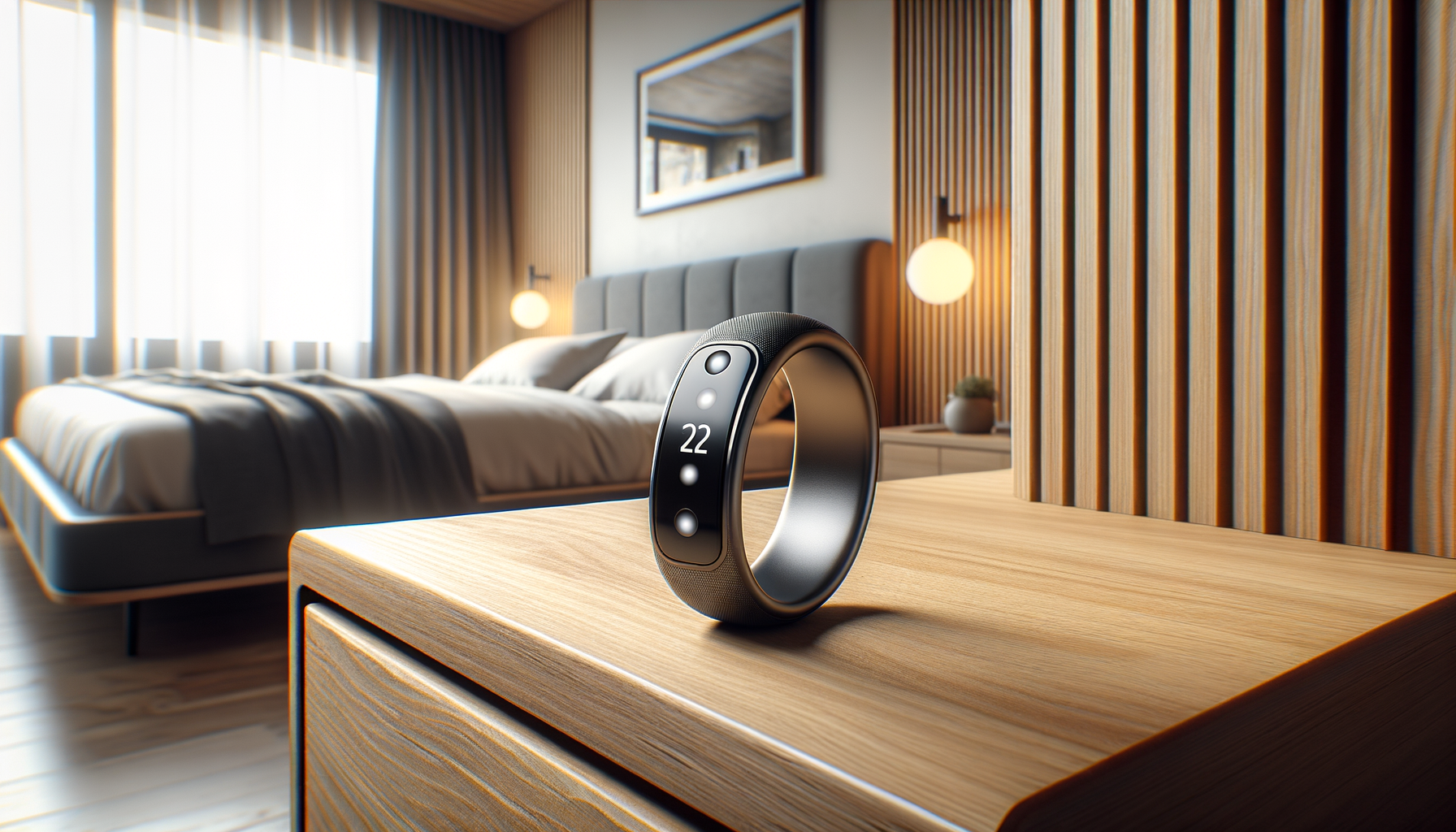
The Amazfit Helio Ring provides continuous monitoring of heart rate, blood oxygen, skin temperature, and movement patterns through sensors embedded in a titanium alloy shell. The device syncs data to the Zepp Health app (iOS and Android compatible), calculating sleep scores, readiness metrics, and basic workout summaries without requiring a monthly subscription.
Amazfit Helio Ring
See Amazfit Helio Ring on AmazonKey specifications differentiate this ring from premium competitors. The Helio Ring currently ships in three sizes only (8, 10, and 12), weighs approximately 4 grams, measures 2.6mm thick, and delivers 4 days of battery life. Water resistance reaches 10 ATM, suitable for swimming but not serious diving. The charging cradle uses wireless power transfer but requires precise alignment.
Coming from someone who wore a WHOOP tracker religiously for months, I appreciate that the Helio Ring doesn’t create additional sleep anxiety. The worst thing a sleep tracker can do is make you feel worse about nights you already know were rough. You could feel great, then the app says your sleep was bad, and suddenly you convince yourself you’re tired. The Helio Ring’s simplified approach to data presentation actually serves anxious sleepers better than overly detailed breakdowns that fuel worry.
Sleep Tracking Performance Against Research Standards
Smart ring accuracy matters significantly more than feature count. Research from the University of California Irvine and University of Turku established that the Oura Ring (using similar PPG sensor technology as the Helio Ring) achieved significant correlations with medical-grade actigraphy for total sleep time, sleep efficiency, and wake after sleep onset in everyday home-based monitoring.
The study tracked 45 healthy individuals for seven consecutive days, revealing that smart rings consistently outperformed smartwatches for non-staging sleep parameters due to superior photoplethysmography signal quality from finger placement. Mean differences between ring measurements and actigraphy baseline fell within satisfactory ranges: total sleep time varied by approximately 15 minutes, wake after sleep onset differed by 17 minutes, and sleep efficiency showed 1.34% variance.
Sleep stage classification presents greater challenges. A Brigham and Women’s Hospital validation study comparing consumer wearables against polysomnography found that even the most accurate smart ring achieved only 79% agreement in four-stage sleep classification, compared to the 83% inter-rater reliability of trained sleep technicians scoring the same data twice.
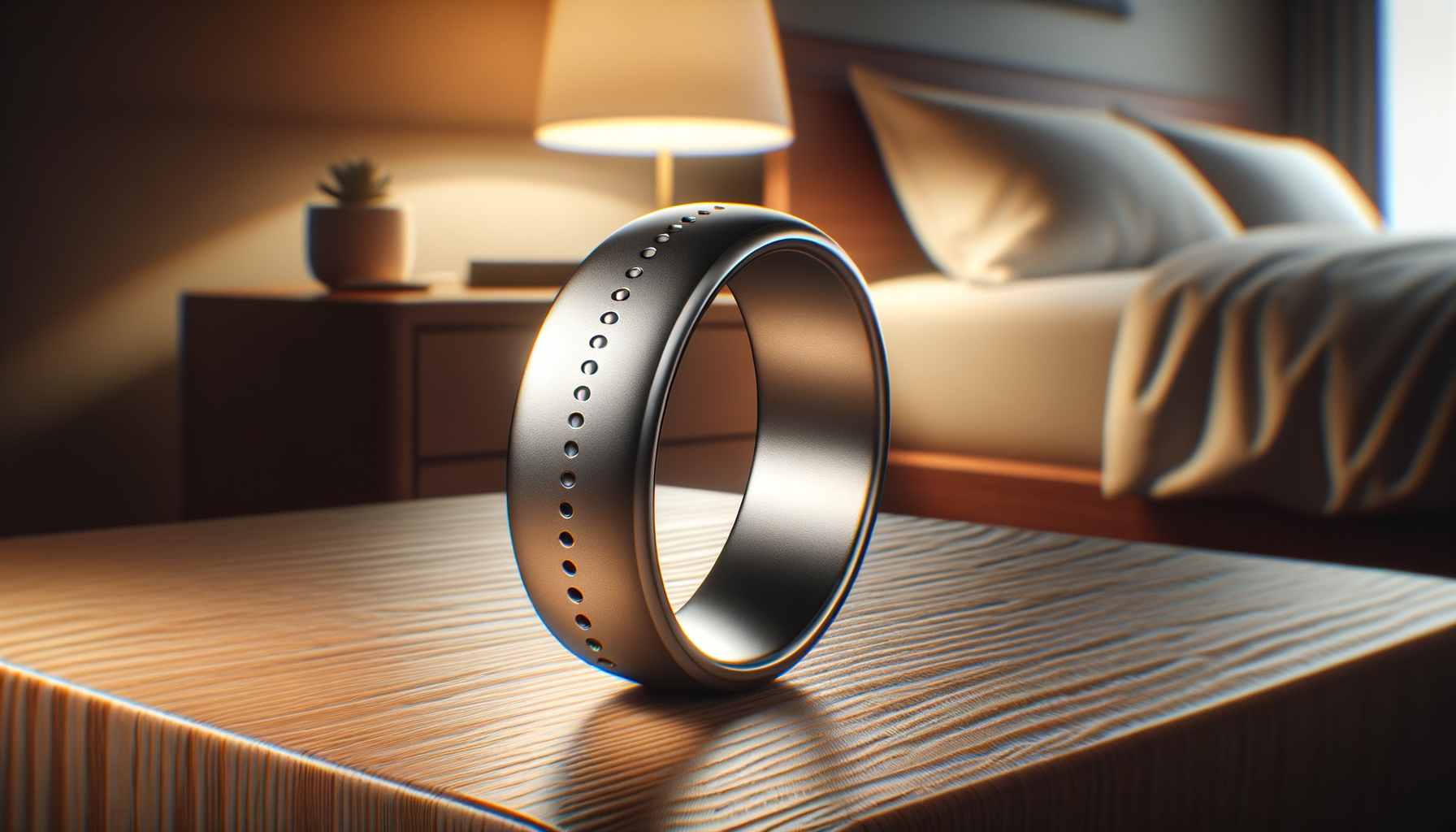
The Helio Ring’s sleep reports break down time spent in light sleep, deep sleep, and REM stages while tracking heart rate, breathing quality, and body temperature variations. Each morning delivers a Sleep Score (0-100 scale) alongside a Readiness Score factoring in resting heart rate, heart rate variability, breathing patterns, and temperature changes.
Testing the Helio Ring’s accuracy against established sleep tracking devices revealed consistently reliable total sleep time measurements but expect 50-80% accuracy for detailed sleep stage breakdowns. The device correctly identified sleep onset and wake times within 15-minute windows, matching performance expectations established by peer-reviewed validation studies of comparable smart ring technology.
The Subscription-Free Advantage Nobody Talks About
Zepp Aura app access comes included with Helio Ring purchase, providing AI-driven sleep insights, customized audio playlists for falling asleep, and detailed weekly reports without recurring fees. The Zepp Fitness app also includes unlimited access to training analysis, workout reports, and a 24/7 sports-focused chatbot.
This represents significant value differentiation. Oura Ring Gen 3 requires $5.99 monthly subscription for full feature access ($71.88 annually), while Samsung Galaxy Ring includes all features but costs $399 upfront. Amazfit’s $199 price point with lifetime app access eliminates the nagging question every subscription model creates: is this actually worth paying for month after month?
When you’ve struggled with sleep for years, the last thing you need is wondering whether your tracking subscription is creating value or just another monthly bill. Free unlimited access removes that particular anxiety entirely. The data syncs automatically with Apple Health, Google Fit, and Strava, providing integration flexibility without platform lock-in.

Build Quality and Wearability for 24/7 Use
The titanium alloy construction weighs less than the Oura Ring (4-6 grams) while exceeding the Samsung Galaxy Ring (2.3-3 grams). The 2.6mm thickness matches Galaxy Ring specifications but feels slightly more substantial than advertised measurements suggest. A subtle vertical line on the exterior indicates optimal sensor placement facing inward toward the palm.
Real-world durability testing revealed expected strengths and surprising weaknesses. The ring survived drops onto marble flooring without damage and maintained water resistance through daily showers, swimming, and dishwashing. However, the titanium finish scratches easier than anticipated. Normal wear including car washing, cycling, and light woodworking produced two noticeable abrasions within five days of testing.
Comfort during extended wear proved exceptional. Unlike smartwatches that require nightly removal for charging, the Helio Ring can remain on fingers continuously for four days between charges. This eliminates the common smartwatch problem of forgetting to put the device back on after charging, ensuring consistent sleep data collection.
I’ve never been one for wearing jewelry regularly, but the Helio Ring became genuinely forgettable after the first few days. That sensation of pressure from a weighted blanket is wonderful because you feel secure without being constrained. The ring delivers similar psychology – constant awareness that sleep data is collecting without the bulky wrist presence that disrupts natural sleep positioning.
Workout Tracking Limitations You Need to Know
The Helio Ring supports exactly four exercise modes: walking, running, cycling, and treadmill workouts. No automatic workout detection exists, requiring manual activation through the Zepp app before starting any activity. This represents deliberate product positioning rather than technical limitation.
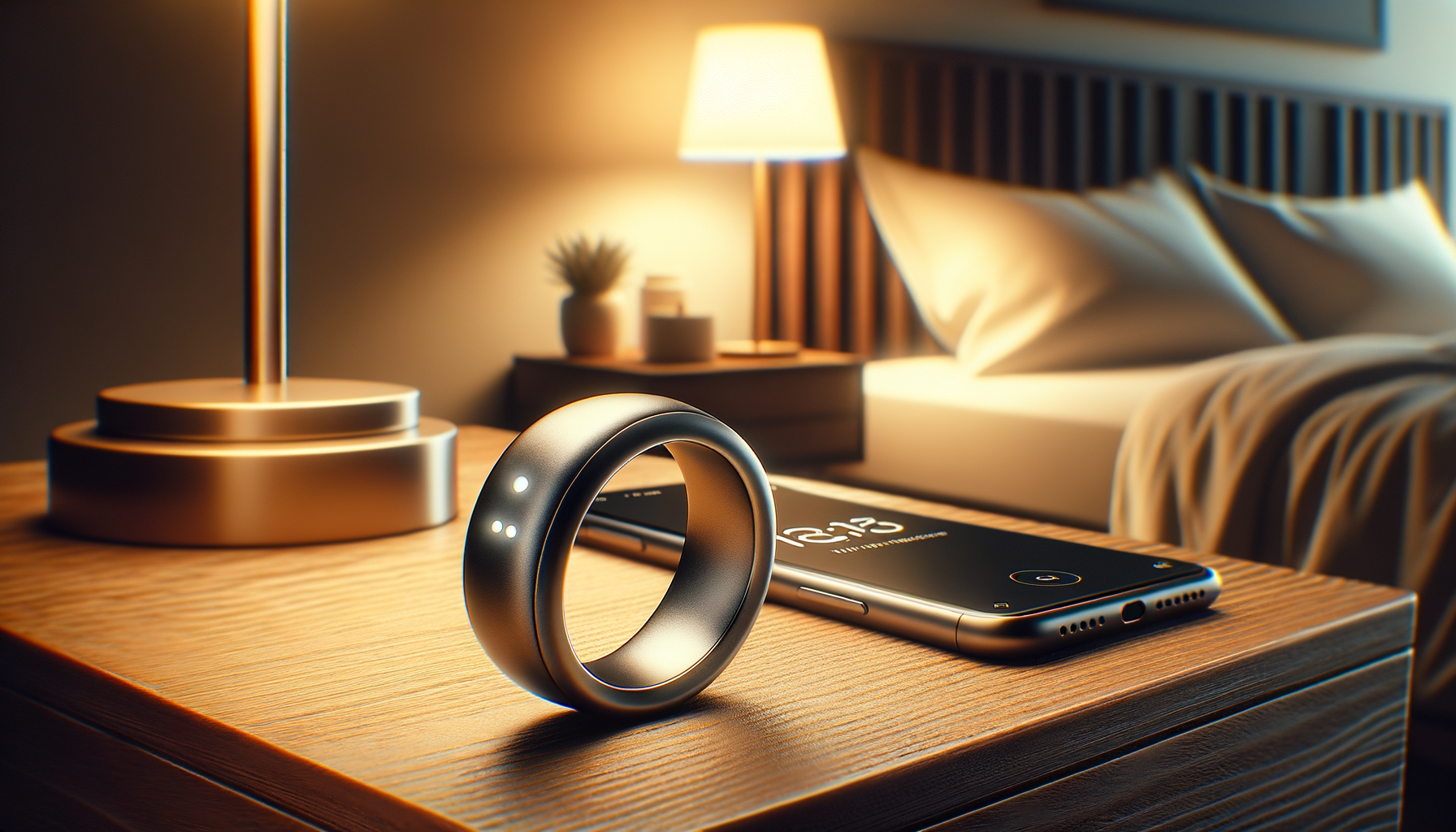
Amazfit intends the Helio Ring as a sleep and recovery companion to their smartwatch line rather than a standalone fitness tracker. The company expects users purchasing the ring to pair it with devices like the Amazfit Balance smartwatch for comprehensive activity monitoring. GPS tracking requires phone proximity since the ring lacks independent location sensors.
Workout accuracy testing against dedicated fitness trackers including Garmin Forerunner 165 and Apple Watch SE 2022 revealed strong performance within the limited scope. Step counting during a 5,000-step walking test matched Garmin measurements. Heart rate tracking during cycling sessions aligned with chest strap monitor readings within 3-5 beats per minute variance.
Post-workout summaries include distance covered, pace, average and maximum heart rate, elevation gained, calories burned, and heart rate zones. Route mapping depends entirely on paired smartphone GPS data. Forgetting your phone eliminates the map feature entirely.
Battery Life Reality Check
Four days of battery life with continuous monitoring enabled falls short of the seven-day performance delivered by Oura Ring Gen 3 and Samsung Galaxy Ring. Real-world testing confirmed the manufacturer’s claims under typical usage patterns including continuous heart rate monitoring, SpO2 measurements, temperature sensing, and EDA stress detection.
The wireless charging cradle requires precise ring alignment with charging contacts, a common frustration with smart ring designs. Misalignment by more than 2-3mm prevents charging initiation entirely. The charging process completes in under two hours from depleted to full capacity, slightly faster than advertised specifications.
Battery drain accelerates noticeably during workout tracking sessions. A 45-minute cycling ride with continuous heart rate monitoring depleted approximately 8% of total battery capacity, suggesting intensive exercise tracking twice daily would reduce the realistic usage window to 3 days between charges.
The Anxiety Factor Most Reviews Miss
Sleep tracking technology creates a psychological paradox for anxiety-driven insomnia sufferers. The device promises better sleep through data awareness while simultaneously generating new metrics to worry about. This fundamental contradiction deserves examination before committing to any sleep tracker purchase.
The Helio Ring’s simplified data presentation actually serves anxious sleepers better than competitors offering excessive detail. Oura Ring provides granular breakdowns of sleep stages, body temperature variations, respiratory rate patterns, and cardiovascular load. Samsung Galaxy Ring generates detailed sleep coaching recommendations and identifies specific sleep disturbances. More information doesn’t always mean better outcomes.
Getting upset about not sleeping is like getting upset that it’s raining outside. Neither changes the reality, both waste energy better spent elsewhere. The Helio Ring’s more restrained approach to sleep insights aligns better with acceptance-based strategies for managing sleep anxiety than products promoting perpetual optimization.
That said, the app still delivers a Sleep Score each morning. Some users will inevitably check that number first thing upon waking, allowing an algorithm to dictate their emotional state for the day. If you recognize this tendency in yourself, reconsider whether any sleep tracker serves your actual needs.
Amazfit Helio Ring Validation Study: What the Research Actually Shows
The Helio Ring benefits from a published validation study comparing its sleep staging accuracy against polysomnography, the clinical gold standard. The study found reasonable agreement for deep sleep and REM sleep detection, though wake detection showed more variability. This positions the Helio Ring ahead of most consumer sleep trackers in terms of independent verification, though it’s worth noting the sample size was modest and real-world accuracy can vary based on individual factors like sleep position and movement patterns.
For context, most smartwatch sleep trackers operate without any published validation studies. The Helio Ring’s transparent approach to testing gives you measurable data rather than marketing claims. That said, the device still functions as a consumer tool, not a clinical diagnostic device. If you’re using it to track trends in your sleep architecture over weeks and months, the validation study suggests you can reasonably trust the relative patterns, even if individual night readings aren’t perfectly precise.
Amazfit Helio Ring Specifications and Technical Details
The Helio Ring houses a 6-axis accelerometer, optical biometric sensors for heart rate and blood oxygen, and skin temperature detection. It uses proprietary algorithms for sleep staging rather than relying on raw sensor data alone. The device syncs to the Zepp app via Bluetooth, storing up to seven days of data locally before requiring a sync. Processing happens on your phone rather than the ring itself, which keeps the ring’s footprint minimal but means you need the app for analysis.
Available in titanium or black steel, sizing ranges from 6 to 13 with incremental half-sizes for some models. The ring weighs roughly 3 grams and sits just above most people’s daily comfort threshold. Waterproofing reaches 5 ATM, handling swimming but not diving. Battery estimates of 10 days assume moderate activity tracking; heavier use tends to shorten this to 7-9 days. These specs matter less than how they translate to actual daily usability, which depends heavily on your wrist size and activity level.
Sizing Availability Problem
The limitation to three sizes represents the Helio Ring’s most significant practical weakness. Ring sizing matters considerably more than smartwatch band adjustments because even slight fit variations affect sensor contact quality and wearing comfort.
Amazfit offers a free sizing kit containing plastic ring sizers for determining the correct size before purchase. However, the three-size limitation means many potential users fall between available options or require sizes outside the 8-12 range entirely.
Competitor comparison reveals this disadvantage clearly. Oura Ring ships in eight full and four half sizes (6-13), while Samsung Galaxy Ring offers nine sizes (5-13). Industry standard practice suggests smart ring manufacturers should provide at minimum seven size options for adequate market coverage.
Amazfit has indicated plans to expand size availability in future production runs but provided no specific timeline. Current purchasers must accept the limited options or wait indefinitely for additional sizes.
Worth Buying at $199?
The Amazfit Helio Ring delivers legitimate value for users who:
- Fit within the available size range (8, 10, or 12)
- Prioritize sleep tracking over comprehensive fitness features
- Want to avoid recurring subscription fees
- Use iOS or Android (not locked to one ecosystem)
- Accept 4-day battery life as sufficient
- Prefer simplified data presentation to detailed breakdowns
Alternative considerations make more sense if you:
- Require extensive workout tracking modes beyond basic exercises
- Need size availability outside 8-12 range
- Want 7-day battery life minimum
- Value detailed sleep coaching and insights
- Don’t mind paying subscription fees for premium features
Direct competitors include the Oura Ring 4 ($349 + $5.99/month subscription) offering superior sleep insights and longer battery life, and the Samsung Galaxy Ring ($399, no subscription) providing better size availability and workout tracking but requiring Android devices. The Ultrahuman Ring Air ($299, no subscription) presents similar positioning with different sensor priorities.
The fundamental question remains whether any sleep tracker actually improves sleep outcomes for anxiety-driven insomnia. Acceptance of natural sleep variation matters infinitely more than optimizing metrics. But if you’re going to track sleep anyway, doing it affordably without creating subscription anxiety represents a reasonable approach.
Transparency note: This article includes affiliate links. If you purchase through these links, liveworksleep may receive a commission at no additional cost to you. Our reviews are based on independent testing and analysis.
Medical disclaimer: This article provides general information only and should not replace professional medical advice. Consult a qualified healthcare provider for diagnosis and treatment of sleep disorders.
Read more articles on the Smart Rings Hub.
About the Author
Scott Hilliard is the founder of liveworksleep, bringing over a decade of real-world experience managing anxiety-driven insomnia. After transitioning from someone who “loved sleep” to someone who feared bedtime, Scott has tested countless sleep products, techniques, and tracking devices. His approach emphasizes acceptance over optimization, practical solutions over perfectionism, and honest assessment over marketing hype. Scott’s insights come from lived experience, professional consultations with sleep specialists and therapists, and extensive self-education in sleep science.
If you’re weighing the Helio Ring against other wearables for sleep data, our guide on the best sleep tracking devices for wearables covers comparable options with similar validation approaches. For a deeper look at how different sensors measure sleep quality, the article on what sleep quality metrics actually mean breaks down the science behind staging and continuous monitoring.
Top picks on Amazon: Fitbit Charge 6 → | Fitbit Inspire 3 → | Withings Sleep Analyzer →
Comparing options? See how the Helio Ring fits among our best smart rings for sleep and the best smart rings without a subscription.