Best Smartwatch for Sleep Tracking 2026: Accuracy & Real-World Testing
Affiliate Disclosure: As an Amazon Associate I earn from qualifying purchases. Some links on this page are affiliate links. If you buy through them we earn a small commission at no extra cost to you. Our recommendations are based on research into specifications, published evidence and product listings. Learn more.
Quick Picks
Finding the right smartwatch for sleep tracking means balancing accuracy, comfort, and real-world usability. Some excel at detecting sleep stages, while others struggle with basic sleep versus wake detection. This guide examines the best smartwatches for sleep tracking in 2025, comparing how devices from Apple, Fitbit, Garmin, and others stack up against scientific validation and practical use.
Top smartwatches for sleep tracking on Amazon:
Fitbit Charge 6 → | Garmin Venu 3 → | Samsung Galaxy Watch 7 →

Why Smartwatch Sleep Tracking Accuracy Matters
Product Comparison
Best Overall  Garmin Venu 3 Check Price on Amazon | Best for Android  Samsung Galaxy Watch 7 Check Price on Amazon | Best Value 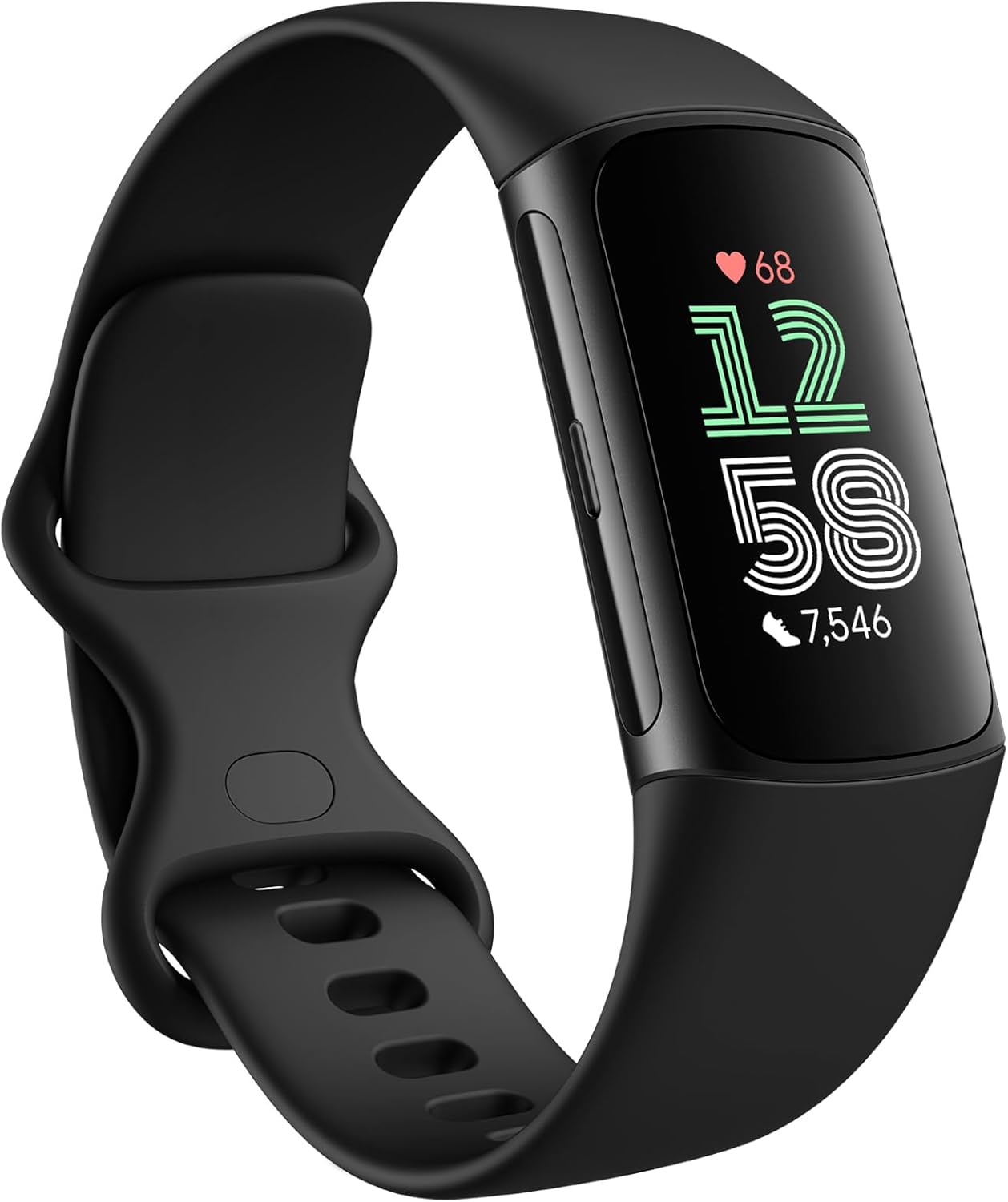 Fitbit Charge 6 Check Price on Amazon | |
|---|---|---|---|
| Form Factor | Smartwatch | Smartwatch | Band |
| Battery Life | ~14 days | Check current spec on Amazon | ~7 days |
| Subscription | None | None | Free / $10 mo (optional) |
| Platform | iOS & Android | Android (check compatibility on Amazon) | iOS & Android |
Sleep tracking accuracy directly impacts how sleep data is interpreted and how decisions about rest are made.
Research published in the Journal of Medical Internet Research analyzed 11 consumer sleep trackers against polysomnography (the gold standard for sleep measurement) and found substantial performance variation. The study examined wearable devices including the Google Pixel Watch, Galaxy Watch 5, Fitbit Sense 2, Apple Watch 8, and Oura Ring 3, finding macro F1 scores ranging from 0.26 to 0.69 for sleep stage classification. Wearables like the Fitbit Sense 2 and Google Pixel Watch demonstrated superiority in detecting deep sleep stages, while sleep-wake detection showed high proportional bias in sleep efficiency measurement.
How Smartwatches Track Sleep
Smartwatches use photoplethysmography sensors and accelerometers to estimate sleep stages by monitoring heart rate, heart rate variability, and movement. Unlike polysomnography, which measures brain activity through electroencephalography, smartwatches infer sleep stages from physiological patterns. This fundamental difference explains why even the best consumer devices can’t match laboratory-grade accuracy.
When multiple wearables are worn simultaneously, devices can disagree about sleep-onset time, deep-sleep duration, and number of wake events during the night. A 2024 validation study comparing the Oura Ring Gen3, Fitbit Sense 2, and Apple Watch Series 8 against polysomnography found all devices achieved sensitivity of 95% or greater for detecting sleep versus wake. However, discriminating between specific sleep stages proved more challenging, with sensitivity ranging from 50% to 86% depending on the device and sleep stage.

Top Smartwatches for Sleep Tracking in 2025
Apple Watch Series 10
The Apple Watch Series 10 represents Apple’s most advanced sleep tracking implementation, building on algorithms refined through multiple hardware generations. For users already invested in the Apple ecosystem, the Series 10 delivers seamless integration with iPhone health data and third-party sleep apps.
The device tracks sleep stages (REM, Core, and Deep), time asleep, and respiratory rate. Recent validation studies comparing the Apple Watch Series 8 to polysomnography found the device achieved 86.1% sensitivity for light sleep detection but only 50.5% for deep sleep. The Apple Watch significantly underestimated wake time by 7 minutes and deep sleep by 43 minutes while overestimating light sleep by 45 minutes.
Battery life remains the Apple Watch’s primary limitation for sleep tracking. The device requires daily charging, which means you need to find strategic charging windows during your routine. Charging during morning routines or evening wind-down periods is a commonly suggested workaround, but it requires more planning than devices with multi-day battery life. Learn more about how to optimize your Apple Watch for sleep tracking.
Fitbit Sense 2
The Fitbit Sense 2 combines multi-day battery life with comprehensive sleep stage tracking, making it one of the more practical options for continuous sleep monitoring. The device provides detailed breakdowns of sleep stages, sleep score calculations, and insights into factors affecting sleep quality.
Validation research found the Fitbit Sense 2 demonstrated 78.0% sensitivity for light sleep and 67.3% for REM sleep when compared to polysomnography. The device tended to overestimate light sleep by approximately 18 minutes while underestimating deep sleep by 15 minutes. Despite these variances, the Fitbit’s consistency and detailed trend tracking make it valuable for identifying patterns over time. For budget-conscious users, explore our guide on the best Fitbit models for sleep monitoring.
Fitbit’s approach emphasises actionable insights rather than overwhelming users with raw data. The Sleep Score provides a single metric that’s easy to understand, while the app breaks down contributing factors like time asleep, sleep stages, and restoration.

Garmin Venu 3
Garmin’s Venu 3 brings advanced sleep tracking to users who prioritize fitness tracking alongside sleep monitoring. The device offers exceptional battery life (up to 14 days in smartwatch mode), eliminating the need for frequent charging that interrupts sleep tracking consistency.
Garmin’s sleep tracking provides nap detection, sleep score, and detailed sleep stage analysis. The company’s Body Battery feature, which estimates energy levels based on sleep quality, stress, and activity, offers a holistic view of recovery. Research on Garmin devices has found reasonable accuracy for total sleep time estimation, though like other wearables, deep sleep and REM detection show more variability. Our comprehensive Garmin sleep tracking comparison explores multiple models in detail.
The Venu 3’s extended battery life means you’re less likely to miss nights of data due to charging, which is crucial when you’re trying to identify patterns.
WHOOP 4.0
The WHOOP 4.0 takes a subscription-based approach to sleep and recovery tracking, offering continuous monitoring without a screen. The device focuses heavily on recovery metrics, using heart rate variability, resting heart rate, and sleep performance to calculate a daily recovery score.
WHOOP’s recovery insights are frequently cited as valuable, though some users report becoming anxious about daily scores. A low recovery score on a morning when a user feels fine can prompt second-guessing of perceived energy levels. This psychological effect is worth considering with any sleep tracker, and may feel particularly pronounced with WHOOP’s strong emphasis on optimization metrics. Read our detailed WHOOP 4.0 review for a comprehensive assessment.
The WHOOP excels at tracking strain and recovery over time, making it popular with athletes. The screenless design means zero distractions at night, and the battery pack charges the device while you’re wearing it. However, the subscription model (starting at $30 per month) represents a significant ongoing cost compared to one-time watch purchases.
Samsung Galaxy Watch 7
Samsung’s Galaxy Watch 7 offers sleep tracking with Galaxy AI for Android users, along with an Energy Score and wellness tips. The watch collects sleep insights and the paired phone analyzes them. Samsung also says the feature can help detect moderate to severe sleep apnea.
A 2023 multicenter validation study found the Galaxy Watch 5 (an earlier generation of the same line) achieved 57.9% accuracy in four-stage sleep classification when compared to polysomnography, with a kappa value indicating moderate agreement. The device demonstrated particular strength in detecting sleep onset and wake times, though like other wearables, it showed some bias in sleep efficiency estimation.
Battery life varies with settings and use, so check the current battery spec on the Amazon listing before you buy. The listing highlights heart rate tracking, an Energy Score and sleep monitoring.

Quick Picks
Key Features to Consider
Battery Life and Charging Strategy
Battery life directly impacts how consistently you can track sleep. Devices requiring daily charging create gaps in data if you forget to charge or can’t find convenient charging windows. With daily-charge devices such as the Apple Watch, missing nights of data is a recognised risk if the watch is not charged before sleep.
Multi-day battery life (3-14 days) eliminates this concern, allowing you to establish charging routines that don’t interfere with sleep tracking. Garmin devices with week-long battery life are particularly practical in this respect, as a single weekly charge can be scheduled at a time that does not interfere with sleep.
Comfort and Sleep Disruption
A sleep tracker that disrupts your sleep defeats its purpose. Watch size, weight, and band material all affect comfort during sleep. Lighter devices with softer bands are generally considered less intrusive during sleep.
Screen brightness during the night is another consideration. Most smartwatches include sleep mode settings that dim or disable the display, but some are more effective than others. The WHOOP’s screenless design completely eliminates this concern, while some watches with always-on displays can be distracting in a dark room.
Data Presentation and Actionability
How a device presents sleep data matters as much as the accuracy of the underlying measurements. Some apps overwhelm users with metrics, while others distill information into actionable insights.
The best sleep tracking apps balance detail with digestibility. They provide enough information to spot trends without drowning you in numbers that require a sleep scientist to interpret. Look for features like sleep score calculations, trend analysis over weeks or months, and specific recommendations based on your data.

Understanding Sleep Tracking Limitations
No consumer smartwatch can match polysomnography accuracy, and it’s important to understand these devices’ limitations. Research consistently shows that wearables excel at distinguishing sleep from wake (typically achieving 90% or greater agreement with polysomnography) but struggle more with specific sleep stage classification.
A comprehensive 2024 study published in Sensors journal found that while devices achieved fair to excellent concordance with polysomnography for total sleep time and sleep efficiency, concordance was poor for deep sleep and REM sleep across all tested devices. The researchers noted that even trained human technicians scoring polysomnography data achieve only approximately 80% agreement with one another, particularly at transitions between REM and other stages.
Rather than focusing on whether a given night yielded exactly 23% deep sleep versus 26%, tracking broader patterns tends to be more meaningful: is sleep duration consistent? Are there trends in sleep quality related to specific behaviors? Is sleep improving or declining over weeks?
Quick Picks
Choosing the Right Smartwatch for Your Needs
The best smartwatch for sleep tracking depends on your priorities, ecosystem, and how you plan to use the data. If you’re already using an iPhone and want seamless health data integration, the Apple Watch Series 10 makes sense despite its shorter battery life. Android users can look at the Galaxy Watch 7, which pairs with a phone for its sleep insights.
For those prioritizing multi-day battery life and fitness tracking alongside sleep monitoring, Garmin’s Venu 3 delivers excellent value. The device provides detailed sleep insights without requiring daily charging decisions. Budget-conscious users should consider affordable fitness trackers with sleep monitoring that deliver core functionality at lower price points.
Athletes and optimization enthusiasts might appreciate WHOOP’s recovery-focused approach, though the subscription model and potential for score-related anxiety warrant consideration. The device excels at tracking training readiness but requires a mindset that views the data as guidance rather than prescription.
Whatever device you choose, remember that sleep tracking is a tool, not a solution. The data helps identify patterns and track improvements, but it shouldn’t replace listening to your body or create additional stress about sleep. Sleep trackers work best when they inform your approach to rest without becoming another source of anxiety.
Read more articles on the Wearables Hub.
About the Author
Scott Hilliard is the founder of LiveWorkSleep, which covers sleep products and sleep science. His recommendations are based on research into specifications, published evidence and product listings.
Transparency Box
This article contains affiliate links. If you purchase products through these links, we may earn a commission at no additional cost to you. We only recommend products we have researched thoroughly. Our editorial content is not influenced by affiliate partnerships.
Medical Disclaimer
This article is for informational purposes only and should not replace professional medical advice. Sleep disorders require proper diagnosis and treatment from qualified healthcare providers. Consumer sleep trackers are not medical devices and should not be used to diagnose sleep conditions. Consult your doctor if you experience persistent sleep problems.