
Hatch Rest vs Hatch Restore: Kids or Adults?
The Hatch Rest is designed for babies and young children, while the Hatch Restore is built for adults who want a smarter bedtime and wake-up routine. If you’re trying to decide between them, the short answer is straightforward: they’re not really competing products. But if you’re a parent wondering whether the Rest could double as an adult sleep aid, or an adult without kids eyeing the Rest for its simplicity, the comparison is worth making properly.
I’ve spent time with both devices, and the differences go deeper than the target demographic on the box. The light quality, the app experience, the sound library, and the morning alarm behaviour are all meaningfully different. Here is what I found.
If you’re exploring the broader landscape of sleep technology, the Sleep Apps Hub covers everything from sound machines to wearable trackers, and it’s worth browsing before you commit to any single device.
Note: this comparison was written around the Hatch Rest+ 2nd Gen and the Hatch Restore 2. Hatch now sells the Restore 3 and the Hatch Baby Sound Machine & Night Light. The core difference still applies, a children’s nursery device versus an adult sleep and wake device, but check the current listings for features.
Quick Picks


What Is the Hatch Rest, and Who Is It Actually For?
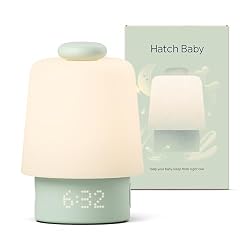
The Hatch Rest is, at its core, a smart night light and sound machine for children. The Rest+ 2nd Gen, the previous generation I describe here, added a time-to-rise feature that teaches young kids when it’s okay to get out of bed. The light glows green when it’s morning, stays a soft amber when it’s still sleep time, and the whole thing is controlled through the Hatch app on your phone.
I bought one for my son when he was going through a phase of wandering into our room at 5:30am convinced it was morning. The time-to-rise feature genuinely helped. Within two weeks he understood the green light meant go, and the amber light meant stay. That single function justified the purchase for us.
But I also noticed something while setting it up: the light quality is warm and pleasant. The amber tones at low brightness are actually quite soothing. It made me curious whether adults were using it for themselves, and a quick look at the Hatch community forums confirmed that yes, plenty of people do. That said, using the Rest as an adult sleep aid is working around its limitations rather than with its strengths.
Hatch’s current kids’ device is the Hatch Baby Sound Machine & Night Light. Its listing describes building routines with light and sound, control from the Hatch Sleep app, 1:1 chat with sleep consultants, five colours, and 3 months of Hatch+ included. The time-to-rise behaviour described above is what I saw on the Rest+ 2nd Gen, so check the current listing before assuming it carries over.
The sound library on the Rest is solid for a children’s product: white noise, rain, ocean, lullabies, a heartbeat sound designed to mimic the womb. For a baby or toddler, it’s comprehensive. For an adult who wants layered soundscapes, meditations, or wind-down content, it’s thin. If you’re looking for that kind of depth, the dedicated best sleep sounds apps will serve you far better than either Hatch device, honestly.
Shopping for a child’s room? See the Hatch Baby Sound Machine & Night Light on Amazon.
What Is the Hatch Restore, and What Does It Do Differently?
The Restore is Hatch’s adult-facing product, and the difference in intent is immediately clear when you open the app. Where the Rest app is built around routines for children, the Restore app is built around a concept Hatch calls “Wind Down” and “Rise.” You set a bedtime routine that might include a dimming light sequence, a sleep meditation, and ambient sound. Then your morning alarm is a gradual sunrise simulation followed by a gentle sound.
The Restore 2 (previous model) added a reading light mode and improved the light ring quality. The sunrise simulation goes from deep red through amber to a warm white over 30 minutes by default, though you can adjust the duration. That amber-to-white progression is what I’ve come to prefer after testing four different sunrise alarms. Cool white light at full brightness is jarring. A warm colour that gradually brightens feels physiologically closer to an actual dawn.
There’s science behind that preference. Research published in PLOS ONE found that gradual light exposure in the morning can reduce sleep inertia and improve alertness compared to abrupt awakening. The colour temperature matters too: cooler light suppresses melatonin more aggressively, which is fine once you’re trying to stay awake but can feel harsh as a wake signal. The Restore’s warm-to-cooler progression threads that needle reasonably well.

The Restore also has a subscription tier called Hatch+, which unlocks the full content library: sleep meditations, breathing exercises, wind-down stories, and soundscapes. Without it, the device still works as a light and basic alarm, but the app experience is noticeably limited. That subscription model is worth factoring into your cost calculation, which I’ll address directly later.
The Hatch Restore 3 is now Hatch’s current adult model. Its listing describes 80+ sleep sounds, a sunrise alarm clock, customisable light and audio pairings, a dimmable clock design, and a Hatch+ subscription with a 30-day free trial with purchase, then $5.99 per month or $59.99 per year. My first-person notes in this article describe the Restore 2.
Looking for an adult sleep and wake device? See the Hatch Restore 3 on Amazon.
How Does the Light Quality Compare Between the Two?
Light quality is where I’d argue the two devices diverge most meaningfully for adult use. The Rest produces warm light well, but its maximum brightness is lower and its colour range is more limited. It’s designed to create a comforting glow for a child’s room, not to simulate a sunrise with enough intensity to actually wake an adult who sleeps through conventional alarms.
The Restore is brighter and has a wider colour temperature range. At full intensity it’s genuinely bright enough to rouse a deep sleeper, and the gradual ramp means you’re not startled. I ran it for three weeks as my primary alarm and found I was waking five to ten minutes before the sound alarm kicked in, which is exactly what a good sunrise alarm should do.
My experience with budget sunrise alarms is that the light often skips the amber phase entirely and just dims a cool white bulb up from nothing. It looks nothing like a dawn. The Lumie I tested before the Restore was better, with a more convincing warm-to-neutral progression. The Restore sits in a similar quality bracket to the Lumie, maybe slightly ahead on the app integration side, slightly behind on raw light output at maximum brightness.
For the Rest, if you’re using it as a nightlight for a child, the light quality is excellent for that purpose. The soft amber glow at low brightness is genuinely soothing and won’t interfere with melatonin production the way a blue-white nursery light would. A study in PMC confirmed that amber-wavelength light has significantly less impact on melatonin suppression than blue-enriched white light, which is relevant whether you’re settling a toddler or winding down yourself.
How Do the Apps Compare?
Both devices require the Hatch app, but the experience within the app is quite different depending on which device you’ve paired.
The Rest app is parent-focused. You create routines, set schedules, and control the device remotely, which is useful when you want to turn the light on or off without going into the room. The interface is clear and functional. There’s no sleep content for adults, no meditations, no breathing exercises. It’s a remote control for a smart night light.
The Restore app is more ambitious. The Wind Down flow prompts you to choose a relaxation activity, dim the light on a schedule, and set your morning routine. With Hatch+, you get access to sleep meditations narrated by recognisable voices and a library of ambient soundscapes. Without the subscription, you get a handful of free sounds and basic light controls.
I’ll be honest about the meditation content: it’s decent but not exceptional. If guided sleep meditation is a priority for you, I’d suggest looking at dedicated apps alongside the Restore rather than relying solely on Hatch+. My comparison of Calm vs. Headspace for guided sleep meditation covers the depth of content those platforms offer, and it’s a meaningful step up from what Hatch+ provides in that specific area.
Where the Restore app does well is in the integration of light, sound, and schedule into a single routine. You’re not managing three separate apps or devices. That simplicity has real value, especially if you’re someone whose insomnia is partly driven by the friction of a complicated bedtime routine. During my worst periods of anxiety-driven insomnia, I found that anything adding complexity to bedtime made things worse. A device that handles light and sound together, on a consistent schedule, removes one layer of decision-making.

Does Either Device Track Sleep?
Neither the Rest nor the Restore tracks sleep in any meaningful sense. They don’t measure movement, heart rate, or breathing. They have no sensors for that purpose. If sleep tracking is on your wishlist, you need a separate solution.
For Apple Watch users, the AutoSleep app is worth looking at as a no-subscription sleep tracking option that uses the data your watch is already collecting. If you want ring-based tracking, the Oura app’s features go into considerable depth on readiness and sleep stage analysis. And if you want a broader comparison before committing to any tracking approach, the best sleep tracking apps for 2025 covers the landscape well.
The Restore does have a basic sleep timer function, and Hatch has gestured toward sleep data features in the past, but as of now it’s not a sleep tracker. It’s a sleep environment device. Those are different things, and conflating them leads to disappointment.
What About the Subscription Cost?
This is the part of the Hatch ecosystem that attracts the most criticism, and I think some of it is fair.
The current Restore 3 lists at about $169.99 on Amazon, and the purchase includes a 30-day free trial of Hatch+ for new subscribers. After the trial, Hatch+ costs $5.99 per month or $59.99 per year. On the Restore 2 I used, without Hatch+, you get a functional sunrise alarm and a handful of sounds, but the wind-down content library is locked. For a device marketed on its bedtime routine capabilities, that’s a meaningful limitation.
The current Hatch Baby Sound Machine & Night Light lists at about $79.99 and includes 3 months of Hatch+, after which the subscription is optional. On the previous Rest+ 2nd Gen, the app features for child routines were free. That’s a better value proposition for its intended use case. The subscription model on the adult device feels more extractive because the core promise of the Restore, personalised adult sleep routines, sits largely behind the paywall.
My honest take: if you’re going to use the Restore, budget for the subscription. Use it for three months, assess whether the content library is actually part of your routine, and then decide whether to continue. A lot of people find they use the light and sound features heavily for the first month, then settle into a consistent routine that doesn’t require new content. At that point the subscription becomes less essential.
The previous Rest+ 2nd Gen had no equivalent subscription burden, since routines were free in the app. The current Hatch Baby device includes 3 months of Hatch+ and the listing says the subscription is optional after that, which is a reasonable model for that product.
Can Adults Use the Hatch Rest?
Technically, yes. Practically, it’s a compromise.
The Rest produces pleasant warm light, plays ambient sounds, and can be set to a schedule. If you want a simple bedside light with a sound machine and you don’t need a sunrise alarm, it works. The light quality at low amber settings is genuinely relaxing.
But you’re missing the sunrise simulation, the adult-oriented wind-down content, and the reading light mode. The alarm function on the Rest is designed to signal to a child that it’s morning, not to gradually wake a sleeping adult. It doesn’t ramp up in a way that functions as a proper sunrise alarm.
If cost is the primary driver, I’d suggest looking at alternatives rather than the Rest as an adult substitute. There are dedicated sunrise alarms in the $60 to $100 range that do the core job better for adult use. The Rest is excellent at what it’s designed to do. Using it as an adult sleep device is asking it to be something it isn’t.

Can the Restore Work for Families With Young Children?
This is a question I’ve seen in forums, and it’s worth addressing directly. Some parents wonder whether they can use the Restore in their own room and skip buying a separate Rest for the child’s room.
The Restore doesn’t have the time-to-rise feature that makes the Rest so effective for toddlers. It doesn’t produce the green light that children learn to associate with “okay to get up.” The Restore’s routines are built around an adult’s wind-down and wake-up experience, not around communicating a simple visual signal to a young child.
If you have a child who is old enough to understand a conventional alarm or who doesn’t need the time-to-rise feature, the Restore in the parents’ room is fine. But if you’re in the thick of toddler sleep training, the Rest’s specific features for that stage are worth having in the child’s room. They’re complementary products, not interchangeable ones.
What Does the Research Say About This Type of Sleep Technology?
The science supporting the core functions of both devices is reasonably solid, though as with most consumer sleep technology, the evidence is better for the underlying mechanisms than for the specific products.
Consistent bedtime routines have clear support in the literature. Research in PubMed found that behavioural sleep interventions, including consistent pre-sleep routines, significantly improve sleep onset and quality. That’s the principle the Restore’s Wind Down feature is built on, and it’s a sound one.
For children, the evidence for structured sleep routines is even stronger. A review published in PMC found that consistent bedtime routines in young children were associated with improved sleep duration, fewer night wakings, and better daytime behaviour. The Rest’s routine-based approach aligns with that evidence base.
What the research doesn’t tell us is whether Hatch’s specific implementation is better than a cheaper alternative. A consistent routine with a $15 white noise machine and a warm lamp on a timer would likely produce similar benefits. The Hatch products add convenience, app integration, and light quality. Whether those additions are worth the premium is a personal calculation.
I’ve found that for my own sleep, the consistency of a routine matters more than the sophistication of the device delivering it. During the years I was managing anxiety-driven insomnia, I tried expensive solutions that didn’t work and simple ones that did. The Restore is a genuinely good device, but its value comes from using it consistently, not from any magic in the hardware.
Hatch Rest vs Hatch Restore: Which Should You Buy?
Here’s the straightforward summary.
Buy a Hatch Rest-style device (today, the Hatch Baby Sound Machine & Night Light) if you have a baby, toddler, or young child who needs a nightlight and sound machine. The Rest+ 2nd Gen I describe was well-designed for that purpose and the app is parent-friendly; check the current listing for time-to-rise and subscription details.
Buy the Hatch Restore (today, the Restore 3) if you’re an adult who wants a sunrise alarm clock with integrated wind-down routines and a quality light experience. Budget for the Hatch+ subscription if you want the full content library. Accept that the sleep tracking and meditation depth won’t match dedicated apps in those categories.
Where to buy: Hatch Restore 3 for adults (about $169.99) or Hatch Baby Sound Machine & Night Light for kids (about $79.99).
Buy both if you have young children and you’re also investing in your own sleep. They serve genuinely different functions, and having the right tool for each context is more useful than trying to make one device do both jobs.
If you’re still exploring what kind of app or device fits your sleep needs, the Pillow app review is a useful read for understanding what iPhone-based sleep tracking can and can’t do, which might help clarify whether you need hardware at all or whether software alone could address your goals. For the newer adult model, read our Hatch Restore 3 review and the Hatch Restore 2 vs 3 comparison.

Neither device is a silver bullet. Sleep is complex, and a well-designed bedside device is one useful variable in a larger picture that includes light exposure, temperature, stress management, and consistency. But both the Rest and the Restore are honest, well-executed products that do what they claim within their respective niches. That alone puts them ahead of a lot of what’s marketed in this space.
Read more articles on the Sunrise Alarm Clocks Hub.
About the Author
Scott Hilliard is a sleep improvement specialist who spent 10 years managing anxiety-driven insomnia. Through personal testing of dozens of sleep products, professional consultations, and extensive research into sleep science, Scott now helps others find practical, evidence-based solutions for better sleep. His approach combines honest product reviews with real-world experience, always prioritising what actually works over marketing hype.
Looking at an upgrade rather than a switch? See Hatch Restore 2 vs 3. Weighing the Restore 3 against another clock? See Loftie vs Hatch Restore 3.
Frequently Asked Questions
Can adults use the Hatch Rest instead of the Hatch Restore?
Adults can use the Hatch Rest as a basic nightlight and sound machine, and the warm amber light quality is genuinely pleasant. However, the Rest lacks a proper sunrise simulation, adult-oriented wind-down content, and an alarm function designed to wake sleeping adults gradually. If sunrise alarm functionality or a bedtime routine experience matters to you, the Restore is the more appropriate choice.
Do Hatch devices require a subscription?
The previous Hatch Rest+ 2nd Gen did not require a subscription for its core features, including routines, light control, and sound. The Hatch Restore works as a basic sunrise alarm without a subscription, but the full wind-down content library, including sleep meditations and extended soundscapes, requires Hatch+, which, per the Restore 3 listing, costs $5.99 per month or $59.99 per year after a 30-day free trial with purchase. The current Hatch Baby Sound Machine and Night Light includes 3 months of Hatch+.
Does the Hatch Restore track sleep?
No. The Hatch Restore does not track sleep. It has no sensors for measuring movement, heart rate, or sleep stages. It is a sleep environment device, not a sleep tracker. If sleep tracking is a priority, you will need a separate solution such as a wearable or a dedicated sleep tracking app paired with a compatible device.
Is the Hatch Restore worth the money compared to cheaper sunrise alarms?
The Restore’s value proposition rests on three things: light quality, app integration, and content library. The light quality is genuinely good, with a warm amber-to-white sunrise progression that compares well to dedicated sunrise alarm brands like Lumie. If you want a standalone sunrise alarm without app dependency, cheaper alternatives exist. If you value the integrated routine experience and are willing to subscribe for the content, the Restore justifies its price for consistent users.
What is the time-to-rise feature on the Hatch Rest, and does the Restore have it?
The time-to-rise feature on the Hatch Rest uses a colour change, typically amber for sleep time and green for morning, to signal to young children when it is appropriate to get out of bed. It is designed for toddlers and young children who cannot yet read a clock. The Restore 2 did not have this feature, and the Restore 3 listing does not mention it. It was a Rest+ 2nd Gen feature and was one of the primary reasons parents bought that device; check the current Hatch Baby listing.