Loftie vs Hatch Restore 3: Which Smart Alarm Clock Wins?
Quick Picks
Quick verdict: Choose the Loftie Alarm Clock if you want a two-stage sound alarm, Bluetooth speaker use and 100+ sleep sounds with no subscription. Choose the Hatch Restore 3 if you want a sunrise alarm light with circadian lighting and 80+ sleep sounds, and you are fine with an optional Hatch+ subscription.
| Feature | Loftie Alarm Clock | Hatch Restore 3 |
|---|---|---|
| Price | About $199.99 | About $169.99 |
| Wake-up style | Two-phase alarm: gentle chime, then a louder tone | Sunrise alarm light |
| Sleep sounds | 100+ | 80+ |
| Bluetooth speaker | Yes | See listing |
| Subscription | None required | Optional Hatch+ ($5.99/month or $59.99/year after a 30-day trial for new subscribers) |
Affiliate Disclosure: LiveWorkSleep may earn a commission on purchases made through links in this article at no extra cost to you. Our recommendations are based on research into specifications, published evidence and product listings. Learn more.
Choosing between the Loftie Alarm Clock and the Hatch Restore 3 comes down to a surprisingly fundamental question: do you wake up better with sound or light? One device bets on a two-stage audio alarm. The other mimics sunrise. Both promise to make mornings less miserable, but the right answer depends almost entirely on you, not the marketing copy.
I spent about a decade with anxiety-driven insomnia, the kind where you lie awake for hours, not the kind where you wake at 3am. During that time I tested more sleep gadgets than I care to admit. Most of them taught me one thing: the wrong device can actively make things worse. If a product adds complexity or anxiety to your sleep routine, you’d be better off with a $10 alarm clock from a drugstore.
These two devices are genuinely worth considering. But they’re worth considering for very different reasons. Let me break down what each actually does, where each falls short, and who should buy which one.
The Core Difference: Sound vs Light Wake-Up
The Loftie and the Hatch Restore aren’t just competing products. They represent two different philosophies about how humans should wake up.
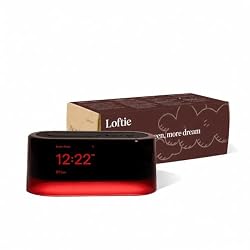

Loftie uses a two-phase audio system. The first alarm is a gentle chime, followed by a louder tone. You can adjust the alarm volume, brightness and sounds right on the clock. The whole approach assumes you don’t need light to cue your brain. You just need a smarter, kinder sound sequence.
Hatch Restore 3 takes the opposite bet. It is a sunrise alarm clock that uses light to support your natural circadian rhythm. The idea is that light helps nudge you toward alertness. There’s real science behind this. Research published in BMC Psychiatry found that simulated dawn improved subjective sleep quality, though the effect sizes were modest, not miraculous.
Here’s the practical catch with light-based wake-ups that nobody in the marketing materials mentions: the light has to actually reach your closed eyelids. I’ve tested breathing light devices before, and I found them genuinely interesting. But I’m a side sleeper who moves around at night. On more than one occasion I woke up facing the wall with the light doing absolutely nothing. With the Hatch, your positioning relative to the device matters. If you’re a restless sleeper, that sunrise simulation might be hitting the ceiling half the time.
Loftie doesn’t have that positioning problem. Sound fills a room. You don’t have to be oriented correctly to hear it.
That said, Loftie is described as a smart alarm clock with a night light, not a sunrise alarm. If you live somewhere with dark winters, or you struggle with seasonal mood shifts, that light component offers real value the Loftie simply cannot replicate. Heavy sleepers may want sound in the mix, because light alone may not wake everyone. The two systems aren’t mutually exclusive so much as differently weighted.
Price and Value: What You’re Actually Paying For
The Loftie Alarm Clock costs about $199.99, and the Hatch Restore 3 costs about $169.99. The hardware gap matters less once you factor in subscriptions.
Hatch offers an optional premium tier. Hatch+ costs $5.99 per month or $59.99 per year after a 30-day free trial for new subscribers, and you can cancel anytime. Loftie lists all features as included with no fees.
The critical difference is what you get without paying anything extra. Loftie ships with 100+ sleep sounds, nature tracks, and wellness content built right in. Full functionality, out of the box. Hatch lists 80+ sleep sounds and a 30-day Hatch+ trial, so check what stays free after the trial before you buy.
Hatch costs less up front, but Loftie needs no ongoing payment, which matters if you’d rather not commit to another monthly bill. I’m the kind of person who audits his subscriptions every six months and cancels anything I’m not actively using, so the stronger out-of-the-box content library on the Loftie genuinely matters to me.
If you’re comparing these against budget sunrise alarm clock options, both represent real investments. Make sure you’re buying the right tool for your situation before spending about $170 to $200 on either one.
Sound Libraries and Audio Quality
Sound quality matters more than most people expect when you’re listening to something for seven or eight hours a night. I learned this the hard way years ago when I was cycling through sleep apps. I tried Calm, Headspace, and a handful of others before settling on a combination that actually worked for me. Tinny, digitized audio genuinely increases my anxiety rather than reducing it. There’s something about low-fidelity recordings that keeps part of my brain alert and dissatisfied.
Loftie handles this well. Its 100+ included sounds include white noise, nature sounds, and guided meditations. For a compact bedside device, the audio quality holds up. It’s not audiophile territory, but it’s not harsh or artificial either.
Hatch Restore 3 lists 80+ science-backed sleep sounds and customizable light and audio pairings, plus a dimmable clock design that keeps your room dark.
One feature worth mentioning: the Loftie also functions as a Bluetooth speaker, so you can stream your own content directly to it. If you have a specific podcast, playlist, or ambient mix that helps you fall asleep, you’re not locked into what Loftie provides. The Hatch listing does not mention Bluetooth streaming. For me, having that flexibility is a genuine plus, because my wind-down audio preferences have shifted over the years and I don’t love being locked into one content library.
Loftie needs the app, 2.4 GHz Wi-Fi and Bluetooth for setup, then can run in Offline Mode without Wi-Fi. That phone-free approach is one of the main reasons people buy dedicated sleep devices in the first place. The temptation to check notifications when you reach for your phone at 2am is real, and removing that temptation has a measurable impact on sleep hygiene.
How Loftie’s Two-Phase Alarm Actually Works
The two-phase alarm is Loftie’s most distinctive feature, and it’s worth understanding the mechanics before you decide if it matches how you naturally wake up.
Phase one is a gentle chime. The intent isn’t to get you out of bed. It’s to begin lifting you from deeper sleep toward lighter sleep, with the louder tone following after.
Phase two is a louder tone, the one designed to actually get you vertical. Loftie also has a Blackout Mode that keeps the screen and light off while the alarm stays active.
The science behind gradual wake-ups is solid. Sleep inertia, that heavy, disoriented feeling when you’re jolted awake mid-cycle, is a real physiological state. Being pulled out of deep sleep abruptly elevates stress hormones and impairs cognitive function for up to 30 minutes. A gentler approach that catches you in lighter sleep stages reduces that effect meaningfully.
My own experience with this system was positive but required some adjustment. The first few mornings I kept waiting for the second alarm, and that anticipation actually made me more alert, which wasn’t the point. Once I stopped trying to monitor the system and just let it do its thing, the transition into wakefulness felt noticeably smoother. It’s a bit like the rain analogy I think about with sleep generally: getting anxious about whether the alarm will work properly is counterproductive. You have to set it up and trust it.
App Experience and Daily Usability
Both devices pair with smartphone apps for setup and customization, though the day-to-day experience differs considerably.
Loftie’s app is clean and functional without being complicated. You set your alarm, choose your sounds, adjust the snooze interval, and you’re done. The physical clock itself has simple touch controls so you rarely need to open the app once your routine is established. For someone who wants technology to fade into the background, this approach works well. I don’t want to spend ten minutes every night reconfiguring a sleep device.
Hatch leans more heavily on its app for the full experience. Building a “routine” in the Hatch app, sequencing your wind-down sounds, sunrise timing, and alarm, is genuinely satisfying once it’s configured. The customization depth is real. But it also means the app is more central to the experience, which introduces more potential friction. If the app update breaks something the night before an important morning, that’s a problem in a way that a simpler device wouldn’t have.
For parents managing kids’ sleep schedules alongside their own, the Hatch app’s routine-building features have obvious appeal. Hatch describes customizable light and audio pairings for a bedtime routine, which may suit families.
Who Should Buy the Loftie Clock
The Loftie is the right choice if you’re a light-to-moderate sleeper who wakes up primarily to sound, you want a full feature set with no subscription, you prefer a device that stays in the background without requiring regular app management, or you’re dealing with sleep anxiety and want the simplest possible bedside setup. The Bluetooth speaker functionality is a genuine bonus for people with established audio preferences.
It’s less suited for heavy sleepers who need strong stimulus to wake up, anyone dealing with seasonal affective disorder or winter darkness, or people who specifically want light-based circadian rhythm support as part of their morning routine. Learn more about circadian rhythm and sleep timing to understand whether light-based interventions belong in your routine.
Who Should Buy the Hatch Restore 3
The Hatch makes more sense if you have dark winter mornings and want genuine sunrise simulation, you’re open to an optional Hatch+ subscription, you enjoy building structured sleep routines with detailed customization, or you’re a heavier sleeper who benefits from the combination of light and sound together.
Hatch+ is optional, but if you’re the kind of person who forgets to cancel things, factor it into your true cost. And if you’re a restless sleeper who ends up facing away from your nightstand by 3am, the sunrise feature may deliver less value than you expect. Check out our guide to alarm clocks for heavy sleepers if you need a stronger wake-up.
The Verdict
If you want the honest answer: the Loftie is the better default choice for most people reading this. It delivers its full feature set without a subscription, the two-phase alarm system is genuinely thoughtful, and the simpler setup reduces the number of things that can go wrong in your sleep environment. For anxiety-prone sleepers especially, complexity is the enemy of good sleep. The Loftie stays out of your way.
The Hatch Restore 3 earns its price for anyone who specifically wants light-based wake-ups or struggles with dark winter mornings. The app-based routine building is more sophisticated. It’s not a worse product. It’s just a more specific one.
Neither device will cure insomnia. Neither will restructure your sleep architecture overnight. What they can do, done right, is make the transition into and out of sleep slightly more civilized. After a decade of testing gadgets and doing the harder cognitive work to actually fix my sleep, I can tell you that “slightly more civilized” is genuinely worth something.
Buy the Loftie Clock on Amazon →
Still weighing your options? Read our best white noise machines guide or our breakdown of sleep trackers that are actually worth buying for more context on building a sleep-friendly bedroom.
Frequently Asked Questions
Loftie vs Hatch: which alarm clock is better?
Neither wins for everyone. The Loftie Alarm Clock (about $199.99) uses a two-phase sound alarm, works as a Bluetooth speaker, and lists 100+ sounds with no subscription. The Hatch Restore 3 (about $169.99) is a sunrise alarm clock with circadian lighting and 80+ sleep sounds. Pick Loftie if you wake to sound and want no fees, and Hatch if you want light-based wake-ups.
Does the Loftie alarm clock need a subscription?
No. Loftie lists all features as included with no fees, including 100+ sleep sounds, a Gentle Alarm and a built-in night light. Setup needs the Loftie app, 2.4 GHz Wi-Fi and Bluetooth, and then you can enable Offline Mode.
Does the Hatch Restore need a subscription?
No, but there is an optional one. Hatch+ comes with a 30-day free trial for new subscribers, then costs $5.99 per month or $59.99 per year, and you can cancel anytime. Check the listing for what is included without it.
What is a good Loftie alarm clock alternative?
The Hatch Restore 3 is the closest alternative here if you want a sunrise alarm light instead of a sound-first alarm. If you are comparing other options, see our guide to the best sunrise alarm clocks.
About the Author
Scott Hilliard is a sleep improvement specialist who spent 10 years managing anxiety-driven insomnia. Through personal testing of dozens of sleep products, professional consultations, and extensive research into sleep science, Scott now helps others find practical, evidence-based solutions for better sleep.
More comparisons: Hatch Restore 2 vs 3, Hatch Rest vs Hatch Restore, Loftie vs One Clock, and our best sunrise alarm clocks.