Loftie vs One Clock: Which Alarm Clock Wins?
Affiliate Disclosure: As an Amazon Associate I earn from qualifying purchases. Some links on this page are affiliate links. If you buy through them we earn a small commission at no extra cost to you. Our recommendations are based on research into specifications, published evidence and product listings. Learn more.
Quick Picks


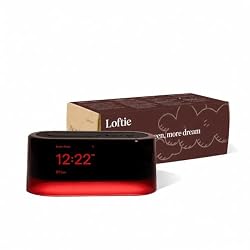
Quick verdict: Pick the Loftie if you want a sound machine, nightlight and two-stage alarm in one clock; the listing says all features are included with no subscription and that it can run in Offline Mode after app setup. Pick the One Clock if you want a bare-bones, dial-set alarm, as described below. If you want a sunrise-style light instead, the Philips SmartSleep listings above describe sunrise and sunset simulation. Comparing Loftie with Hatch instead? Read our Loftie vs Hatch comparison.
| Feature | Loftie Alarm Clock | One Clock |
|---|---|---|
| Price | About $199.99 | See listing |
| Subscription | None per listing; all features included | See listing |
| Sounds | 100+ sleep sounds and guided meditations | See listing |
| Alarm | Two-phase: gentle chime, then louder tone | See listing |
| Light | Built-in nightlight with Blackout Mode | See listing |
| Wi-Fi and app | App and 2.4 GHz Wi-Fi for setup, then Offline Mode | See listing |
The Loftie Clock and the One Clock are two of the most thoughtfully designed alarm clocks on the market for people who want to break up with their phone. Both sit in the premium tier, both promise a calmer bedroom, and both have genuinely passionate fans. The short answer: Loftie wins on features and sound quality, while the One Clock wins on simplicity and design purity. Which one is right for you depends entirely on what you want your alarm clock to actually do.
I’ve been testing both of these on my nightstand over the past several months, and the differences are more nuanced than the spec sheets suggest. Let me walk you through what I found.
This comparison sits within a broader set of product comparisons I’ve been working through at liveworksleep. If you’re still deciding which category of sleep product to prioritise, the comparisons hub covers everything from sound machines to trackers to alarm clocks, and it’s worth a look before you commit to anything.
Shop on Amazon: Loftie Clock on Amazon → | Shop Loftie Clock →

Why Did I Start Looking at Premium Alarm Clocks in the First Place?
For most of my adult life, my phone was the last thing I looked at before sleep and the first thing I reached for in the morning. During the decade I spent managing anxiety-driven insomnia, I knew intellectually that this was a problem. But convenience is a powerful thing. The phone was already there. It had my alarm. It had my podcasts. It had everything.
What finally pushed me to change wasn’t a new study or a productivity book. It was a particularly bad stretch of nights where I’d wake at 3am, check the time on my phone, see a notification, and then lie awake for two hours with my brain running at full speed. The phone wasn’t just a clock. It was a portal to every anxiety I had, available at the worst possible moment.
I started testing dedicated alarm clocks seriously after that. I went through four models over roughly two years, ranging from a cheap Amazon option to a Lumie, a Philips wake-up light, and eventually some of the newer smart-but-intentional clocks like Loftie and the One Clock. What I learned across that process is that the clock itself matters less than what it replaces, and what it replaces matters enormously.
The science backs this up. According to research published through the National Institutes of Health, evening smartphone use is associated with shorter sleep duration, delayed sleep onset, and reduced sleep quality, particularly because of the social and cognitive stimulation that comes bundled with the device, not just the light. A dedicated alarm clock removes the portal. That’s the core value proposition of both Loftie and the One Clock, and it’s worth keeping in mind as we compare features.
What Is the Loftie Clock and Who Is It For?
Loftie is a smart alarm clock that leans into content. It has a two-phase alarm system, 100+ sleep sounds, guided meditations, a built-in nightlight, and Bluetooth speaker use. Setup goes through the Loftie app and 2.4 GHz WiFi. The screen is warm and readable without being harsh. The physical design is clean and understated, a matte rectangle with a fabric-wrapped speaker that sits comfortably on a nightstand without demanding attention.
The two-phase alarm is Loftie’s most distinctive feature. It plays a gentle chime first, followed by a louder tone. The idea is to catch you in a lighter sleep stage and ease you toward waking rather than jolting you out of deep sleep. In practice, I found this genuinely useful on mornings when I’d had a reasonable night. On nights when I’d slept badly, the early phase just woke me up too soon and left me groggy and irritated.
The sound library is substantial. White noise, pink noise, brown noise, nature sounds, and curated ambient tracks. If you’re someone who already relies on background sound for sleep, Loftie consolidates that into one device. That said, if you want a dedicated sound machine with more control over frequency and volume, you might find Loftie’s options feel slightly curated rather than customisable. I’ve covered the broader landscape of sound machines separately, including some excellent budget options in my guide to the best budget white noise machines, which is worth reading if sound masking is a priority for you.

The current Loftie listing is priced at about $199.99 and says all features are included with no subscription. The earlier Loftie model required a subscription after the first year, at roughly $36 per year, to keep the meditations and updated content. Check the current listing for what is included before you buy.
What Is the One Clock and Who Is It For?
The One Clock takes a completely different philosophy. Where Loftie adds, the One Clock subtracts. It’s a premium alarm clock designed to do exactly one thing exceptionally well: wake you up gently with gradually increasing sound, then get out of your way.
The alarm sound on the One Clock is a custom-composed melody that starts almost imperceptibly quiet and builds slowly over several minutes. There’s no library, no subscription, no app required. You set the time using a single dial on the back. The display shows the time in a warm, low-brightness format that’s easy to read without disturbing your sleep environment. That’s it. That’s the whole product.
The build quality is exceptional. The One Clock feels like an object someone cared about making. It’s heavier than you’d expect, the materials feel considered, and the minimal interface means there’s almost nothing to go wrong or get confused by. I’ve handed it to people who are not remotely tech-oriented and they figured it out in about 45 seconds.
The One Clock costs around $199 at full price, with no ongoing subscription.
The limitation is obvious. If you want sound masking, breathing exercises, or a content library, the One Clock doesn’t offer any of that. It’s a clock. A very good clock, designed with genuine care, but a clock nonetheless.
How Do the Wake-Up Experiences Actually Compare?
This is where I spent the most time paying attention, because waking up is the whole point.
The One Clock’s gradual melody is genuinely pleasant. It starts so quietly that on several occasions I wasn’t sure whether I’d heard something or imagined it, and by the time it reached a volume that felt like an alarm, I was already mostly awake. That’s the ideal outcome for a gentle alarm. The melody itself is inoffensive without being saccharine. I never found myself dreading the sound, which is more than I can say for most alarm tones I’ve used over the years.
Loftie’s two-phase approach is more complex. The first phase uses a softer chime designed to nudge you toward lighter sleep. The second phase is your actual alarm. The logic is sound, and it’s grounded in real sleep science. The Mayo Clinic notes that waking during lighter sleep stages tends to feel less disorienting than being jolted from deep sleep, which is the principle Loftie is working with. In practice, though, the execution depends heavily on where you are in your sleep cycle when that first phase hits. Some mornings it worked beautifully. Other mornings it just woke me up early and left me worse off.

One thing I noticed across my alarm clock testing, going back to earlier models I tried before these two, is that light colour matters as much as sound for morning waking. The Philips wake-up light I tested before these two used a cool white at full brightness, which felt clinical and harsh. The amber-to-warm-white progression I prefer is more physiologically appropriate, mimicking natural sunrise. Neither Loftie nor the One Clock is a sunrise simulator. Loftie has a built-in nightlight, but its listing describes a chime-based alarm, so if sunrise light matters to you, look at the Philips SmartSleep wake-up lights above.
Sound Quality and the Sleep Environment
Loftie has a noticeably better speaker than the One Clock. This matters if you’re using it for sleep sounds throughout the night. The audio is warm, reasonably full-range, and loud enough to fill a standard bedroom without distortion. I tested it with brown noise, rain sounds, and some of the ambient tracks, and all of them sounded genuinely good for a nightstand device.
The One Clock’s speaker is adequate for its alarm function but not designed for extended listening. It’s not poor quality, it’s just not the point. If you want to run sleep sounds all night, you’d need a separate device.
This distinction matters more for some households than others. If you have a partner who’s a light sleeper, or you’re in a noisy environment, a dedicated sound machine is often a better solution than relying on an alarm clock’s secondary audio features. I’ve written extensively about this, including a guide to the best white noise machines in 2025 that covers the full spectrum of options. For parents specifically, the calculus is different again, and the best white noise machines for babies guide addresses those specific needs.
The broader question of whether sound masking actually helps sleep is one I find genuinely interesting. The evidence is reasonably strong, though not without nuance. A study published via PubMed found that continuous white noise improved sleep onset and reduced nighttime awakenings in environments with variable noise, though the effect size varied considerably between individuals. My own experience aligns with this: sound masking helps me most when I’m in an unfamiliar environment or when external noise is unpredictable. At home, in a quiet bedroom, the benefit is smaller.
The App and Connectivity Question
Loftie has an iOS and Android app. Initial setup needs the app, 2.4 GHz WiFi and Bluetooth; after that you can enable Offline Mode. The app is clean and well-designed. It works reliably in my experience, though I did have one firmware update that temporarily made the clock unresponsive for about 20 minutes, which was mildly alarming at 11pm when I was trying to set my morning alarm.
Here’s my honest concern with app-dependent alarm clocks: the whole reason you’re buying one of these is to get your phone off the nightstand. If you need to pick up your phone to set your alarm, you’ve reintroduced the exact problem you were trying to solve. Loftie is aware of this tension. You can adjust alarm volume, brightness and sounds directly on the clock, but the initial setup pulls you back to your phone. It’s a real trade-off, not a dealbreaker, but worth naming.
The One Clock has no app, no WiFi, no Bluetooth. The dial on the back sets the alarm time. There is nothing else to configure. For people who find this liberating, it genuinely is. For people who want granular control over multiple alarms or weekday/weekend schedules, it’s a limitation.
I bought a simpler dedicated alarm clock for my teenage son a while back, partly to help him build a morning routine that didn’t start with scrolling. The One Clock would have been overkill for that purpose, but the principle was the same: remove the phone, replace it with something that does one job well. The American Psychological Association has written about adolescent sleep and device use, noting that the bedroom environment is particularly important for teenagers whose sleep architecture is already shifting. A phone-free nightstand is one of the lowest-friction interventions available.

Travel Considerations
Neither of these is designed as a travel clock, and I wouldn’t recommend either for that purpose. They’re both mains-powered, reasonably sized, and not packaged with travel in mind. If you travel frequently and want to maintain a consistent sleep environment away from home, you’re better served by something purpose-built for portability. I’ve covered that category separately in the best white noise machines for travel guide, which includes options that handle time zone shifts and variable power standards gracefully.
That said, Loftie needs WiFi and the app for setup, then can run in Offline Mode. I’ve taken mine on a couple of longer trips and it worked fine. The One Clock works anywhere with a standard power outlet, no internet required.
How Do These Compare to Other Dedicated Sleep Devices?
It’s worth situating Loftie and the One Clock within the broader ecosystem of dedicated sleep devices. Both are alarm clocks first. Neither replaces a proper sound machine if you have significant noise sensitivity or a partner with different sleep needs. Neither provides the light therapy component that a sunrise alarm clock offers.
If you’re comparing these to something like the Hatch Rest ecosystem, the overlap is partial. Hatch products are designed primarily around sound and light, with alarm functionality as a secondary feature. The comparison between Hatch models is its own nuanced topic, and if that’s relevant to your situation, the breakdown of Hatch Rest 2nd Gen vs Rest+ covers those differences in detail.
The CDC’s sleep guidelines recommend maintaining consistent sleep and wake times as one of the foundational behaviours for sleep health. A reliable, non-phone alarm clock supports that consistency in a way that’s underrated. The tool doesn’t need to be sophisticated. It needs to be reliable and present.
What I’ve come to believe, after testing a lot of these products, is that the value of a dedicated alarm clock is mostly about what it displaces rather than what it provides. Both Loftie and the One Clock do that job. They get your phone off the nightstand. Everything else is a feature debate.
Price, Value, and the Honest Verdict
Let me be direct about value, because this is where a lot of reviews get evasive.
The One Clock at $199 is expensive for what it does. You are paying for design, build quality, and simplicity. If those things matter to you, it’s worth it. If you want to feel like you got features for your money, you will feel shortchanged.
Loftie at about $199.99 is priced similarly to the One Clock, and its listing says the sound library and other features come with no subscription. If you use the sound library and meditations regularly, that is a lot of function for the money. If you mostly want a plain alarm, a simpler clock may be enough.
The Sleep Foundation consistently emphasises that sleep environment improvements don’t need to be expensive to be effective. Consistency, darkness, temperature, and reduced stimulation before bed are the high-leverage variables. A premium alarm clock is a nice tool. It’s not a treatment.
I say that as someone who has spent real money on sleep products over the years, some of which were genuinely worth it and some of which were not. The honest framing for both of these clocks is: they’re good products solving a real problem, at a price point that requires some justification. Neither is an impulse buy.
If you’re interested in the broader science of what environmental interventions actually move the needle on sleep quality, the evidence on white noise machines and sleep is a useful reference point for understanding what the research actually supports versus what’s marketing.

My Recommendation
Choose the Loftie if you want a sleep ecosystem in one device: sound library, guided meditations, a nightlight, and a two-phase alarm. You’re fine with app-based setup, you’ll actually use the content, and you want more than just an alarm clock. Weighing it against Hatch? See our Loftie vs Hatch comparison.
Choose the One Clock if you want the purest possible version of a phone replacement. No subscription, no app dependency, exceptional build quality, and a genuinely lovely wake-up experience. You’re buying simplicity, and you’re paying a fair price for it.
Both are meaningfully better than using your phone as an alarm clock. Both will improve your bedroom environment in the specific way they’re designed to. Neither is a magic solution for sleep problems, and I’d be doing you a disservice if I suggested otherwise.
What I can say from experience is that removing the phone from my nightstand was one of the highest-impact changes I made during the years I was actively working on my sleep. The clock I used to replace it mattered less than the fact that I replaced it at all. These are both good tools for making that change stick.
Read more articles on the Comparisons Hub. You may also like our Loftie vs Hatch comparison, the Loftie clock review, and our guide to the best sunrise alarm clocks.
Transparency Disclaimer: This article contains affiliate links to sleep products. If you purchase through these links, liveworksleep may earn a commission at no additional cost to you. These commissions help support our independent testing and honest reviews. We only recommend products that align with our experience-based evaluation standards.
About the Author
Scott Hilliard is a sleep improvement specialist who spent 10 years managing anxiety-driven insomnia. Through personal testing of dozens of sleep products, professional consultations, and extensive research into sleep science, Scott now helps others find practical, evidence-based solutions for better sleep. His approach combines honest product reviews with real-world experience, always prioritising what actually works over marketing hype.
Frequently Asked Questions
Is Loftie worth it?
The Loftie listing is priced at about $199.99 and says all features are included with no subscription, including 100+ sleep sounds, a gentle two-stage alarm and a nightlight. It is worth it if you want those in one bedside device. If you only want a plain alarm, a simpler clock may be enough.
What is a good Loftie alarm clock alternative?
If you want a sunrise-style wake-up, the Philips SmartSleep Sleep and Wake-Up Light (about $143.99) and the Philips SmartSleep Wake-up Light (about $76.29) both describe sunrise and sunset simulation with sounds and FM radio. If you want a simple dial-set alarm, the One Clock covered above is the other option compared here.
Loftie vs Hatch: which should I choose?
They suit different priorities, so it is best to compare them side by side. We cover it in our Loftie vs Hatch comparison at https://liveworksleep.com/loftie-vs-hatch/.
Loftie vs One Clock: which is better?
Loftie suits readers who want sounds, a nightlight and a two-phase alarm in one clock. The One Clock, as described in this article, suits readers who want a minimal clock without an app. Check each listing for current details.