Loftie Clock Review: Two-Phase Wake System Worth the Price?
Affiliate Disclosure: As an Amazon Associate I earn from qualifying purchases. Some links on this page are affiliate links. If you buy through them we earn a small commission at no extra cost to you. Our recommendations are based on research into specifications, published evidence and product listings. Learn more.
Quick Picks


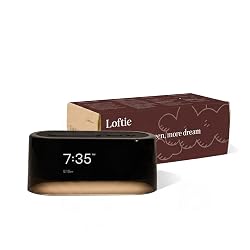
The Loftie Clock has carved out a unique position in the smart alarm space by focusing on disconnection rather than integration. Unlike competitors that pack in sunrise simulation and comprehensive sleep tracking, Loftie takes a minimalist approach centered on one distinctive feature: a two-phase alarm designed to mirror your body’s natural waking process.
Shop on Amazon: Loftie Clock → | Philips SmartSleep →
After spending years battling anxiety-driven insomnia, I’ve tested countless wake-up solutions. The appeal of a device specifically engineered to reduce that jarring morning shock resonated immediately. The question is whether Loftie’s focused feature set justifies its $160 price tag when competitors offer more comprehensive functionality for similar or lower costs.
This review examines the Loftie Clock’s actual performance, value proposition, and whether its two-phase alarm system delivers meaningful benefits or clever marketing wrapped in pleasant aesthetics.
What Makes the Loftie Clock Different
The Loftie Clock distinguishes itself through deliberate limitations rather than feature abundance. The device centers on a two-phase alarm that plays a gentle wake-up tone nine minutes before your scheduled alarm, designed to gently rouse you from deeper sleep stages into lighter sleep. Nine minutes later, the get-up alarm sounds with a louder, more energizing tone intended to fully wake you.
This approach aligns with emerging research on sleep inertia, the transitional state of reduced arousal and impaired cognitive performance immediately upon awakening. A 2023 study published in the Journal of Sleep Research found that snoozing may allow people interrupted from slow-wave sleep or REM sleep the opportunity to reach lighter sleep stages before fully waking, potentially diminishing sleep inertia’s effects. Research on melodic alarm tones also suggests that sounds rated as melodic show significant relationships to reduced perceived sleep inertia.

Beyond the two-phase system, Loftie offers 100+ sleep sounds, white noise options, breathwork exercises, and guided meditations. The device functions as a Bluetooth speaker and includes a nightlight with adjustable brightness. Critically, it features a complete blackout mode with zero light leakage, addressing a common complaint with digital alarm clocks.
I’ve always prioritized absolute darkness for sleep. My bedroom uses both blackout blinds and curtains together to achieve pitch black conditions. The Loftie’s true blackout mode matters more than most reviews acknowledge. Many alarm clocks claim dim displays but still emit enough ambient light to disrupt sleep. Loftie actually delivers on this promise.
What the Loftie Clock notably lacks is sunrise alarm functionality. This isn’t a design oversight but a deliberate choice. The small nightlight can turn on with alarms, but it doesn’t simulate gradual dawn. Loftie sells a separate Lamp product ($275) specifically for sunrise features, which pairs with the clock but isn’t included.
Technical Specifications and Setup Process
The Loftie Clock measures approximately 5.7 inches wide, with a minimalist design available in black or white color options. The device requires 2.4 GHz Wi-Fi and Bluetooth for initial setup through the Loftie mobile app (available for both iOS and Android).
Setup demands more effort than traditional alarm clocks but less than fully integrated smart home devices. After downloading the app and creating an account, you connect the clock to your Wi-Fi network and wait for the initial content download, which typically takes 30 to 60 minutes. This delay proved frustrating during my testing, particularly since you can’t use core features until the update completes.

Once setup completes, the clock operates in two modes. Standard mode maintains Wi-Fi connectivity for software updates and accessing new content. Offline mode (labeled “No Wi-Fi Mode” in settings) allows full functionality without wireless connection after initial setup and time synchronization. This offline capability addresses concerns about electromagnetic field exposure near the bed, though you lose access to new content additions until reconnecting.
The physical interface uses three buttons: two arrows for navigation and volume control, one large button for the nightlight, snooze, and back functions, and a smaller circular button for power, selection, and play/pause. This simplified control scheme requires learning a specific navigation pattern, but becomes intuitive after several days of use.
Battery backup lasts approximately five to seven hours if unplugged, protecting against brief power interruptions but requiring constant connection for reliable operation. The device charges via USB-C cable with included wall adapter.
The Two-Phase Alarm: Theory Versus Practice
Loftie’s signature feature deserves scrutiny beyond marketing claims. The two-phase alarm concept draws from research suggesting gradual awakening reduces sleep inertia more effectively than abrupt alarms. However, the scientific evidence supporting this specific implementation shows mixed results.
A 2022 study in the Journal of Physiological Anthropology examined snooze alarm effects on sleep inertia. Researchers found that using snooze alarms prolonged wake time and increased stage N1 sleep (the drowsy transitional state) during the final 20 minutes before waking. Participants showed worse reaction times and reduced global vigor after awakening compared to single-alarm conditions. The study concluded that repeated forced awakening may actually increase sleep inertia rather than reduce it.

This research presents a challenge for Loftie’s approach. While the device’s wake-up tone differs from traditional snooze functions (you don’t need to press anything to continue the cycle), the underlying mechanism of interrupted then resumed sleep remains similar. The question becomes whether Loftie’s predetermined nine-minute interval and specifically designed tones overcome the documented downsides of sleep fragmentation.
In my testing over four weeks, the two-phase alarm produced inconsistent results. On nights when I fell asleep relatively early and achieved adequate total sleep time, the initial wake-up tone felt gentle and the nine-minute interval provided a gradual transition to full wakefulness. However, on shorter sleep nights, the first alarm often woke me completely, making the subsequent nine minutes an exercise in frustration rather than gradual arousal.
The variability likely relates to which sleep stage the initial alarm interrupts. When it caught me in lighter sleep stages, the system worked as advertised. When it pulled me from deeper sleep or REM cycles, I experienced the same grogginess any abrupt awakening causes. Unfortunately, the Loftie offers no sleep stage detection to optimize timing, a feature competitors like the Hatch Restore 3 attempt through their app integration and sleep tracking capabilities.
After years managing sleep challenges, I’ve learned that acceptance matters more than optimization. Getting upset about not sleeping perfectly is like getting upset that it’s raining outside—pointless resistance that makes the situation worse. This philosophy extends to alarm effectiveness. Some mornings will feel rough regardless of your wake-up method. The Loftie Clock doesn’t eliminate bad mornings; it occasionally makes good mornings slightly better.
Sound Library and Audio Quality
The Loftie Clock includes over 100 sounds accessible without subscription: nature sounds, white noise variations, brown noise, soundscapes, breathwork guides, and sleep meditations. The pre-installed content covers essential categories adequately, though the selection feels modest compared to dedicated sound machine apps.
Audio quality matches decent Bluetooth speakers, delivering clear midrange frequencies suitable for voice-based meditations and ambient sounds. Bass response lacks depth, which matters less for sleep applications but becomes noticeable when streaming music via Bluetooth. The speakers handle white noise reproduction well, with minimal hiss or artifact at moderate volumes.

Alarm tone selection deserves specific attention. Loftie offers sounds like “Bowls,” “Radiance,” “Paradise,” and “Gong” for both wake-up and get-up phases. These tones emphasize melodic qualities over jarring beeps, consistent with research showing melodic alarms correlate with reduced perceived sleep inertia. The variety allows customization based on personal preference, though you’ll need the app to preview sounds before selecting them.
Volume adjustment spans a useful range from barely audible to sufficiently loud for heavy sleepers. My testing confirmed the clock reaches adequate volume even for someone who typically struggles with morning alertness, though it won’t match dedicated wake-up alarms designed for profound hearing loss.
The optional Loftie+ subscription ($5.99 monthly) adds extended soundscapes, exclusive bedtime stories, and customizable wind-down routines. During my trial period, I found the free content sufficient for basic needs. The subscription value depends on whether you regularly engage with guided content rather than simple ambient sounds.
If you find the clock’s own content thin and what you really want is something to listen to as you drift off, a dedicated audiobook library fills that gap better than a bundled sound catalogue. Slow narration and sleep stories are what I reach for when ambient noise isn’t enough. A free 30-day Audible trial is a no-cost way to see whether spoken-word content settles you faster than soundscapes do.
App Dependency and Offline Functionality
Loftie markets itself as enabling phone-free bedrooms, but this claim requires context. Initial setup demands the smartphone app, as does any significant customization like changing alarm sounds, adjusting settings, or accessing new content. Once configured, the clock operates fully via physical buttons without app interaction.
This differs from competitors like the Hatch Restore 3, which requires app access for most alarm and routine adjustments. You can turn Hatch’s pre-set alarms on or off via device buttons, but creating new alarms or modifying sounds necessitates app use. Loftie allows setting and modifying alarms directly on the clock, a genuine advantage for minimizing phone presence in the bedroom.
I maintain a strict screen-free hour before bed, which typically means leaving my phone in another room. This routine developed after realizing that having my phone accessible inevitably led to checking messages or scrolling—behaviors incompatible with quality sleep preparation. The Loftie’s physical interface supports this approach better than app-dependent alternatives.
However, the “phone-free bedroom” positioning overstates the reality. You’ll periodically need your phone for software updates, accessing new content, or troubleshooting issues. The clock doesn’t eliminate phone dependency; it reduces it to occasional rather than daily interaction. For those genuinely committed to device-free sleeping environments, consider whether this partial reduction justifies the investment versus a basic alarm clock.
Comparison: Loftie Clock Versus Hatch Restore 3
The Hatch Restore 3 ($170) represents the Loftie’s primary competitor, though the devices pursue different philosophies. Hatch emphasizes comprehensive customization through deep app integration, offering sunrise simulation, extensive sound libraries, and detailed routine programming. Loftie prioritizes simplicity and reduced phone dependency through preset content and physical controls.

The sunrise feature represents the most significant functional difference. Hatch gradually increases light intensity before your alarm time, simulating natural dawn. Research on artificial dawn shows potential benefits for reducing sleep inertia, with a 2010 study in the Journal of Sleep Research finding positive effects on skin temperature and awakening cortisol response. Loftie’s small nightlight cannot replicate this effect without the separate $275 Lamp accessory.
For those seeking sunrise functionality, exploring options like the Philips SmartSleep Wake-Up Light provides dedicated dawn simulation without additional purchases. If sunrise matters less than sound-based awakening and offline functionality, Loftie’s approach may suit your preferences better.
Sound library depth favors Hatch, particularly with the Hatch+ subscription ($4.99 monthly) unlocking hundreds of options including sleep stories, music, and meditation content. Loftie’s 100+ sounds cover basics adequately but lack the variety power users might desire. Both devices require subscriptions for premium content, making the free tier comparison most relevant for budget-conscious buyers.
The two-phase alarm remains Loftie’s unique selling proposition. Hatch uses traditional single-alarm timing, though you can create custom routines approximating gradual awakening through app programming. Whether Loftie’s automated two-phase system outperforms Hatch’s DIY approach depends on individual response to the wake-up intervals and sound selection.
Design, Build Quality, and Bedroom Integration
The Loftie Clock adopts minimalist aesthetics that integrate well with contemporary bedroom decor. The device measures small enough for crowded nightstands while maintaining readable display size. Build quality feels solid, with a plastic housing that resists minor impacts and a stable base preventing easy tipping.
The fabric-covered front panel containing speakers adds tactile interest while serving acoustic purposes. This material choice differs from competitors’ all-plastic construction, contributing to the premium positioning despite the modest price point.
Display brightness adjusts through multiple levels, from barely visible to comfortably readable in moderate ambient light. The blackout mode truly eliminates all display illumination, a feature I immediately enabled and never disabled. True darkness matters more than most people realize. Even small amounts of light can disrupt sleep quality, and Loftie gets this right where many competitors fail.
The nightlight provides soft, warm-toned illumination suitable for late-night navigation without shocking your eyes with harsh brightness. However, it cannot simulate gradual sunrise, limiting its utility to basic orientation lighting rather than circadian rhythm support.
What the Loftie Clock Does Well
The Loftie Clock excels in specific areas that matter greatly if they align with your priorities:
True blackout mode eliminates all light pollution, crucial for light-sensitive sleepers. Complete darkness remains non-negotiable for my sleep quality, and Loftie delivers without compromise.
Physical button control reduces phone dependency more effectively than app-reliant competitors. You can set alarms, adjust volume, and control all functions without unlocking your smartphone, supporting genuine device-free bedrooms rather than marketing rhetoric.
The two-phase alarm provides gentler awakening than single alarms when it catches you in appropriate sleep stages. On nights when everything aligns, the gradual arousal feels noticeably more pleasant than jarring beeps, though consistency remains elusive.
Offline functionality works completely after initial setup and content download. Concerns about electromagnetic fields near the bed can be addressed through No Wi-Fi Mode without sacrificing alarm reliability.
The included sound library covers essential categories without subscription requirements. Basic white noise, nature sounds, and meditation content provide adequate variety for straightforward sleep support.
Significant Limitations and Concerns
Several factors constrain the Loftie Clock’s value proposition and may disappoint buyers expecting comprehensive smart alarm functionality:
No sunrise alarm capability without purchasing the separate $275 Lamp creates a significant cost barrier for those wanting dawn simulation. The total investment reaches $435 for combined functionality competitors integrate in single $170 devices.
The two-phase alarm’s effectiveness varies unpredictably based on sleep stage timing you cannot control. Without sleep stage detection, the system applies the same nine-minute interval regardless of whether you’re in deep sleep or already approaching natural wakefulness.
Research on snooze alarms suggests repeated awakening may increase rather than decrease sleep inertia through sleep fragmentation. The 2022 Journal of Physiological Anthropology study found worse cognitive performance after snooze alarm use, raising questions about whether Loftie’s variation overcomes these documented downsides.
Sound library depth pales compared to dedicated sound machine apps or competitor offerings. The 100+ sounds cover basics but lack the extensive selection available through Hatch+ or standalone meditation apps.
Limited Bluetooth functionality prevents headphone connections, restricting private listening options for shared bedrooms. The device functions as a speaker for streaming audio but offers no jack or wireless headphone pairing.
One-year warranty coverage feels inadequate for a $160 device. Several user reviews mention unit failures within the first year, making the brief warranty period concerning for long-term reliability.
Price Analysis and Value Assessment
At $160 regular price, the Loftie Clock occupies an awkward position between basic alarm clocks ($20-50) and feature-rich smart alternatives ($150-200). Refurbished units sometimes appear at $99, improving value but sacrificing new condition and full warranty protection.
Comparing directly to the Hatch Restore 3 ($170) reveals similar pricing but divergent feature sets. Hatch includes sunrise simulation, superior sound variety, and comprehensive app customization. Loftie offers simplified operation, better offline functionality, and the unique two-phase alarm. Your preference between these tradeoffs determines which device delivers better value.
Budget alternatives merit consideration for those primarily wanting sound-based awakening without smart features. Quality basic alarm clocks with pleasant tones cost $30-60. Dedicated white noise machines range from $50-100. Combining these separate devices provides similar core functionality at lower total investment, though you sacrifice integration and aesthetic cohesion.
The optional Loftie+ subscription adds $72 annually for extended content. Unless you regularly engage with guided meditations or bedtime stories, the free sound library proves sufficient for sleep support.
I’ve learned through experience that expensive sleep products rarely solve underlying issues. The weighted blanket that genuinely helped my anxiety-related sleep struggles cost $80. The WHOOP tracker I tested provided interesting data but limited practical value despite significantly higher cost and ongoing subscription. The Loftie Clock falls somewhere between these extremes: not essential, occasionally helpful, reasonably well-executed but expensive for what it delivers.
Who Should Buy the Loftie Clock
The Loftie Clock suits specific users whose priorities align with its focused feature set:
Light-sensitive sleepers who prioritize complete darkness benefit from true blackout mode executed better than most competitors. If stray LED glow disrupts your sleep, Loftie’s zero-light-leakage design addresses this fundamental need.
Those committed to phone-free bedrooms gain more substantive device independence than app-dependent alternatives provide. Physical button control enables genuine smartphone separation rather than aspirational marketing.
People curious about two-phase alarms willing to experiment with the approach might find occasional benefits when sleep timing aligns favorably, though consistent results remain uncertain.
Minimalist aesthetic preferences match Loftie’s clean design that integrates unobtrusively into contemporary bedroom decor without competing for visual attention.
Buyers unconcerned about sunrise simulation can avoid paying for features they won’t use, unlike competitors bundling dawn simulation with higher price tags.
Who Should Consider Alternatives
Several buyer profiles would benefit from exploring other options before committing to the Loftie Clock:
Anyone wanting sunrise alarm functionality faces either purchasing Hatch’s integrated approach or investing $435 total for Loftie’s Clock plus Lamp combination. Neither path offers compelling value compared to dedicated sunrise alarms.
Budget-conscious shoppers can achieve similar core functionality through separate, less expensive devices. A $40 alarm clock plus $60 sound machine provides comparable capability at significantly lower investment.
Those desiring extensive sound libraries and customization options will find Hatch’s ecosystem more satisfying despite greater app dependency. The trade-off between variety and simplicity favors Hatch for content enthusiasts.
People requiring reliable wake-up consistency might struggle with the two-phase alarm’s variable effectiveness. Traditional single alarms or sunrise simulation provide more predictable results.
Shared bedroom sleepers needing private listening options cannot use headphones with Loftie, making alternatives supporting Bluetooth headphones more practical.
Final Verdict: Focused Excellence With Clear Limitations
The Loftie Clock executes its focused vision competently while accepting limitations that constrain broader appeal. The device delivers genuine value in specific areas: true blackout mode, reduced phone dependency, pleasant aesthetic integration, and offline functionality. The two-phase alarm provides occasional gentle awakening when circumstances align favorably.
However, the lack of sunrise simulation, variable two-phase alarm effectiveness, modest sound library, and $160 price point create significant value questions. The device asks buyers to pay premium pricing for deliberately limited functionality, wagering that focused execution outweighs comprehensive features.
After extensive testing and reflection on my decade managing anxiety-driven insomnia, I’ve concluded the Loftie Clock represents a “nice to have” rather than “must have” purchase. It improves some mornings marginally, looks attractive on nightstands, and supports phone-free bedroom goals effectively. But it doesn’t transform sleep quality, guarantee gentler awakenings, or deliver value clearly superior to less expensive alternatives.
For buyers whose priorities align precisely with Loftie’s strengths—particularly complete darkness obsessives seeking pleasant sound-based awakening without sunrise features—the device delivers on its promises. For everyone else, the Hatch Restore 3’s sunrise simulation and deeper customization, budget alarm clocks combined with standalone sound machines, or even the best sunrise alarm clocks for comprehensive wake-up support merit serious consideration before investing in Loftie’s focused but limited approach.
The Loftie Clock succeeds at what it attempts while deliberately avoiding features many users want. Whether this focused philosophy represents thoughtful restraint or frustrating limitation depends entirely on which features matter most for your specific sleep challenges and morning preferences.
Frequently Asked Questions
Does the Loftie Clock have a sunrise alarm feature?
No, the Loftie Clock does not include sunrise alarm functionality. The device has a small nightlight that can turn on with alarms, but it cannot simulate gradual dawn. Loftie sells a separate Lamp product ($275) that provides sunrise features and works with the Clock, but sunrise capability is not built into the Clock itself.
How does the two-phase alarm system work?
The two-phase alarm plays a gentle wake-up tone nine minutes before your scheduled alarm time, designed to gently rouse you from deeper sleep stages. Nine minutes later, a louder get-up tone sounds to fully wake you. Both tones can be customized from Loftie’s sound library, and you can choose different sounds for each phase. The system aims to reduce sleep inertia by providing gradual awakening rather than abrupt alarm shock.
Can I use the Loftie Clock without the smartphone app?
After initial setup, yes. You need the app for first-time configuration and content download, but once setup completes, you can control all functions through the three physical buttons on the device. You can set alarms, adjust volume, select sounds, and use all features without your phone. The app is only required later for software updates, accessing new content, or making significant customization changes.
Does the Loftie Clock require a subscription?
No subscription is required for core functionality. The Clock includes 100+ sleep sounds, meditations, and alarm tones accessible without any subscription. However, Loftie offers an optional Loftie+ subscription ($5.99/month) that adds extended soundscapes, exclusive bedtime stories, customizable wind-down routines, and app-blocking features. Most users find the free content sufficient.
How does blackout mode work?
Blackout mode completely eliminates all light from the display, creating total darkness with zero light leakage. You can enable it through either the app or the physical buttons on the device. This differs from many alarm clocks that claim “dim” displays but still emit some ambient glow. When blackout mode is active, the Loftie Clock produces absolutely no visible light, which matters significantly for light-sensitive sleepers.
Shop on Amazon: Loftie Clock → | Philips SmartSleep → | JALL Wake Up Light →
Is the Loftie Clock better than the Hatch Restore 3?
Neither device is objectively “better”—they serve different priorities. The Hatch Restore 3 offers sunrise simulation, more extensive sound libraries, and deeper app customization but requires more phone interaction. The Loftie Clock provides better offline functionality, true phone-free operation after setup, and the unique two-phase alarm, but lacks sunrise features and offers a more limited sound selection. Choose Hatch if you want sunrise alarm capability and comprehensive customization. Choose Loftie if you prioritize reduced phone dependency and focused simplicity. To understand whether sunrise alarms actually improve waking, see our research-based analysis.
Read more articles on the Sunrise Alarm Clocks Hub.
About the Author
Scott Hilliard is the founder of liveworksleep and has spent over a decade managing anxiety-driven insomnia through extensive product testing, professional consultations, and evidence-based sleep optimization strategies. His reviews combine personal experience with research analysis to help readers make informed decisions about sleep solutions.
Transparency Disclaimer: liveworksleep.com participates in affiliate programs. When you purchase through links on our site, we may earn a commission at no additional cost to you. This supports our research and content creation. We only recommend products we have thoroughly researched. Our editorial content remains independent of affiliate relationships.
Medical Disclaimer: This article is for informational purposes only and does not constitute medical advice. Sleep issues can indicate underlying health conditions. Consult qualified healthcare providers for personalized medical guidance. Individual results with sleep products vary. What works for one person may not work for another.