Muse 2 vs Muse S Athena: Which Should You Buy?
Affiliate Disclosure: LiveWorkSleep may earn a commission on purchases made through links in this article at no extra cost to you. Our recommendations are based on research into specifications, published evidence and product listings.
Quick Picks


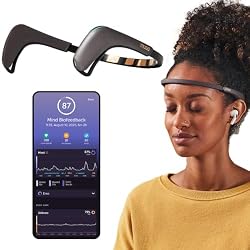
Quick verdict: Choose the Muse 2 (about $249.99) if you mainly want guided, biofeedback meditation while awake. Choose the Muse S Athena (3rd gen, about $474.99) if you want a soft headband built for sleep tracking and sleep features such as Sleep Assist and Deep Sleep Boost. Both pair with the Muse app over Bluetooth.
| Feature | Muse 2 (USB-C) | Muse S Athena (3rd gen) |
|---|---|---|
| Price | About $249.99 | About $474.99 |
| Main focus | Meditation with real-time biofeedback and a calm score | Sleep tracking, focus and recovery |
| Sensors | SmartSense EEG | SmartSense EEG plus fNIRS |
| Sleep features | See listing | Sleep Assist and Deep Sleep Boost |
| Headband | See listing | Soft, adjustable headband |
| Premium subscription | Optional (AI Coach, 500+ meditations) | Optional (AI Coach, 500+ meditations) |
The Muse 2 and Muse S are both EEG headbands designed to help you meditate and sleep better, but they serve meaningfully different purposes. The Muse 2 is a meditation-focused device you wear during guided sessions while awake. The Muse S was specifically redesigned for sleep, with a softer form factor you can actually wear through the night. Which one is right for you depends almost entirely on what problem you’re trying to solve.
Note: the current Muse S is the Muse S Athena (3rd gen). Where I describe my hands-on experience with the Muse S below, it refers to the previous model, the Muse S (Gen 2).
I’ve spent a lot of time thinking about whether EEG headbands are worth the investment, and the Muse line sits at the centre of that question. The technology is genuinely interesting. Real-time brainwave monitoring is actual neuroscience, not the accelerometer-based guesswork that most sleep wearables rely on. But interesting technology and useful technology are two different things, and that gap is exactly what this comparison is about.
If you’re exploring the broader landscape of EEG sleep devices, our EEG Headbands Hub covers everything from how the technology works to which devices are worth considering in 2025. This article focuses specifically on the Muse 2 versus Muse S decision, including who each device actually suits and where both fall short.
Shop on Amazon: Muse 2 | Muse S Athena
What Problem Are You Actually Trying to Solve?
This is the question I wish every sleep tech review started with, because it changes the answer completely. Most people arrive at a Muse comparison looking for something that will improve their sleep. That’s partially true for both devices, but the mechanism matters enormously.
When I was in the thick of my anxiety-driven insomnia, around year four or five of genuinely struggling, I became obsessed with understanding what was happening in my brain at night. I’d lie awake running the same mental loops, watching the clock, calculating how many hours I had left before my alarm. The problem wasn’t that I didn’t know how to sleep. It was that I couldn’t quiet the cognitive noise long enough to let sleep happen.
That distinction matters here. The Muse 2 addresses the pre-sleep problem. It trains you to reach a calmer mental state through real-time biofeedback during meditation sessions. The Muse S does that too, but adds a sleep-specific layer: it monitors your brain activity throughout the night and provides data on your sleep stages and patterns.
If your problem is a racing mind at bedtime, both devices are relevant. If you want to understand your sleep architecture, only the Muse S gets you there. Knowing which camp you’re in saves you from spending more than you need to, or buying the wrong tool entirely.
How Does the Hardware Actually Differ?
Muse 2: Built for Meditation, Not Mattresses
The Muse 2 looks like what it is: a meditation device. It has a rigid headband with a firm forehead sensor and behind-ear electrodes. Worn for 20 minutes during a guided session while you’re sitting still with your eyes closed, it’s comfortable enough. Worn through eight hours of sleep? That’s a very different conversation.
I tried sleeping with the Muse 2 once, out of curiosity more than anything else. I made it about 90 minutes before the forehead pressure became distracting enough to pull me out of the light sleep I’d managed to reach. As a side sleeper, the behind-ear sensor also dug into my pillow in a way that made comfortable positioning genuinely difficult. It’s not designed for overnight use, and it shows.
Battery life is worth checking too if you plan to wear it overnight; see the current listing for details.
Muse S: Redesigned from the Ground Up
The details below describe the previous model, the Muse S (Gen 2). The current model is the Muse S Athena (3rd gen), which the listing describes as a soft, adjustable headband with EEG and fNIRS sensors.
The Muse S was built with sleep in mind from the start. The headband uses a softer, more flexible fabric material with a gentler fit. The sensors are repositioned to reduce pressure points when you’re lying down, which matters a lot if you’re a side sleeper like me. There’s also a built-in sleep timer and a feature called Go-to-Sleep Journeys: audio experiences that respond to your brain state in real time, fading when your brain activity shows you’re drifting toward sleep.
I’ve tested a fair number of wearable sleep devices over the years, and comfort is consistently the variable that separates theory from practice. The best tracking device in the world is useless if you pull it off at 2am because it’s digging into your temple. The Muse S is meaningfully more wearable for overnight use than the Muse 2, though I’ll be honest: neither device is something you’ll forget you’re wearing. The Muse S just gets much closer to the point where you stop noticing it.
On the Gen 2, battery life extended to around ten hours, which covered most sleep windows. Check the Athena listing for its current battery details.
What Does the EEG Data Actually Tell You?
This is where I want to be straight with you, because the marketing in this category tends to outpace the science.
EEG, or electroencephalography, measures electrical activity in the brain through sensors placed on the scalp. Clinical EEG uses multiple electrodes placed precisely across the skull. The Muse devices use four to seven sensors depending on the model, which is a significant simplification. Research published through the National Institutes of Health indicates that consumer-grade EEG devices can detect broad brainwave patterns, including alpha, theta, and delta waves associated with different states of relaxation and sleep, but their accuracy for staging sleep is considerably lower than clinical polysomnography.
What this means practically: the Muse S can tell you something real about your brain’s activity during sleep. It can identify periods of lighter and deeper sleep with reasonable consistency. But you should treat the sleep stage data as directional rather than definitive. If it shows you’re consistently spending very little time in deep sleep across multiple nights, that’s worth paying attention to. If it tells you that you got 47 minutes of REM on a Tuesday, I wouldn’t put too much weight on that specific figure.
The Muse 2’s data output is focused on meditation quality rather than sleep. After each session, you see a breakdown of how much time you spent in calm, neutral, and active brain states, along with a score and streak tracking. The gamification works for some people, and I’ll admit it worked for me during the early months of building a consistent meditation habit. The specific numbers are more motivational than diagnostic, but that’s not nothing. A consistent meditation habit has genuine downstream effects on sleep quality, which is the real case for the Muse 2 as a sleep tool.
The Mayo Clinic notes that mindfulness meditation has a meaningful evidence base for reducing the cognitive arousal that disrupts sleep onset. That’s exactly the mechanism the Muse 2 works with. The device doesn’t create calm; it reflects your brain state back to you in a way that helps you learn to reach calm more reliably. That’s a real and useful function, even if it’s more indirect than overnight sleep tracking.
For context on how consumer EEG compares to clinical sleep measurement, the Sleep Foundation’s overview of sleep studies is worth reading before you set expectations for either device.
How Does the App Experience Compare?
Both devices run through the Muse app, which has improved considerably over the past few years. The interface is clean, the session history is easy to navigate, and the guided meditations are genuinely well-produced. On the Gen 2, the Muse S unlocked additional content within the app, including the Go-to-Sleep Journeys and morning sleep reports. The Athena lists Sleep Assist and Deep Sleep Boost features.
One thing that surprised me when I started testing meditation apps and devices seriously: the quality of the audio content matters more than you’d expect. I’ve used apps where the guided sessions felt clinical and detached. I’ve used others where the voice and pacing actually helped me settle. Muse sits in the better half of that range. The biofeedback element, where nature sounds respond to your brain state in real time, is genuinely engaging in a way that keeps you invested in the session rather than just waiting for a timer to go off.
The sleep reports in the Muse S (Gen 2) app gave you a nightly summary with a sleep score, time asleep, and a breakdown of sleep phases. Heart rate data is also included. For someone trying to identify patterns in their sleep quality over weeks or months, this is genuinely useful. For someone looking for precision diagnostic data, the limitations I mentioned earlier apply.
One practical note: both devices require Bluetooth and a charged phone nearby. If you’re someone who charges your phone in another room as a sleep hygiene practice, that’s worth factoring in. I had to rethink my own phone placement when testing the Muse S, which felt like a minor but real trade-off.
Pricing and Value
The Muse 2 (USB-C) is about $249.99. The Muse S Athena (3rd gen) is about $474.99. The previous Muse S Gen 2 is no longer the current model. That’s a meaningful gap, and it shapes the value calculation considerably.
If your primary goal is building a meditation practice that indirectly supports better sleep, the Muse 2 delivers that at a lower price point. The EEG biofeedback is real, the app is solid, and the meditation habit itself is probably the highest-value outcome either device can produce anyway.
If you want overnight sleep tracking with EEG accuracy and you’re genuinely committed to using the data to make changes, the Muse S is the right tool. But I’d encourage honest self-reflection here. Most people who buy sleep tracking devices check the data obsessively for two weeks and then taper off. If that sounds like you, the cheaper device is probably the smarter buy.
There’s also a broader question about whether EEG headbands compete well against other sleep investments at similar price points. Our best sleep trackers comparison looks at how ring-based and wrist-based alternatives stack up, which gives useful context for this decision. For those specifically interested in the meditation angle, our meditation for sleep guide covers the evidence base without requiring any hardware at all.
Who Should Buy Each Device
Buy the Muse 2 If:
- Your main sleep problem is a racing or anxious mind at bedtime
- You want to build a consistent meditation habit with real biofeedback
- You won’t be using the device overnight
- Budget matters and you’d rather spend less on a proven function
- You already track sleep with another device and don’t need redundant data
Buy the Muse S If:
- You want EEG-based sleep stage tracking overnight
- You’re interested in the Athena’s Sleep Assist and Deep Sleep Boost features
- You’re a side sleeper who needs a wearable that can handle the position
- You want a single device for both meditation practice and sleep monitoring
- You’re willing to invest more for more complete functionality
For a deeper look at how these devices compare to other EEG options on the market, our EEG headbands guide covers the full category. And if you’re specifically trying to address sleep-onset anxiety, our article on managing sleep anxiety covers the behavioural and environmental approaches that tend to work alongside (or instead of) technology.
The honest summary: the Muse S is the better sleep device. The Muse 2 is the better value if meditation is your primary goal. Neither is a substitute for addressing the underlying causes of poor sleep, and neither will fix what a consistent sleep schedule, a cool dark room, and reduced pre-bed screen time can’t also help. But as tools go, they’re built on real science, and for the right person with realistic expectations, either one can be a genuinely useful part of the picture.
Getting upset that a $475 headband can’t fix anxiety-driven insomnia overnight is a bit like getting upset it’s raining. The rain doesn’t care, and neither does your nervous system. What both devices can do is give you a structured, feedback-driven way to practise getting quieter. That’s worth something.
For more on this category, see our best EEG headbands for sleep, the Muse S vs Dreem comparison, and Dreem headband alternatives.
Buy the Muse 2 on Amazon: Check current price
Frequently Asked Questions
What is the difference between the Muse S Athena and the Muse 2?
The Muse 2 (about $249.99) is a meditation headband that gives you real-time biofeedback and a calm score after each session. The Muse S Athena (about $474.99) is a soft, adjustable headband with EEG and fNIRS sensors, plus Sleep Assist and Deep Sleep Boost features, aimed at sleep, focus and recovery.
Is the Muse S Gen 2 the current Muse S?
No. The current model is the Muse S Athena (3rd gen). The Gen 2 is the previous model, and the hands-on notes on this page about the Muse S describe the Gen 2.
Can you sleep with the Muse 2 on?
Technically yes, but it isn’t designed for it. In my own try, the forehead pressure and the behind-ear sensor made it hard to stay comfortable as a side sleeper. If overnight sleep tracking is your goal, the Muse S line is the better fit.
Is the Muse S worth the extra cost over the Muse 2?
It depends on what you’re buying it for. If overnight sleep tracking and sleep features are central to your goals, the Muse S Athena justifies the premium. If you primarily want biofeedback-assisted meditation, the Muse 2 delivers that at a lower price. Be honest about whether you’ll use the sleep data, because that’s where the extra cost lives.
About the Author
Scott Hilliard is a sleep improvement specialist who spent 10 years managing anxiety-driven insomnia. Through personal testing of dozens of sleep products, professional consultations, and extensive research into sleep science, Scott now helps others find practical, evidence-based solutions for better sleep.