Casper Glow Light Review: Worth the Hype? (2026 Testing)
Affiliate Disclosure: As an Amazon Associate I earn from qualifying purchases. Some links on this page are affiliate links. If you buy through them we earn a small commission at no extra cost to you. Our recommendations are based on research into specifications, published evidence and product listings. Learn more.
Quick Picks


The Casper Glow Light isn’t technically a sunrise alarm clock. It’s something different: a portable, gesture-controlled bedside light designed to help you wind down at night and wake gradually in the morning. After weeks of testing this minimalist cylinder, I’ve found it occupies an interesting middle ground between smart lighting and sleep tech, though whether that makes it worth the investment depends heavily on your sleep setup and expectations.
Quick picks: Natrol Melatonin → | Doctor’s Best Magnesium Glycinate → | Manta Sleep Mask →
What intrigues me most about the Glow is Casper’s deliberate choice to strip away complexity rather than add features. No screens. No voice control. No app dependency for basic operation. Just a warm light that dims when you twist it, brightens when you flip it, and mimics natural sunset and sunrise patterns. The question is whether this simplicity serves genuine sleep improvement or merely aesthetic appeal.

What Makes the Casper Glow Different
The Glow measures approximately 5.25 inches tall with a 3.75-inch diameter, small enough to fit comfortably on any nightstand without dominating the space. The entire body glows when activated, creating what Casper describes as a “magical lantern” effect. The diffused polycarbonate shell houses 36 warm white LEDs plus 12 amber accent LEDs, producing light at a 2700K color temperature.
This warm color temperature matters more than you might think. Research published in Somnologie demonstrates that light exposure significantly impacts our circadian rhythms, with blue wavelengths being most disruptive to sleep when encountered in evening hours. The Glow’s 2700K output falls into the warmer end of the spectrum, theoretically minimizing circadian disruption compared to cooler, blue-enriched lighting.
Over my decade managing anxiety-driven insomnia, I’ve learned that the bedroom environment acts as a supporting character in sleep quality, not the lead role. Complete darkness remains my non-negotiable preference, but I recognize that many people benefit from gradual light transitions. The Glow attempts to provide those transitions without the harsh on-off cycle of traditional lighting.
Gesture Controls: Clever or Gimmicky?
The Glow responds to physical manipulation through a built-in gyroscope. Flip it upside down to trigger the wind-down routine. Twist it counterclockwise to dim, clockwise to brighten. Wiggle it for a gentle guiding light. Tap the buttons on either end to pause dimming. These controls feel intuitive once learned, though they’re not flawless.
The twisting motion for brightness adjustment works smoothly most of the time. I appreciated being able to fine-tune light levels without fumbling for buttons or opening an app. However, the wiggle function sometimes required more forceful shaking than ideal for a sleepy, middle-of-the-night bathroom trip. Multiple reviewers report similar experiences with the motion sensitivity being inconsistent.
What the Glow lacks is smart home integration. No Alexa, no HomeKit, no Google Assistant. For some, this limitation is deal-breaking. For others, it’s liberating. I fall somewhere in between. The absence of voice control means one less device listening in your bedroom, but it also means no integration with existing bedtime routines if you’ve built them around smart home platforms.

The Wind-Down Function: Theory vs. Practice
Flip the Glow over when you’re ready to sleep, and it initiates a gradual dimming sequence lasting up to 45 minutes (customizable via app). The light slowly fades from your chosen brightness level down to complete darkness, supposedly mimicking natural sunset to cue your body for sleep.
The circadian science here is sound. Harvard Health research confirms that evening light exposure, particularly blue light, can suppress melatonin production and delay sleep onset. A gradual dimming of warm light should theoretically signal to your suprachiasmatic nucleus (your brain’s master clock) that darkness is approaching, supporting natural melatonin release.
My practical experience was mixed. The wind-down timing felt arbitrary. Even at the lowest brightness setting, the initial light level was brighter than I wanted when getting into bed. I found myself immediately twisting it dimmer, which somewhat defeats the purpose of the automated routine. For couples, this could become complicated if partners have different light preferences or bedtimes.
I’ve spent years working to accept that sleep doesn’t always come easily, rather than fighting against difficult nights. This acceptance-based approach, learned through therapy, taught me that rituals matter less than mindset. The Glow’s wind-down function is a ritual. Whether it actually helps depends on whether you find dimming light psychologically soothing or just another thing to think about when trying to sleep.
Wake-Up Light Performance
The sunrise function requires the Casper app for setup. You schedule wake-up times, and the Glow gradually brightens over 30 minutes leading up to your alarm. Unlike dedicated sunrise alarm clocks, the Glow has no built-in sound alarm. It’s light only.
This presents an immediate limitation. I tested the wake-up function for two weeks, and on most mornings, I woke before the light reached peak brightness. The gradual nature means you’re getting relatively dim light for the first 20 minutes of the cycle. Research in BMC Public Health demonstrates that morning light exposure can help align circadian rhythms and reduce sleep midpoint, but effectiveness depends on sufficient light intensity.
The Glow tops out at 280 lumens. For context, full sunlight delivers tens of thousands of lux. Even clinical bright light therapy typically uses 7,000 to 10,000 lux. The Glow’s output is ambient lighting, not therapeutic. It might gently nudge you toward wakefulness, but it won’t forcefully pull you from deep sleep like dedicated sunrise alarm clocks from Hatch or Philips.
After three months of consistent wake-up times and morning walks, I learned that natural light exposure matters more than any device. A 20-minute outdoor walk shortly after waking does more for my circadian rhythm than any bedroom light could. The Glow might supplement natural morning light exposure, but it shouldn’t replace it.

App Experience and Limitations
The Casper Glow app (iOS and Android) handles alarm scheduling, brightness preferences, and multi-light syncing. The interface is clean and straightforward, which aligns with the product’s minimalist philosophy. However, the app hasn’t received significant updates in years, last refreshed in 2020 for Android.
This stagnation concerns me. The iOS version maintains a 3.9-star rating with mixed reviews about connectivity issues. Android users report even more problems with Bluetooth pairing. During testing, I experienced occasional sync delays between the app and the physical light, though nothing that prevented basic functionality.
You can operate the Glow entirely without the app for basic lighting and wind-down functions. Alarms require app setup, but once programmed, they run independently. This semi-autonomous operation is actually a strength. Unlike fully app-dependent devices, the Glow won’t become unusable if Casper abandons software support.
The app allows syncing multiple Glows for bedroom-wide dimming and brightening. This could benefit couples wanting coordinated lighting, though at $89 per unit, outfitting a bedroom with multiple Glows becomes expensive quickly.
Portable Night Light Function
The Glow charges wirelessly on its included base and lasts up to seven hours on a full charge at medium brightness. This portability is genuinely useful. Pick it up, and it provides gentle illumination for navigating to the bathroom without blinding yourself or a sleeping partner.
The wiggle-to-activate feature illuminates only the bottom third of the lamp when you shake it, creating a focused downward light that won’t blast you in the face. In theory, this preserves some degree of darkness adaptation. In practice, the sensitivity issues mentioned earlier mean you sometimes shake more vigorously than intended, potentially waking yourself more than necessary.
Battery life matches Casper’s claims. I used the Glow as a nightlight several nights per week, and it typically went three to four days between charges. The charging base magnetically aligns with the Glow’s metal contact points, making it nearly foolproof to dock.
Scientific Context: Does Gradual Light Actually Help Sleep?
The premise behind the Glow rests on circadian biology. Our suprachiasmatic nucleus responds to light exposure, using it as the primary zeitgeber (time cue) to synchronize our internal 24-hour rhythms with the external day-night cycle. Light therapy has established efficacy for treating seasonal affective disorder and certain circadian rhythm sleep disorders.
But there’s a critical distinction between clinical light therapy and ambient bedroom lighting. Effective bright light therapy typically requires exposure to 7,000-10,000 lux for 30-60 minutes. The Glow provides roughly 280 lumens at maximum output, which translates to perhaps 20-30 lux at typical viewing distances. This is ambient lighting, not therapeutic intervention.
The evening dimming function has slightly more theoretical support. Gradual light reduction mimics natural sunset, potentially supporting melatonin onset. However, I found no peer-reviewed studies specifically examining whether 45-minute artificial dimming sequences produce measurable sleep benefits compared to simply turning off lights when getting into bed.
What research does show is that consistent sleep-wake timing and strategic light exposure during the day matter more than marginal light adjustments at night. My experience supports this. The mornings I took early walks in natural light, I felt more alert during the day and sleepier at night, regardless of whether I used the Glow.
The Pros: What the Glow Does Well
The build quality is excellent. The polycarbonate shell feels substantial without being heavy. After months of daily handling, mine shows no scratches or scuffs. The magnetic charging is genuinely satisfying to use.
The warm 2700K light creates pleasant ambiance. It’s significantly warmer than most bedroom lighting, which should theoretically minimize circadian disruption. The even glow across the entire body looks nicer than directional lamps.
Portability genuinely adds value. Having a cordless, rechargeable light that you can carry anywhere in the house proved more useful than I anticipated. I’ve used it as reading light, hallway navigation, and general ambient lighting beyond just sleep applications.
The minimalist design works aesthetically in modern bedrooms. If visual clutter bothers you, the Glow’s simple cylindrical form beats cluttered smart displays or busy-looking alarm clocks.
The Cons: Where the Glow Falls Short
The $89 price point feels steep for what you’re getting. You’re essentially paying premium dollars for a rechargeable lamp with timers. Comparable budget sunrise alarm clocks cost $30-50 and include actual alarm sounds.
The lack of smart home integration will frustrate many buyers. If you’ve invested in HomeKit, Alexa, or Google Home ecosystems, the Glow exists in isolation. You can’t include it in bedtime routines or voice control it.
The sunrise function’s 30-minute maximum lingering time is limiting. Dedicated sunrise alarms often allow the light to stay on indefinitely or for several hours, supporting extended morning light exposure. The Glow automatically shuts off after 30 minutes, which feels arbitrary.
The app’s abandonment worries me. No updates since 2020 suggests Casper has moved on from actively supporting this product. While basic functions work without the app, alarm scheduling does not. If the app eventually becomes incompatible with future iOS or Android versions, you lose wake-up light functionality entirely.
Customer reviews reflect mixed experiences. The Glow averages 3.4 stars on Amazon and 3.8 stars on Casper’s website. Common complaints center on Bluetooth connectivity issues, gesture sensitivity problems, and the feeling that the product is overpriced for its capabilities.

Who Should Buy the Casper Glow Light?
The Glow makes sense for a specific buyer: someone who values minimalist aesthetics, doesn’t need smart home integration, and primarily wants pleasant ambient lighting with optional wind-down and wake-up features. If you’re already committed to the Casper brand ecosystem and appreciate their design philosophy, you’ll likely enjoy the Glow.
It’s also reasonable for people who want a portable, rechargeable bedside light that happens to include sleep-timing features as a bonus. If you view it primarily as a well-designed lamp that can optionally do sunrise and sunset mimicry, the value proposition improves.
However, if you’re specifically looking for effective sunrise alarm functionality or genuine light therapy benefits, dedicated devices serve those purposes better. Products like the Hatch Restore or Philips SmartSleep provide brighter light output, longer illumination windows, and actual alarm sounds.
People with anxiety-driven sleep issues, like myself, should approach this skeptically. The Glow is a tool, not a solution. If your sleep struggles stem from racing thoughts, environmental light transitions won’t address the root cause. Therapy, cognitive techniques, and acceptance-based approaches matter more than any device.
Alternatives Worth Considering
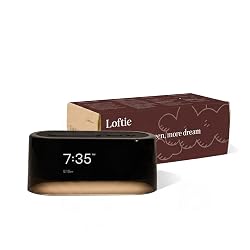
If you’re drawn to the Glow’s concept but want more functionality, consider these alternatives. The Hatch Restore 3 offers app control, multiple sounds, customizable color lighting, and meditation content for $170. The Philips SmartSleep provides significantly brighter wake-up light and FM radio for about $144. The Loftie Clock includes two-phase alarms, white noise, and Bluetooth speaker functionality for $150.
For budget-conscious buyers, numerous $30-50 sunrise alarm clocks from brands like JALL or Homelabs provide basic wake-up light functionality without premium pricing. They lack the Glow’s portability and design refinement but cover core sunrise simulation at a fraction of the cost.
If you already own smart lighting like Philips Hue, you can program similar wind-down and wake-up routines using existing bulbs and automation. This approach offers more flexibility and integration with other smart home devices, though it lacks the Glow’s portability.
Final Verdict: A Niche Product Done Well
The Casper Glow is well-executed within its narrow scope. It’s a beautifully designed portable lamp with sleep-timing features, not a comprehensive sleep solution. If that matches what you’re looking for, you’ll probably enjoy it. If you’re expecting transformative sleep benefits or robust smart home functionality, you’ll feel disappointed.
After testing dozens of sleep products over the years, I’ve learned to distinguish between genuinely helpful tools and cleverly marketed gadgets. The Glow sits somewhere in between. It won’t solve sleep problems, but it might enhance an already solid sleep environment for the right person.
Is it worth $89? That depends entirely on how much you value minimalist design, portability, and warm ambient lighting. For most people, that answer is probably no. But for the subset who prioritize aesthetic simplicity and don’t need extensive features, the Glow delivers what it promises without overpromising.
I’d score the Casper Glow a 7/10. Points for excellent build quality, thoughtful design, and reliable basic functionality. Deductions for high price, limited brightness, abandoned app support, and narrow use case. It’s a good product that serves a specific audience well, but it’s not for everyone.
Frequently Asked Questions
Can the Casper Glow replace my alarm clock?
Not reliably. The Glow provides only light-based waking, with no sound alarm. If you’re a heavy sleeper or tend to sleep through gentle wake-up methods, you’ll need a backup audible alarm. The light’s maximum brightness is also relatively dim compared to dedicated sunrise alarm clocks, which may not be sufficient to wake you from deep sleep.
How long does the battery actually last?
Casper claims up to seven hours of continuous use at full brightness. In testing, I found this accurate. At medium brightness with intermittent use (which is how most people use it), expect three to four days between charges. The battery holds charge well when not in use, so if you only use it occasionally, you might go a week or more between charging.
Do I need the app to use the Glow?
For basic lighting and manual wind-down functions, no. You can operate the Glow entirely through gesture controls. However, you do need the app to set up sunrise alarms, adjust wind-down timing preferences, and sync multiple Glows. Once programmed, alarms run independently without requiring the app to be open or your phone nearby.
Top picks on Amazon: Natrol Melatonin → | Doctor’s Best Magnesium Glycinate → | Manta Sleep Mask →
Is the Casper Glow suitable for children?
The Glow functions well as a sophisticated nightlight for older children who can understand gesture controls (roughly age 8+). For younger children, it might be too expensive and delicate for rough handling. The lack of specific child-safety features like automatic shut-off timers or child locks also makes it less ideal than dedicated kids’ nightlights. That said, several users report success using it in children’s rooms.
Will the Glow work during a power outage?
Yes, the Glow operates on battery power when not on its charging base. If you keep it charged, it will continue working for several hours during a power outage. However, the charging base itself requires power, so you won’t be able to recharge during extended outages. The Glow doesn’t serve as an emergency flashlight replacement due to its ambient rather than directional light output.
Read more articles on the Sunrise Alarm Clocks Hub.
About the Author
Scott Hilliard is the founder of liveworksleep, bringing over a decade of personal experience managing anxiety-driven insomnia. After years of testing sleep products, techniques, and therapies, Scott shares evidence-based insights to help others navigate their own sleep challenges. His approach combines personal testing with careful research, always emphasizing that sleep improvement is a journey, not a destination.