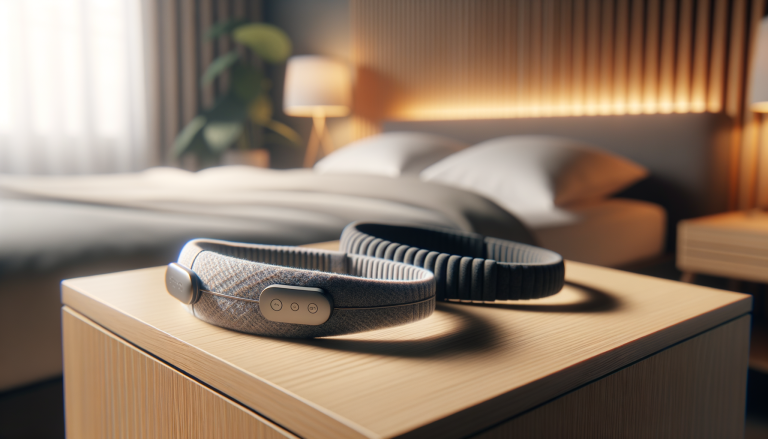
FRENZ Brainband Review
Affiliate Disclosure: We may earn a commission on purchases made through links in this article at no extra cost to you. Our recommendations are based on research into specifications, published evidence and product listings. Learn more.
The FRENZ Brainband is a consumer EEG headband that uses real-time brainwave monitoring to detect when you’re falling asleep and plays personalised audio, pink noise, or binaural beats to help you get there faster. It’s one of the more technically ambitious sleep devices available, with real compromises around comfort and app reliability that matter at this price point.
If you’re considering it, the honest summary is this: the underlying science is credible, the hardware is genuinely sophisticated, but whether it’s worth the investment depends heavily on what kind of sleeper you are and how patient you’re willing to be with a device that’s still maturing.
The FRENZ sits in a category that’s worth understanding before you pay a premium price. If you want the broader context on how these devices work and how they compare, the full guide on the EEG headbands hub covers the landscape in depth. This review focuses specifically on what the FRENZ Brainband does, where it earns its price, and where it falls short.
Note: the FRENZ Brainband is sold direct by the maker at frenz.ai, not on Amazon.
Quick verdict: worth considering only if sleep onset is your main problem and you sleep on your back. If you sleep on your side, the forehead pressure makes it a poor fit. If you are just starting to work on your sleep, try the cheaper basics first.

What Exactly Is the FRENZ Brainband and How Does It Work?
The FRENZ Brainband is made by Earable Neuroscience, a company founded by researchers with backgrounds in neuroscience and signal processing. That academic pedigree matters, because the device isn’t just slapping a heart rate sensor on a headband and calling it EEG. It uses dry EEG electrodes positioned at the forehead to measure electrical activity in the brain, combined with EOG (electrooculography) to detect eye movements and an accelerometer for motion data.
The core idea is closed-loop stimulation. The device monitors your brainwave patterns in real time, identifies the specific neural signatures associated with the transition into sleep (primarily the shift from alpha waves into theta waves), and then delivers audio stimulation timed to reinforce that transition. This is meaningfully different from a white noise machine or a sleep meditation app, which operate on a fixed schedule regardless of what your brain is actually doing.
The audio is delivered through bone conduction transducers built into the headband itself, which means you’re not wearing earbuds. That’s a practical advantage for side sleepers, though the headband design creates its own comfort issues covered below.
From a scientific standpoint, the approach has legitimate backing. Research published through the National Institutes of Health has explored closed-loop auditory stimulation as a method for enhancing slow-wave sleep and supporting sleep onset, with some evidence suggesting measurable effects on sleep architecture. The FRENZ is attempting to bring that lab-based methodology into a consumer device, which is ambitious and, to varying degrees, successful.
Who Is This Device Actually Built For?
The marketing around the FRENZ is fairly broad. The device is marketed as a sleep aid for anyone with sleep trouble, but in practice it’s best suited to a specific kind of sleeper: someone whose primary problem is sleep onset, who sleeps on their back or in relatively stable positions, and who is comfortable with technology as part of their bedtime routine.
That’s not a criticism exactly. It’s just a reality check. Matching the tool to the problem matters enormously. For people whose difficulty is a racing mind at bedtime, the inability to switch off cognitive activity when lying down, the FRENZ addresses exactly that problem, because it’s designed to detect and reinforce the neurological transition out of wakefulness.
For someone whose insomnia is driven by chronic pain, sleep apnea, or circadian rhythm disruption, the FRENZ is going to be less useful. Circadian issues, in particular, are better addressed through light exposure and a consistent schedule.

The Hardware: Build Quality, Comfort, and the Elephant in the Room
The FRENZ is an adjustable headband meant to fit a range of head sizes, and its electrode contact points are designed to work through hair without gel, which is a practical improvement over clinical EEG setups.
The elephant in the room is comfort during sleep. This is likely the biggest practical obstacle for many users.
The headband sits across the forehead with some pressure, which is necessary for good electrode contact. For back sleepers, this is manageable. For side sleepers, it’s genuinely difficult. The pressure against a pillow can create enough discomfort to interfere with the very sleep onset the device is trying to facilitate. That’s a frustrating paradox. Staying on your back just to accommodate the device can introduce its own cognitive load.
With any wearable sleep tech, the awareness of wearing something can become its own source of arousal. With the FRENZ, that effect may be amplified because the device is physically more present than a wrist tracker. Some users adapt within a week or two. Others never fully habituate. That variability is real and worth accounting for.
Check the current battery spec on the maker’s site before buying, because it needs to cover a full night. The bone conduction audio is built for sleep-oriented content such as pink noise and guided relaxation, not for music.
Does the EEG Tracking Actually Work?
This is the question that matters most, and it requires some nuance.
Consumer EEG devices face a fundamental challenge: clinical-grade EEG uses multiple electrodes placed across the entire scalp, with conductive gel, in controlled conditions. A forehead-mounted consumer device with dry electrodes is capturing a fraction of that signal, from a limited area, in a noisy environment. The FRENZ’s signal processing algorithms are doing significant work to extract meaningful data from that constrained input.
The sleep stage detection is best treated as directionally accurate but not clinically precise. The granular sleep stage breakdowns, the percentages of REM and deep sleep, are where more scepticism is warranted.
Tracking data can create more anxiety than insight. The American Psychological Association has documented orthosomnia, the phenomenon where tracking sleep actually worsens it, and it’s a real risk with any device that gives you granular nightly scores. The FRENZ is not immune to this dynamic.
More valuable than the tracking data is the functional output: does the device help you fall asleep faster? Whether any smoother sleep onset reflects the closed-loop stimulation working, a placebo effect, or simply the relaxation response triggered by having a bedtime ritual is hard to say with certainty. That uncertainty is worth acknowledging.

The App Experience: What to Check
The FRENZ app is where the device either comes together or frustrates you.
The app provides sleep reports and the audio programmes the device uses for stimulation, including pink noise, nature sounds, and guided relaxation content.
The maker says the app builds a profile of your sleep patterns over time and adjusts the stimulation parameters accordingly. Whether the audio content selections become more calibrated with consistent use, and whether that improvement would continue to compound over months of use, is unclear.
One design point matters for anxious sleepers. Gamified sleep scoring tends to backfire, so a brief, constructively framed morning summary is better than a nightly score. The Mayo Clinic consistently emphasises that sleep anxiety is self-reinforcing, and any device that adds to that loop is counterproductive regardless of its technical sophistication.
How Does the FRENZ Fit Into a Broader Sleep Strategy?
Many reviews of premium sleep tech evaluate the device in isolation, as if buying it replaces everything else. It doesn’t, and it shouldn’t.
The FRENZ works best as a complement to the basics, such as a consistent schedule, a dark, cool room and a wind-down routine, not a replacement for them.
The FRENZ does not address light exposure, so if your sleep timing is off for that reason, see our guide to light therapy lamps.
The point is that the FRENZ is a sophisticated tool for one specific part of the sleep problem: the onset transition. If that’s genuinely your sticking point, it has real potential. If your sleep issues are more systemic, you need a more systemic approach.

FRENZ Brainband vs. the Alternatives: Is There a Better Option?
The honest answer is: it depends on what you’re optimising for.
If you want sleep tracking accuracy and don’t need active stimulation, a good wrist-based tracker is cheaper and more comfortable. If you want relaxation audio without the EEG component, a quality app subscription costs a fraction of the price. The FRENZ justifies its premium specifically through the closed-loop stimulation, the fact that it’s responding to your actual brain state rather than running a fixed programme.
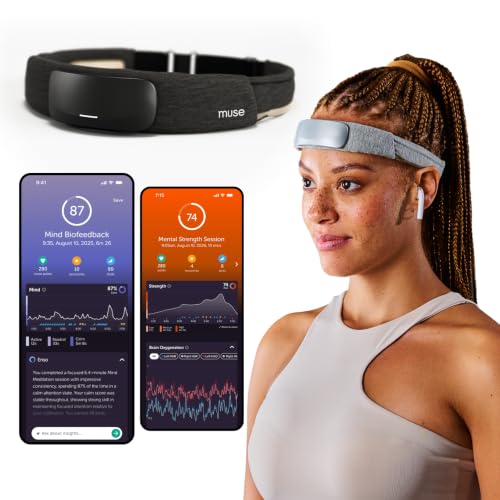
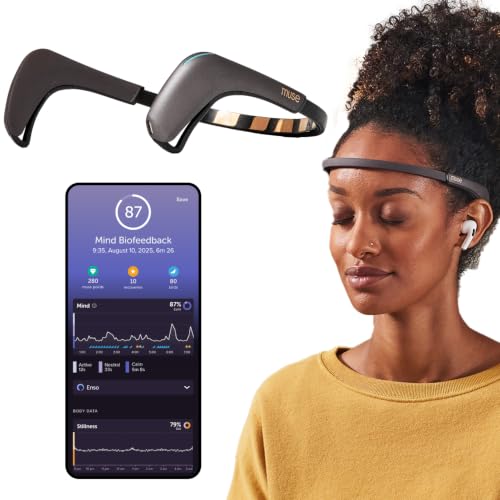
The Dreem headband was the most direct competitor, but it’s no longer available to consumers (see Dreem alternatives). The Muse S is in a similar category but focuses more on meditation feedback than sleep onset intervention. The FRENZ is currently one of the few consumer devices genuinely attempting real-time sleep onset detection with adaptive audio response.
Whether that’s worth a premium price is a personal calculation. For someone who has tried everything else and whose primary problem is the transition into sleep, it may be worth a trial. For someone who is just starting to address sleep issues, the cheaper and more foundational interventions come first.
If you decide the FRENZ is not for you, these Muse headbands are the main alternatives available on Amazon. Our best EEG headbands for sleep guide and the Muse S vs Dreem comparison go into more detail.
Quick Picks
What the Evidence Supports, What Is Mixed, and What Is Unclear
What the evidence supports: Closed-loop auditory stimulation has demonstrated effects on sleep architecture in controlled research settings. The PubMed literature on slow oscillation entrainment through acoustic stimulation is genuinely encouraging. The FRENZ is attempting to operationalise that research in a consumer device.
What’s mixed: Consumer EEG accuracy at the forehead is limited compared to clinical setups. The sleep stage data should be treated as approximate. Individual response to the stimulation varies considerably, and the research on long-term consumer EEG use for sleep is still developing.
What remains unclear: Whether the adaptive personalisation continues to improve meaningfully beyond the first month of use. Whether app stability is consistent across firmware versions. How the device performs for people with significantly different sleep architecture.
To see how EEG-based sleep devices compare before committing to one, read how accurate EEG headbands are and whether EEG headbands improve sleep.
Final Verdict: Is a Closed-Loop EEG Sleep Device Worth the Price?
The FRENZ Brainband is among the most technically credible consumer sleep onset devices. The closed-loop stimulation concept is grounded in real neuroscience, and it offers something a passive sleep app can’t.
But it’s not a finished product. The comfort limitations are real and will be disqualifying for many side sleepers. App reliability is worth checking in current user reviews. And the price is high enough that the value calculation requires honest self-assessment about whether sleep onset is actually your core problem.
Our recommendation: if you’ve already addressed the fundamentals, consistent sleep schedule, light management, a solid wind-down routine, and your primary remaining obstacle is the mental transition into sleep, the FRENZ is worth serious consideration. The CDC’s sleep guidelines consistently emphasise that behavioural and environmental factors are the foundation of good sleep, and those should be in place before adding a device like this.
If you’re earlier in the process, start with the foundations. They’re cheaper, better evidenced, and often sufficient. The FRENZ is a powerful tool for a specific problem. Make sure it’s your problem before you buy it.

Read more articles on the EEG Headbands Hub.
Transparency: LiveWorkSleep may earn affiliate commissions from products recommended on this page. This doesn’t influence our recommendations. Our recommendations are based on research into specifications, published evidence and product listings.
About This Guide
LiveWorkSleep publishes guides to sleep products and sleep science. Recommendations are based on research into specifications, published evidence and product listings. This page is general information, not medical advice.
Frequently Asked Questions
Does the FRENZ Brainband actually improve sleep onset?
The closed-loop audio stimulation, which responds to real-time brainwave data, is a credible mechanism with backing in neuroscience research. However, individual results vary considerably, and comfort during wear is a significant factor in whether the device can deliver its intended effect.
Is the FRENZ Brainband accurate for sleep tracking?
The FRENZ is directionally accurate for detecting wakefulness versus sleep transition, which is the function it needs to perform for closed-loop stimulation. The granular sleep stage data, including REM and deep sleep percentages, should be treated as approximate rather than clinically precise. Consumer forehead EEG has inherent limitations compared to multi-electrode clinical setups, and the data is best used as a general guide rather than a definitive sleep architecture report.
Can side sleepers use the FRENZ Brainband comfortably?
This is the most significant practical limitation of the device. The headband requires forehead contact pressure for EEG accuracy, which creates discomfort when pressed against a pillow. Some side sleepers adapt over time, but many find the device incompatible with their natural sleeping position. If you’re primarily a side sleeper, this is a serious consideration before purchasing. Back sleepers generally find the comfort acceptable after an initial adjustment period.
How does the FRENZ Brainband compare to the Muse S headband?
The Muse S is primarily designed for meditation feedback and sleep monitoring, while the FRENZ is specifically built around sleep onset intervention through closed-loop stimulation. The FRENZ’s adaptive audio response to real-time brain state is more sophisticated for sleep onset purposes, but the Muse S has a longer track record and a more established app ecosystem. The FRENZ is the better choice if sleep onset is your specific target; the Muse S may be preferable if you want a device that serves both meditation and sleep monitoring functions.
What sleep problems is the FRENZ Brainband least suited for?
The FRENZ is not well-suited for sleep problems rooted in circadian rhythm disruption, sleep apnea, or chronic pain. It doesn’t address the timing of your sleep-wake cycle, which is better approached through light therapy and consistent scheduling. It also won’t detect or address breathing-related sleep disruption. If your core issue is waking frequently during the night rather than difficulty falling asleep initially, the FRENZ’s primary function, sleep onset facilitation, may not address your actual problem.
Price bands: $ under $15, $$ $15 to $40, $$$ $40 to $100, $$$$ over $100. Check Amazon for the current price.