NextSense Smartbuds Review EEG Sleep Earbuds
Affiliate Disclosure: As an Amazon Associate I earn from qualifying purchases. Some links on this page are affiliate links. If you buy through them we earn a small commission at no extra cost to you. Our recommendations are based on research into specifications, published evidence and product listings. Learn more.
Quick Picks


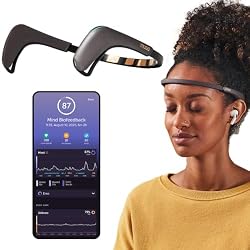
The NextSense Smartbuds are EEG-enabled sleep earbuds designed to monitor your brain activity during sleep, track sleep stages, and deliver personalised audio interventions, all without the headband or electrode gel that traditional EEG devices require. They represent a genuinely new category of sleep technology, one that sits somewhere between a consumer sleep tracker and a clinical-grade monitoring tool. Whether they live up to that promise is a more complicated question.
The short answer: NextSense has built something technically impressive, but the experience of actually using these earbuds for sleep is messier than the marketing suggests. If you’re considering spending serious money on in-ear EEG sleep monitoring, read this carefully before you commit.
The NextSense Smartbuds sit within a broader landscape of brain-sensing wearables that includes headbands, rings, and now earbuds. If you want context on how in-ear EEG fits into that wider category, the EEG headbands hub covers the full spectrum of consumer brain-monitoring sleep tech, which is useful background before diving into the specifics here.
Shop on Amazon: Muse S Athena (best alternative) →

What Are the NextSense Smartbuds and Who Makes Them?
NextSense started as a Google project before spinning out as an independent company. The core technology uses in-ear electrodes to capture electroencephalogram data, the same type of brainwave measurement used in clinical sleep studies, but miniaturised into an earbud form factor. The idea is that your ear canal offers a surprisingly stable, low-noise site for EEG measurement, because the skin there is thin and sits close to the temporal lobe.
That’s not marketing spin. Research published through the National Institutes of Health has explored in-ear EEG as a viable approach for continuous neural monitoring, with findings suggesting the ear canal can produce signals comparable to scalp electrodes for certain frequency bands. NextSense has published its own validation data suggesting its sleep staging correlates reasonably well with polysomnography, the gold standard clinical sleep study. I’ll come back to how that translates in practice.
The Smartbuds themselves look like slightly chunkier wireless earbuds. They connect to a companion app that tracks sleep stages, records movement, and can play audio, including white noise, binaural beats, and guided relaxation content, timed to your sleep cycles. The pitch is that the device doesn’t just track your sleep passively; it actively intervenes to improve it.
How Do the NextSense Smartbuds Actually Work?
The earbuds contain small dry electrodes that make contact with the skin of your ear canal. During sleep, they continuously record electrical activity from the brain. The companion app processes this signal and classifies it into sleep stages, light sleep, deep sleep, REM, and wakefulness, in real time.
What makes this interesting beyond passive tracking is the closed-loop audio delivery. The app can detect when you’re entering light sleep and play calming audio to ease the transition, or hold off on playing anything during deep sleep to avoid disrupting it. There’s also an alarm function that wakes you during a lighter sleep stage within a defined window, theoretically leaving you feeling less groggy.
The smart alarm can feel genuinely different, a softer, more gradual emergence from sleep rather than a jarring mid-cycle interruption, though it may sometimes wake you at what feels like exactly the wrong moment. Whether that is sensor error, algorithm error, or just the inherent messiness of sleep is hard to say.
The audio library includes genuinely useful content. The guided progressive muscle relaxation (PMR) sessions in the NextSense app are a strong point. The combination of decent audio quality and real-time sleep stage awareness means the app can sometimes deliver relaxation content at moments when you are actually receptive to it, which isn’t something a dumb timer can do.

Sleep Tracking Accuracy: How Does In-Ear EEG Compare?
This is where I want to be careful, because there’s a real temptation with devices like this to either overclaim or dismiss entirely.
Consumer sleep trackers as a category have a complicated relationship with accuracy. Most wrist-based trackers use movement and heart rate to infer sleep stages, which is an indirect measurement at best. Mayo Clinic notes that consumer sleep trackers can be useful for identifying general patterns but shouldn’t be treated as clinical diagnostic tools. Some people develop real anxiety around their sleep tracker data, checking scores obsessively and catastrophising a single bad night. That’s a genuine risk worth naming.
The NextSense approach is different in kind, not just degree. EEG actually measures neural activity directly, which is what sleep staging is fundamentally based on. The question is whether in-ear EEG captures enough signal fidelity to do this reliably. NextSense’s own published validation suggests around 80% agreement with polysomnography for four-stage classification. That’s meaningfully better than most wrist trackers, though still short of clinical precision.
The sleep stage data cannot be validated rigorously without a simultaneous PSG study, so it is best treated as plausible rather than confirmed accurate.
On nights with more movement than usual, or when the earbuds shift slightly in the ears, the data can look noisier. The app flags some of these sessions as low-confidence readings, which is a welcome feature. Transparency about data quality is something more sleep tech companies should build in.
Comfort and Wearability: Can You Actually Sleep in These?
I want to be honest here, because this is where a lot of people will make or break their decision.
The fit matters enormously, both for comfort and for signal quality. NextSense provides multiple ear tip sizes and a custom fitting guide in the app. Getting this right is worth the time.
Side sleepers will have the hardest time. The earbuds add enough bulk that sleeping directly on your ear creates pressure. I’m primarily a back sleeper, which helped. If you reliably sleep on your side, this is a genuine usability concern, not a minor caveat.
Battery life is rated at around 10 hours, which covers most sleep sessions comfortably. The charging case is compact. The earbuds stayed connected to my phone throughout the night without dropout issues.

The App Experience: Where the Product Either Comes Together or Falls Apart
Sleep hardware is only as good as the software interpreting it. This is true for EEG headbands, it’s true for light therapy devices, and it’s absolutely true here.
The NextSense app is functional and reasonably well-designed, but it’s clearly still maturing. The sleep staging visualisation is clear and easy to read. The trend data over weeks is genuinely interesting, and that kind of personalised feedback is where consumer EEG actually earns its price tag.
The audio intervention side is more hit-and-miss. The content library is decent but not enormous. The timing logic for interventions can feel slightly off, sometimes playing audio during deeper sleep rather than catching the transition.
One thing I want to flag for anyone who’s ever experienced sleep anxiety: the app’s data presentation is generally calm and non-alarmist, which I appreciated. There’s no sleep score that punishes you for a rough night. The framing is more observational than evaluative. That is a deliberate design choice, and a sensible one. The American Psychological Association’s research on sleep consistently shows that sleep anxiety can become self-reinforcing, so tools that reduce rather than amplify that anxiety are worth noting.
How Does NextSense Fit Into a Broader Sleep Improvement Strategy?
A device like this doesn’t exist in isolation. No single tool solves sleep. A combination of behavioural changes, environmental adjustments, and targeted technology used strategically tends to do more.
Light therapy is one of the more underrated interventions. If you’re exploring this area, the complete evidence-based guide to light therapy for sleep disorders is worth reading before you buy anything, because the science here is genuinely strong and often misunderstood.
The NextSense Smartbuds slot into a sleep improvement strategy as a monitoring and intervention tool, not a cure. They give you better data than most consumer trackers, and the closed-loop audio delivery adds something genuinely novel. But they work best when your sleep environment is already optimised, when your circadian rhythm is reasonably well-anchored, and when you’re using them to refine rather than fix.
Timing matters more than most people realise. Understanding when to use light therapy for sleep is a good example of this principle applied to a different technology: the same intervention at the wrong time can be useless or counterproductive. The same logic applies to audio interventions during sleep.
I also want to mention that for people whose sleep problems are rooted in mood or seasonal patterns, the picture is more complex. Light therapy for SAD addresses a distinct but related mechanism, and if there’s any seasonal component to your sleep difficulties, that’s worth investigating separately. Sleep technology works best when you understand which problem you’re actually trying to solve.

Who Should Consider the NextSense Smartbuds?
Let me be direct about this, because the price point demands it.
The NextSense Smartbuds make sense if you’re a back sleeper or combination sleeper who is genuinely curious about EEG-level sleep data, comfortable with first-generation technology that will improve over time, and interested in audio-based sleep interventions rather than just passive tracking. If you’ve already optimised your sleep environment and behavioural habits and want to go deeper into what’s actually happening in your brain during sleep, this is a legitimate tool for that.
They make less sense if you’re a committed side sleeper, if you find earplugs uncomfortable, if you’re primarily motivated by a sleep score rather than underlying data, or if you’re hoping a device will solve a sleep problem that hasn’t responded to simpler interventions. The CDC’s sleep health resources are a useful reminder that most sleep improvement comes from behavioural and environmental changes, not from better measurement.
They also make less sense if you’re in the middle of active sleep anxiety. There’s a version of sleep tracking that becomes its own problem. The NextSense app is better designed than most for avoiding this, but it’s worth being honest with yourself about where you are.
NextSense Smartbuds vs. Other EEG Sleep Devices
The main alternatives in consumer EEG sleep tech are headband-based devices like the Muse S Athena and Dreem 2. Each has a different trade-off profile.
Headbands generally offer more electrode coverage, which means potentially richer EEG data. But they’re bulkier, more intrusive for sleep, and many people find them uncomfortable for a full night. The in-ear form factor is genuinely more practical for most sleepers, even accounting for the side-sleeper caveat.
The Muse S Athena is more established and has a larger content library, and it combines EEG with fNIRS tracking, but it is still a headband, so fit and comfort can vary. Dreem 2 had strong clinical validation but is no longer sold to consumers. NextSense sits in an interesting position: better form factor than most headbands, potentially stronger signal than most wrist trackers, but earlier in its software maturity curve.
For context on what the broader light therapy device market looks like when a category matures, it’s instructive to look at how products like the Circadian Optics Lumos evolved from niche clinical tools to practical everyday devices. EEG sleep tech is probably five years behind that curve, which tells you something about where NextSense sits right now.
The Transparency Box: What We Know, What We Don’t
What we know: In-ear EEG is a scientifically valid approach to sleep stage monitoring. NextSense has published validation data suggesting reasonable agreement with polysomnography. The device is comfortable for back sleepers with correct fit. The app’s data presentation is thoughtfully designed.
What we don’t know: Long-term accuracy across diverse sleepers and sleep conditions. Whether closed-loop audio interventions produce measurable sleep quality improvements over time. How the device performs for people with sleep disorders beyond general insomnia.
Mixed evidence: The smart alarm function. Some nights it felt genuinely useful. Others it didn’t. The sample size of my personal testing isn’t large enough to draw firm conclusions, and individual variation in sleep architecture makes this hard to evaluate without controlled conditions.
For anyone whose sleep problems have a mood or seasonal component, it’s also worth noting that light therapy research is considerably more mature than consumer EEG research. The best light therapy lamps for sleep have years of clinical evidence behind them, which isn’t yet true for consumer EEG devices. That doesn’t make EEG less interesting, it just means calibrating your expectations appropriately.
Similarly, if you’re comparing investment options for sleep tech, a well-chosen light therapy lamp like the Verilux HappyLight costs a fraction of what EEG earbuds cost and has a stronger evidence base for certain sleep problems. That’s not a reason to dismiss NextSense, but it’s context worth having.

Final Verdict: Is NextSense Worth It?
NextSense has built something genuinely novel and technically credible. The in-ear EEG approach works better than I expected, the app is thoughtfully designed, and the closed-loop audio interventions add real value on good nights. This is first-generation technology in a meaningful sense, not just a marketing claim. The software will improve. The algorithm will improve. The question is whether you want to be an early adopter at a premium price point.
If you’re a sleep enthusiast who wants the most sophisticated consumer EEG sleep data currently available in a wearable form factor, and you’re comfortable with the side-sleeper limitation and the current state of the app, NextSense is worth serious consideration. The National Sleep Foundation’s overview of sleep study methods puts consumer EEG in useful context: it’s not a clinical sleep study, but it’s closer to one than anything else you can wear at home.
If you’re earlier in your sleep improvement experience, or if you haven’t yet addressed the environmental and behavioural foundations of good sleep, I’d start there first. The data NextSense gives you is only as useful as your ability to act on it. Sleep hygiene fundamentals from the National Sleep Foundation remain the highest-leverage starting point for most people, regardless of how sophisticated your tracking device is.
Ten years of insomnia taught me that the most expensive tool is rarely the most effective one. But occasionally, a piece of technology comes along that genuinely does something new. NextSense is in that category. It’s not perfect. It’s not for everyone. But it’s real.
Read more articles on the EEG Headbands Hub.
Transparency: LiveWorkSleep may earn affiliate commissions from products recommended on this page. This doesn’t influence our recommendations. Our recommendations are based on research into specifications, published evidence and product listings.
About This Guide
LiveWorkSleep publishes guides to sleep products and sleep science. Recommendations are based on research into specifications, published evidence and product listings. This page is general information, not medical advice.
Frequently Asked Questions
Are the NextSense Smartbuds accurate for sleep staging?
NextSense has published validation data suggesting around 80% agreement with polysomnography for four-stage sleep classification, which is meaningfully better than most wrist-based trackers that rely on movement and heart rate inference. In-ear EEG captures actual brainwave activity rather than proxy signals, making the underlying measurement approach more scientifically sound. That said, accuracy varies with fit quality and movement during sleep, and the device should not be treated as a clinical diagnostic tool.
Can you sleep comfortably wearing the NextSense Smartbuds?
Comfort depends significantly on sleeping position and ear tip fit. Back sleepers and combination sleepers generally adapt well after finding the correct ear tip size, which NextSense provides in multiple options. Side sleepers face a more difficult experience because the earbud bulk creates pressure when lying directly on the ear. The fit calibration process in the app is worth doing carefully, as incorrect sizing affects both comfort and signal quality.
How do NextSense Smartbuds compare to EEG headbands like the Muse S?
EEG headbands typically offer more electrode coverage across a wider area of the scalp, which can capture richer signal data. However, headbands are bulkier and many users find them uncomfortable for a full night of sleep. The NextSense in-ear form factor is more practical for most sleepers, and the ear canal provides a surprisingly stable measurement site due to its proximity to the temporal lobe. The Muse S has a more mature software ecosystem and larger content library, while NextSense offers potentially stronger sleep-specific EEG signal in a more wearable package.
Do the audio interventions in the NextSense app actually improve sleep?
The closed-loop audio delivery, which times content to your real-time sleep stage data, is conceptually sound and occasionally felt genuinely useful during testing. The smart alarm function, which targets lighter sleep stages within a defined window, produced noticeably better wake experiences on some nights. However, the intervention timing logic is still maturing and results vary. The audio content library, including guided relaxation and white noise, is of decent quality. Whether these interventions produce measurable long-term sleep improvements requires more controlled research than currently exists for this specific device.
Who should not buy the NextSense Smartbuds?
The NextSense Smartbuds are a poor fit for committed side sleepers, anyone who finds in-ear devices uncomfortable during sleep, and people who are currently experiencing sleep anxiety or are prone to obsessing over sleep data. They’re also a difficult recommendation for anyone who hasn’t yet addressed the foundational behavioural and environmental factors affecting their sleep, since sophisticated tracking data is only useful when you have the baseline conditions to act on it. For most people earlier in their sleep improvement experience, simpler and less expensive interventions will deliver better return on investment.